What Does 'Mad as a Hatter' Really Mean?
TL;DR
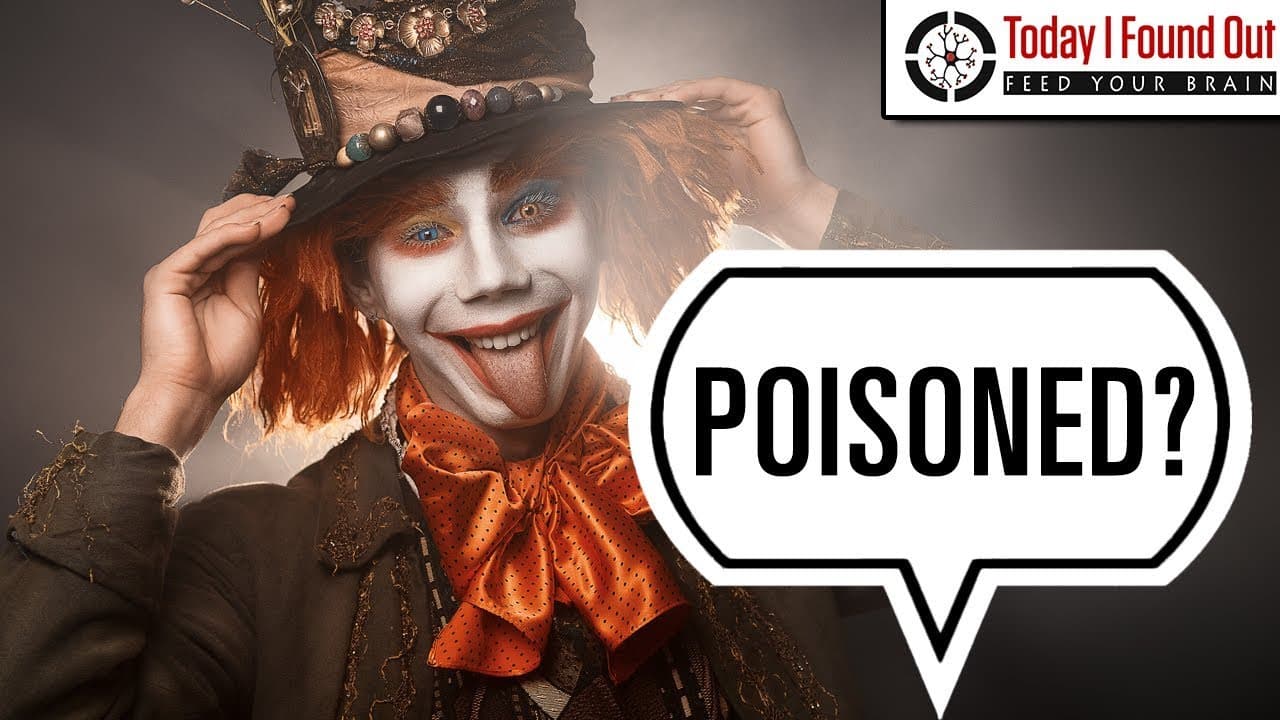
'Mad as a hatter' originates from the historical mercury poisoning suffered by hat makers in the 19th century, not from Lewis Carroll's works. The phrase was first documented in 1829 and reflects the erratic behavior resulting from mercury exposure, which caused symptoms like tremors and mood swings in those affected.
Transcript
Although the phrase “mad as a hatter” is, and will likely long be, associated with Charles Dodgson’s (a.k.a. Lewis Carroll’s) 1865 novel, Alice in Wonderland, contrary to popular belief, Carroll neither coined the phrase nor did he use it in his works. (The Hatter is referred to as “mad”, along with his little tea party, but he is never explicitly ... Read More
Key Insights
- 😠 The phrase "mad as a hatter" was not coined by Lewis Carroll and was first documented in the early 19th century.
- 🤠 "Mad hatters' syndrome" was a condition caused by mercury poisoning among hatters in the hat-making industry.
- 💱 The symptoms of mercury poisoning included neurological effects such as tremors and mood changes.
Install to Summarize YouTube Videos and Get Transcripts
Explore YouTube Video Summarizer or Get YouTube Transcript Extractor
Questions & Answers
Q: Did Lewis Carroll use the phrase "mad as a hatter" in his works?
No, Lewis Carroll never used the phrase in his works. The character Hatter in Alice in Wonderland is referred to as "mad," but the specific phrase is not used.
Q: Where did the phrase "mad as a hatter" actually come from?
The phrase was first documented in a short story from 1829, and it referred to the symptoms experienced by hatters suffering from mercury poisoning.
Q: What was the cause of mercury poisoning among hatters?
Hatters were exposed to mercury vapors while using a method called "carroting" to make felt for hats. The use of mercury nitrate in the process led to mercury poisoning.
Q: When did the problem of mercury poisoning among hatters end?
Mercury poisoning among hatters in the United States continued until World War 2 when the U.S. Public Health Service enforced the use of alternative methods.
Summary & Key Takeaways
-
The phrase "mad as a hatter" was never used by Lewis Carroll in his works, contrary to popular belief.
-
The first documented instance of the phrase was found in a short story from 1829.
-
The phrase originated from the symptoms of mercury poisoning experienced by hatters in the hat-making industry.
Read in Other Languages (beta)
Share This Summary 📚
Summarize YouTube Videos and Get Video Transcripts with 1-Click
Try YouTube Summary with ChatGPT & Claude or YouTube Transcript Generator
Explore More Summaries from Today I Found Out 📚






Summarize YouTube Videos and Get Video Transcripts with 1-Click
Try YouTube Summary with ChatGPT & Claude or YouTube Transcript Generator