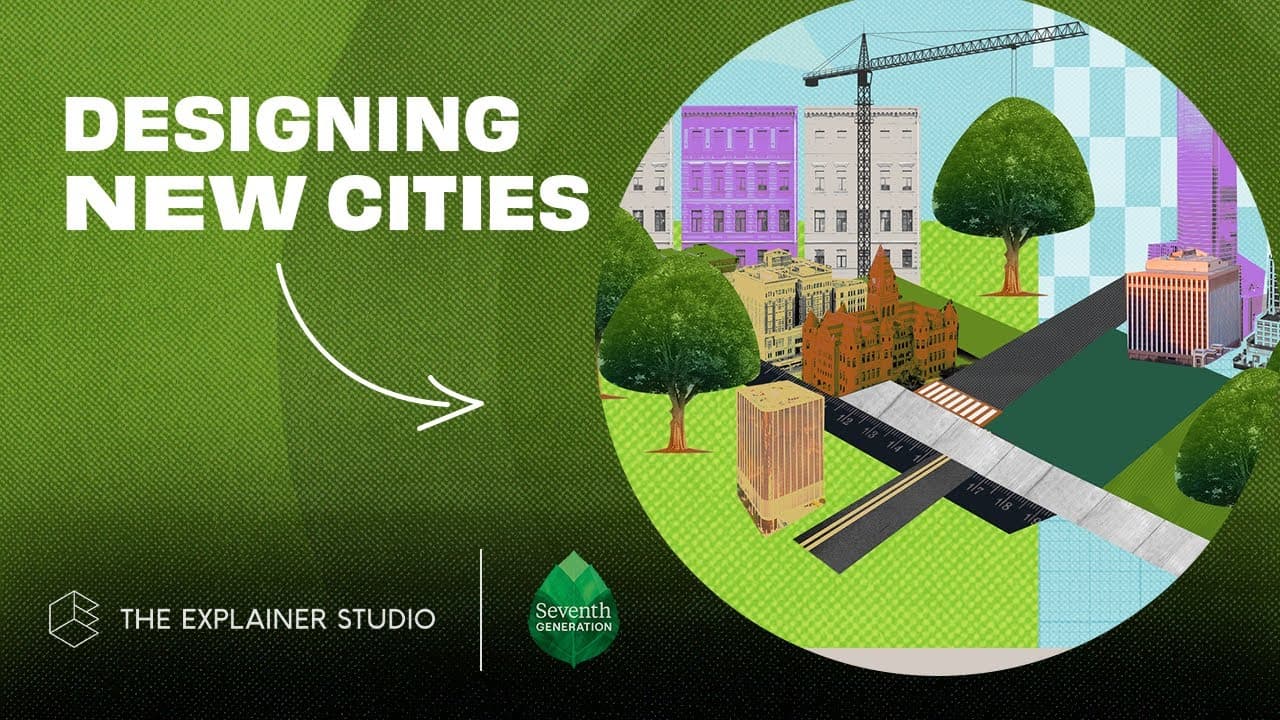
How will the next generation of cities address the challenges of climate change? [Ad Content]
TL;DR
Cities must prioritize human connection and public transit over cars.
Transcript
these are images of some of the oldest cities from around the world and they all have something in common they were built with human Connection in mind narrow streets buildings closed together homes mixed with workplaces and shops Central Public spaces now look at many of today's American cities and you'll notice features that are quite different w... Read More
Key Insights
- Modern cities are predominantly designed for cars, leading to wide roads and separated residential and commercial zones, which impacts social equity and environmental health.
- Historically, cities were built with human connection in mind, featuring narrow streets and mixed-use spaces, fostering community interaction.
- The Federal Highway Act of 1956 facilitated the creation of interstate highways, which led to urban sprawl and negatively impacted communities, especially those of color.
- Transportation is a major contributor to greenhouse gas emissions in the U.S., necessitating a rethink of city design and transportation methods to combat climate change.
- Walkability is crucial for sustainable urban design, requiring walks to be useful, safe, comfortable, and interesting to encourage pedestrian movement.
- Government investment in public transit and modern road designs is essential to repair the damage done by car-centric urban planning.
- A just transition to a regenerative economy can address climate, inequality, and racial injustice by investing in community upliftment and sustainable policies.
- Collective power and organizing are vital for amplifying efforts towards a future that prioritizes public transit and human connection in city planning.
Install to Summarize YouTube Videos and Get Transcripts
Explore YouTube Video Summarizer or Get YouTube Transcript Extractor
Questions & Answers
Q: How did the Federal Highway Act of 1956 impact American cities?
The Federal Highway Act of 1956 facilitated the construction of interstate highways, which led to urban sprawl by making it easier for people to leave cities. These highways often ran through and destroyed working-class and minority communities, exacerbating social and economic inequalities.
Q: What are the main environmental impacts of car-centric city designs?
Car-centric city designs contribute significantly to greenhouse gas emissions, as the transportation sector is one of the largest emitters in the U.S. The reliance on cars leads to increased air pollution, urban sprawl, and a separation of residential and commercial areas, making cities less sustainable and livable.
Q: Why is walkability important in urban planning?
Walkability is crucial in urban planning because it promotes sustainable living by reducing reliance on cars. A walkable city ensures that walks are useful, safe, comfortable, and interesting, encouraging people to walk more, which decreases emissions and fosters community interaction and health.
Q: What does a just transition to a regenerative economy entail?
A just transition to a regenerative economy involves shifting towards sustainable practices that do not leave anyone behind. It focuses on uplifting communities through investment in public transit, renewable energy, and policies that address climate change, social inequality, and racial injustice, creating a more equitable society.
Q: How can cities of the future address climate change challenges?
Cities of the future can address climate change by prioritizing public transportation, walkability, and mixed-use spaces that enhance human connection. By reducing car dependency and investing in sustainable infrastructure, cities can decrease emissions and create more equitable and livable environments.
Q: What role does collective power play in urban transformation?
Collective power is essential in urban transformation as it amplifies the voices and efforts of communities advocating for sustainable and equitable city planning. Organizing and mobilizing communities can drive policy changes and investments that prioritize public transit and human-focused urban designs.
Q: How did early 20th-century cities differ from modern car-centric cities?
Early 20th-century cities were designed with human connection in mind, featuring narrow streets and mixed-use spaces that encouraged walking and community interaction. In contrast, modern car-centric cities prioritize wide roads and separated zones, which discourage walking and contribute to social and environmental issues.
Q: What policies can support the transition to sustainable cities?
Policies supporting the transition to sustainable cities include investing in public transportation, modern road designs, and mixed-use developments. Encouraging walkability, renewable energy, and community-focused planning can reduce emissions, foster social equity, and create more resilient urban environments.
Summary & Key Takeaways
-
The emergence of automobiles in the 20th century reshaped U.S. cities, prioritizing car infrastructure and contributing to increased greenhouse gas emissions. Future city planning can learn from ancient cities by focusing on public transit and human connection to reduce emissions and enhance accessibility.
-
The Federal Highway Act of 1956 played a significant role in urban sprawl, negatively affecting communities, especially those of color. Addressing climate change requires reconsidering city design, emphasizing walkability, and increasing investment in public transportation and modern road systems.
-
A just transition towards a regenerative economy is crucial to address climate change, inequality, and racial injustice. This involves uplifting communities through sustainable policies and organizing collective power to create cities that prioritize human connection and public transit over car-centric designs.
Read in Other Languages (beta)
Share This Summary 📚
Summarize YouTube Videos and Get Video Transcripts with 1-Click
Try YouTube Summary with ChatGPT & Claude or YouTube Transcript Generator
Explore More Summaries from Vox 📚


Summarize YouTube Videos and Get Video Transcripts with 1-Click
Try YouTube Summary with ChatGPT & Claude or YouTube Transcript Generator