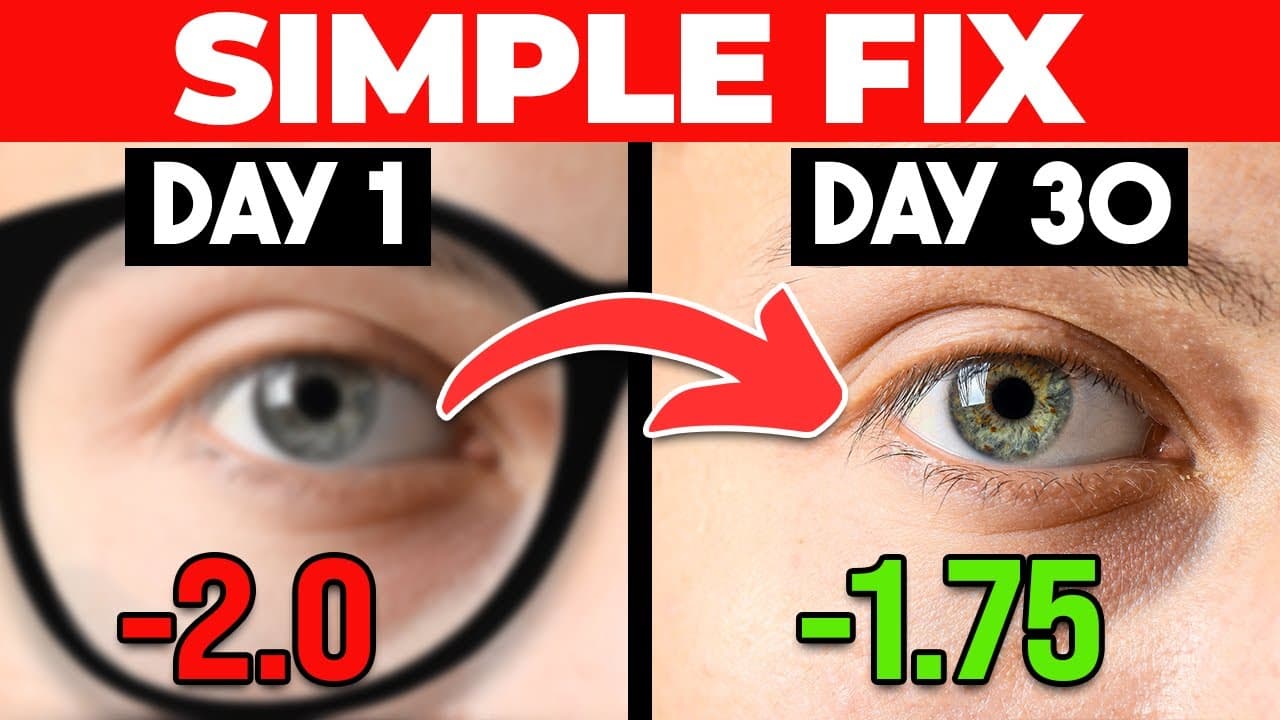
#1 Deficiency Behind POOR EYESIGHT
TL;DR
Learn how to enhance your eyesight naturally without using glasses.
Transcript
today I'm going to share with you how to improve your eyesight naturally without these things right here glasses I cannot stand these glasses and they call them corrective lenses but do they really correct anything no the more you wear them the more that you need a stronger prescription in fact when I wear these especially for long periods of time ... Read More
Key Insights
- Glasses, often termed corrective lenses, do not truly correct eyesight; they can lead to stronger prescriptions over time.
- Contrast sensitivity loss is a condition affecting vision clarity in low light, often overlooked by routine eye tests.
- Carotenoids, antioxidants in the retina, protect eyes from blue light and other damages but decrease with age.
- Natural sunlight is essential for eye health, providing UV and infrared light that enhances melatonin in the eyes.
- Consuming foods rich in lutein and zeaxanthin, such as egg yolks, can increase carotenoids, improving eye health.
- Removing seed oils and adopting an ancestral diet can significantly benefit eye health, reducing inflammation.
- Vitamin D and omega-3 fatty acids from fish are crucial for maintaining eye health and preventing various eye conditions.
- Regular outdoor exposure and full-spectrum lighting can temporarily aid vision but do not address underlying issues.
Install to Summarize YouTube Videos and Get Transcripts
Explore YouTube Video Summarizer or Get YouTube Transcript Extractor
Questions & Answers
Q: Why are glasses not truly corrective for eyesight?
Glasses are often referred to as corrective lenses, but they do not correct the underlying issues affecting eyesight. Instead, they compensate for vision problems, which can lead to a dependency that requires stronger prescriptions over time. The video suggests focusing on natural methods to improve eyesight rather than relying solely on glasses.
Q: What is contrast sensitivity loss and why is it important?
Contrast sensitivity loss is a condition where the ability to differentiate between shades of gray diminishes, leading to blurry vision, especially in low light. It is significant because it is often overlooked in routine eye tests, yet it affects daily activities like reading and driving. Addressing this loss can improve overall vision quality.
Q: How do carotenoids benefit eye health?
Carotenoids are antioxidants present in the retina that protect the eyes from blue light and various forms of damage, including those caused by diabetes and environmental pollutants. As people age, the levels of carotenoids decrease, reducing eye protection. Increasing carotenoid intake through diet or supplements can help maintain eye health and improve vision.
Q: What role does natural sunlight play in eye health?
Natural sunlight is crucial for eye health because it provides UV and infrared light, which are beneficial for the eyes. Infrared light helps build up melatonin, a powerful antioxidant in the eyes. Regular exposure to sunlight can enhance eye health and reduce the risk of various eye conditions, countering the effects of prolonged indoor activities.
Q: Which foods are recommended for improving eyesight?
Foods rich in lutein and zeaxanthin, such as egg yolks, are recommended for improving eyesight. These carotenoids are essential for maintaining healthy vision. Additionally, consuming fatty fish like salmon, which is high in omega-3 fatty acids, supports eye health by reducing inflammation and providing essential nutrients like DHA, crucial for the retina.
Q: How does vitamin D contribute to eye health?
Vitamin D is vital for eye health, as it supports various eye functions and helps prevent conditions like glaucoma, macular degeneration, and retinopathy. The video suggests taking at least 10,000 IU of vitamin D daily to maintain eye health and reduce the risk of associated complications. Vitamin D enhances overall eye function and health.
Q: What dietary changes can improve eye health?
To improve eye health, the video recommends removing seed oils from the diet and adopting an ancestral diet that emphasizes whole, unprocessed foods. This dietary change reduces inflammation and supports overall eye health. Consuming foods high in omega-3 fatty acids, like fatty fish, and increasing carotenoid intake are also beneficial for the eyes.
Q: What temporary solutions can aid vision clarity?
Temporary solutions for aiding vision clarity include using full-spectrum lighting and increasing natural light exposure in workspaces. These methods help improve vision temporarily by enhancing light absorption. However, they do not address the root causes of vision problems, which require dietary changes and increased antioxidant intake for long-term improvement.
Summary & Key Takeaways
-
The video discusses natural methods to improve eyesight, emphasizing that glasses may worsen vision over time. It highlights contrast sensitivity loss, a condition affecting vision clarity, often missed in routine eye tests.
-
Carotenoids, crucial antioxidants in the retina, protect eyes from blue light and other damages. However, these decrease with age, necessitating increased intake through diet or supplements to maintain eye health.
-
Natural sunlight exposure is vital for eye health, providing UV and infrared light that enhances melatonin production. A diet rich in lutein, zeaxanthin, and omega-3s, along with vitamin D, supports eye health.
Read in Other Languages (beta)
Share This Summary 📚
Summarize YouTube Videos and Get Video Transcripts with 1-Click
Try YouTube Summary with ChatGPT & Claude or YouTube Transcript Generator
Explore More Summaries from Dr. Eric Berg DC 📚



Summarize YouTube Videos and Get Video Transcripts with 1-Click
Try YouTube Summary with ChatGPT & Claude or YouTube Transcript Generator