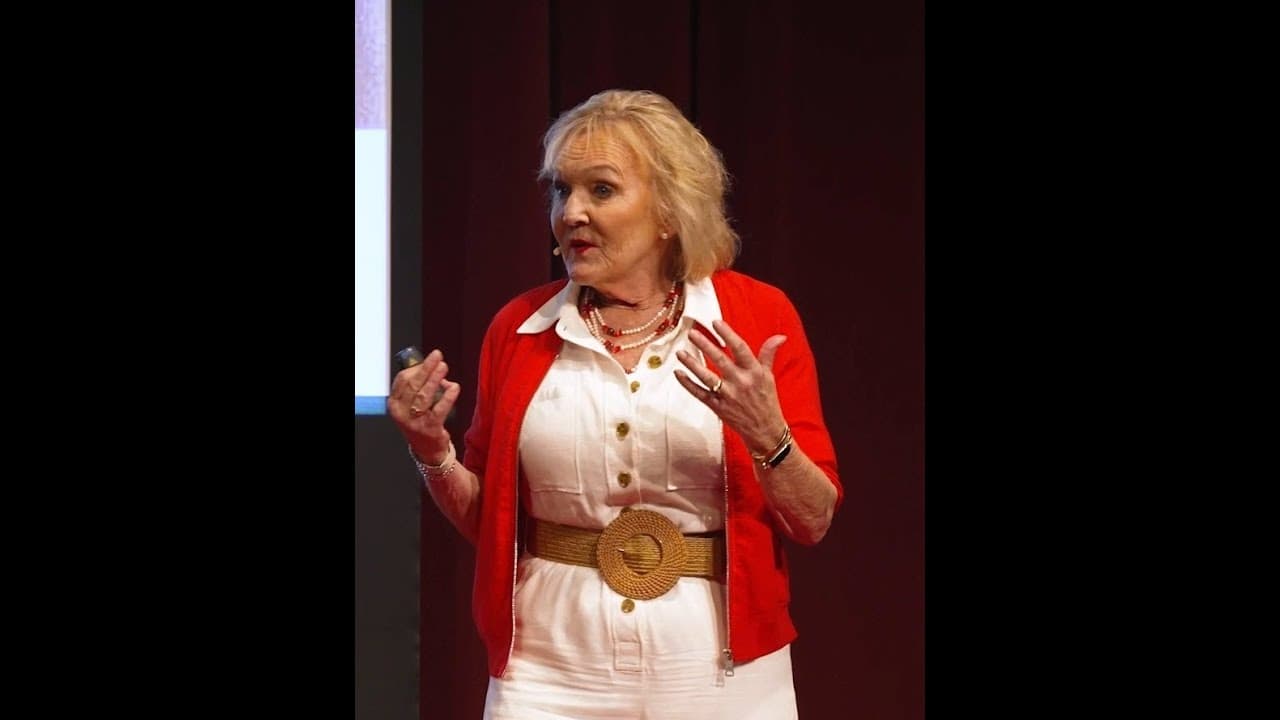
We're talking but are we really communicating? | Dr. Debra Dupree | TEDxTaftAvenue
TL;DR
Effective communication is key to understanding and resolving conflicts, leading to better relationships.
Transcript
[Applause] today you're going to learn a four-letter word now not the kind you think but this four-letter word can have a powerful influence on how you show up and impact others with the show of your hands how many of you are an only child in your family okay how about one or two how about five I came from a family of nine nine siblings in 16 years... Read More
Key Insights
- 💠 Childhood experiences shape perspectives on communication and relationships.
- 😀 Non-verbal cues play a significant role, comprising 55% of face-to-face communication.
- 🛀 Effective conflict management involves perspective-taking, seeking understanding, emphasizing commonalities, and reframing negatives positively.
- 🦻 Conversational reciprocity aids in managing conflicts by hedging opinions, emphasizing commonalities, empathizing with differences, acknowledging diverse perspectives, and reframing negatives.
- 🥺 Toxic communication can lead to discomfort, unhappiness, and insecurity, with long-lasting effects on relationships.
- 🥺 People tend to react emotionally to communication before fully understanding it, leading to defensiveness and retaliation.
- 😒 Choosing to use one's voice constructively can make a significant difference in resolving conflicts and fostering positive relationships.
Install to Summarize YouTube Videos and Get Transcripts
Explore YouTube Video Summarizer or Get YouTube Transcript Extractor
Questions & Answers
Q: How did the speaker's childhood experiences influence their views on communication?
The speaker's upbringing in a large, diverse family taught them the importance of understanding various personalities and perspectives, shaping their approach to effective communication.
Q: Why is non-verbal communication significant in understanding others?
Non-verbal cues, comprising 55% of communication, convey emotions and attitudes beyond words, highlighting the importance of body language in effective communication.
Q: What strategies can be used to manage conflicts effectively?
Strategies like perspective-taking, seeking to understand before being understood, emphasizing commonalities, and reframing negatives positively help manage conflicts constructively.
Q: How can individuals shift confrontations into conversations?
By practicing conversational reciprocity, individuals can hedge their opinions, emphasize commonalities, empathize with differences, acknowledge diverse perspectives, and reframe negatives positively to foster constructive conversations.
Summary & Key Takeaways
-
Growing up in a large family with diverse personalities shaped the speaker's view on communication.
-
Communication goes beyond talking to include emotions and body language, with 55% being non-verbal cues.
-
To manage conflicts, seek to understand different perspectives before being understood, emphasizing common ground and reframing negatives positively.
Read in Other Languages (beta)
Share This Summary 📚
Summarize YouTube Videos and Get Video Transcripts with 1-Click
Try YouTube Summary with ChatGPT & Claude or YouTube Transcript Generator
Explore More Summaries from TEDx Talks 📚
Summarize YouTube Videos and Get Video Transcripts with 1-Click
Try YouTube Summary with ChatGPT & Claude or YouTube Transcript Generator