High Frequency Trading (HFTs): Explained
TL;DR
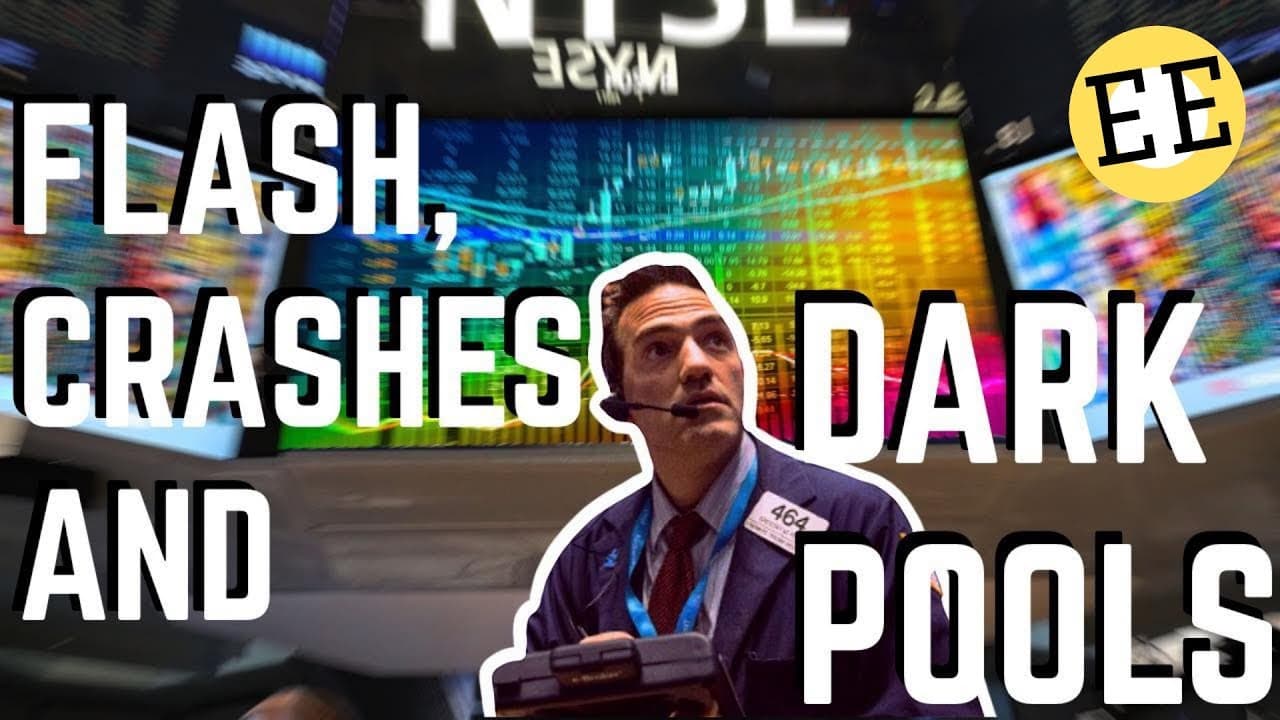
High-frequency trading uses algorithms for rapid market transactions, raising concerns about market stability.
Transcript
this is the New York Stock Exchange the largest and most liquid securities market in the world here is where a good portion of the world's largest companies have their stocks traded amongst millions of investors worldwide ranging from small individual investors to major banks and financial institutions and even entire countries through things like ... Read More
Key Insights
- High-frequency trading (HFT) involves algorithms executing trades at lightning speed, often outperforming human traders in efficiency and profit margins.
- HFT algorithms process vast amounts of data, including news articles and social media posts, to make rapid trading decisions based on sentiment analysis.
- The development of HFT has led to an arms race for speed, with firms investing heavily in infrastructure to gain milliseconds of advantage over competitors.
- Flash crashes, caused by algorithmic feedback loops, reveal the vulnerabilities in markets dominated by HFT, raising concerns about market stability.
- Some HFT strategies, like spoofing and quote stuffing, have been banned due to their manipulative nature, yet firms continuously develop new tactics.
- Dark pools, like Robin Hood, allow trades to occur off major exchanges, providing fertile ground for HFT firms to exploit less regulated environments.
- HFT poses ethical and regulatory challenges, as it can undermine the foundational purpose of stock exchanges, which is to raise capital for productive use.
- Despite regulatory efforts, HFT remains a significant force in financial markets, with ongoing debates about its impact on market fairness and efficiency.
Install to Summarize YouTube Videos and Get Transcripts
Explore YouTube Video Summarizer or Get YouTube Transcript Extractor
Questions & Answers
Q: What is high-frequency trading and how does it work?
High-frequency trading (HFT) involves the use of complex algorithms to execute trades at extremely high speeds, often within microseconds. These algorithms analyze large volumes of market data, including news and social media posts, to make rapid trading decisions. HFT aims to capitalize on small price discrepancies and market inefficiencies, often outperforming human traders in speed and efficiency.
Q: What are the risks associated with high-frequency trading?
High-frequency trading poses several risks, including market instability and flash crashes. Algorithms can create feedback loops that lead to sudden and drastic market movements. Additionally, HFT can undermine market fairness, as it allows firms with advanced technology to gain an advantage over regular investors. Regulatory challenges also arise, as new HFT strategies continuously evolve.
Q: How do high-frequency trading algorithms analyze data?
HFT algorithms analyze data by scanning news articles, financial reports, and social media posts for sentiment indicators. They assign positive or negative values to words like 'growth' or 'fraud' and make trading decisions based on the overall sentiment of the information. This allows them to react to market-relevant news faster than human traders, often executing trades in milliseconds.
Q: What is a flash crash and how is it related to high-frequency trading?
A flash crash is a sudden and severe drop in market prices, often caused by algorithmic trading errors or feedback loops. In the context of high-frequency trading, flash crashes can occur when multiple algorithms interact in unforeseen ways, leading to rapid sell-offs. These events highlight the vulnerabilities in markets dominated by automated trading and raise concerns about market stability.
Q: What are dark pools and how do they relate to high-frequency trading?
Dark pools are private exchanges where trades are executed away from public markets. They allow for large transactions to occur without affecting market prices. In the context of high-frequency trading, dark pools provide a less regulated environment where HFT firms can exploit opportunities. Platforms like Robin Hood operate as dark pools, facilitating trades internally and allowing HFT firms to engage in strategies that may not be feasible on public exchanges.
Q: Why is high-frequency trading controversial?
High-frequency trading is controversial due to its potential to destabilize markets and create unfair advantages. While it can improve liquidity and reduce spreads, it also raises ethical and regulatory concerns. HFT allows firms with advanced technology to gain an edge over regular investors, and its role in events like flash crashes has led to debates about its impact on market integrity and fairness.
Q: How have regulations addressed high-frequency trading?
Regulations have aimed to curb manipulative HFT strategies, such as spoofing and quote stuffing, by banning them in many markets. Exchanges have also implemented measures like minimum latency restrictions to level the playing field. However, the rapid evolution of HFT strategies poses ongoing challenges for regulators, who must continuously adapt to new tactics and technologies.
Q: What is the future of high-frequency trading?
The future of high-frequency trading is likely to involve continued innovation and regulatory scrutiny. As technology advances, HFT strategies will evolve, potentially leading to new market dynamics. Regulators will need to keep pace with these changes to ensure market integrity and fairness. Ongoing debates about the role of HFT in financial markets will shape its development and impact in the coming years.
Summary & Key Takeaways
-
High-frequency trading (HFT) uses sophisticated algorithms to execute trades at unprecedented speeds, often outperforming human traders. These algorithms analyze vast amounts of data, including news and social media, to make rapid trading decisions based on sentiment analysis, raising concerns about market stability and fairness.
-
HFT has led to a technological arms race, with firms investing heavily in infrastructure to gain milliseconds of advantage. This has resulted in phenomena like flash crashes, where algorithmic feedback loops can cause sudden market drops, highlighting vulnerabilities in markets dominated by automated trading.
-
Some HFT strategies, such as spoofing, have been banned for their manipulative nature, yet new tactics continue to emerge. Dark pools like Robin Hood provide less regulated environments where HFT firms can exploit opportunities, posing ethical and regulatory challenges to market fairness and efficiency.
Read in Other Languages (beta)
Share This Summary 📚
Summarize YouTube Videos and Get Video Transcripts with 1-Click
Try YouTube Summary with ChatGPT & Claude or YouTube Transcript Generator
Explore More Summaries from Economics Explained 📚





Summarize YouTube Videos and Get Video Transcripts with 1-Click
Try YouTube Summary with ChatGPT & Claude or YouTube Transcript Generator