Parabolic Mirrors - Numberphile
TL;DR
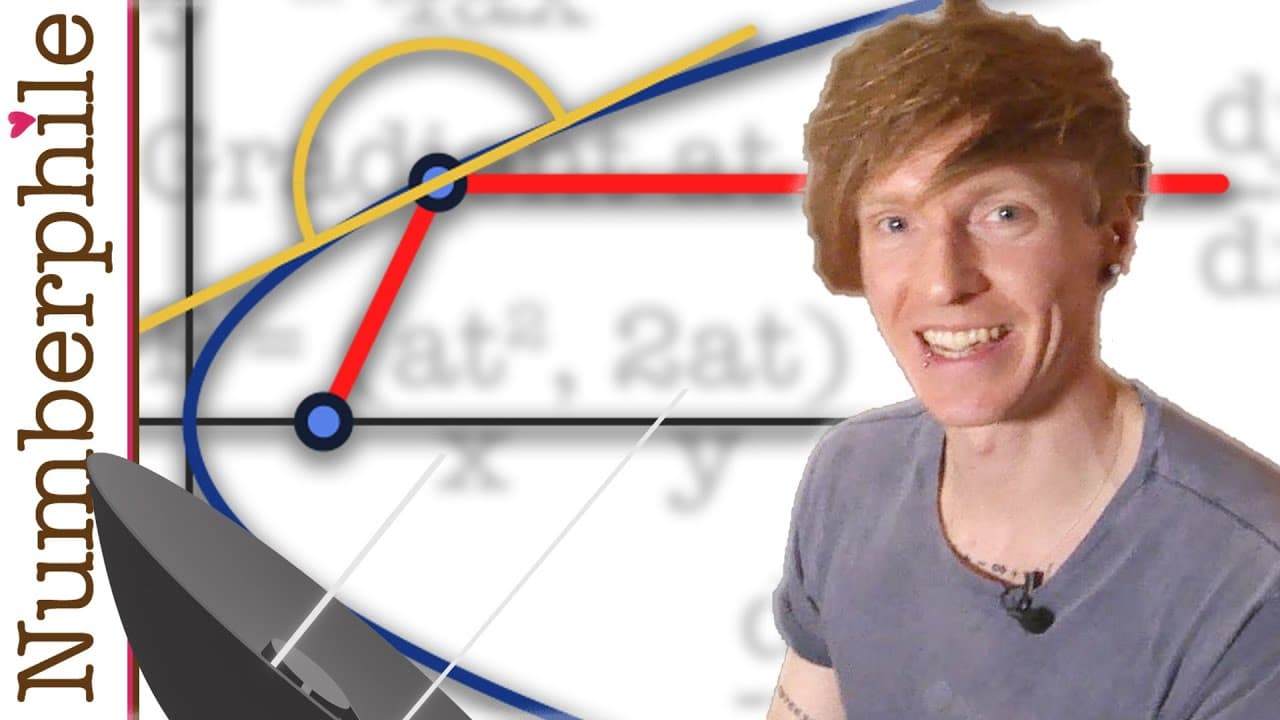
Parabolic mirrors use a parabola shape to focus signals, used in various applications for signal amplification and concentration.
Transcript
Parabolic mirrors. So this is a particular shape - parabola shape - and these are used to focus signals. So they can be used in satellite dishes, that's why they have this shape, it's a parabola. You can use them in listening devices, to focus a weak sound signal - it's used in espionage; and then amplify the signal that you're getting. It'... Read More
Key Insights
- 🪩 Parabolic mirrors utilize a parabola shape to focus signals and amplify their intensity.
- 🪩 The mathematical principles behind parabolic mirrors involve geometry and vectors to explain their focusing behavior.
- 🪩 Horizontal beams hitting parabolic mirrors always bounce to a central point due to the reflection properties of the mirror.
- 🪩 Parabolic mirrors are used in various applications like telescopes and listening devices for signal concentration.
- 👮 Geometry and physics laws govern the reflection behavior of parabolic mirrors, ensuring signals are focused effectively.
- 📡 The parabolic shape of mirrors allows for maximum signal amplification by concentrating signals onto a single point.
- 🙂 Signals like light or sound are enhanced through the use of parabolic mirrors, showcasing their practical applications.
Install to Summarize YouTube Videos and Get Transcripts
Explore YouTube Video Summarizer or Get YouTube Transcript Extractor
Questions & Answers
Q: How do parabolic mirrors work to focus signals?
Parabolic mirrors use a specific parabola shape to concentrate signals like light or sound onto a single point, enhancing their intensity and effectiveness.
Q: What is the significance of the parabola shape in signal amplification?
The parabolic shape of mirrors allows for signals to be reflected and concentrated, ensuring that horizontal beams converge at a focal point for maximum amplification.
Q: What role do geometry and vectors play in understanding parabolic mirrors?
Geometry and vectors are essential tools to mathematically demonstrate how horizontal beams hitting parabolic mirrors always reflect to a central point, showcasing the focusing behavior of these mirrors.
Q: How are parabolic mirrors utilized in applications such as telescopes or listening devices?
Parabolic mirrors are used in telescopes to focus light from distant stars into a single point for amplification, while in listening devices, they concentrate weak sound signals for better reception.
Summary & Key Takeaways
-
Parabolic mirrors utilize a parabola shape to focus signals such as light or sound, amplifying them for various applications.
-
The mathematics behind parabolic mirrors involve geometry and vectors to explain how signals are focused onto a single point.
-
Horizontal beams hitting parabolic mirrors always bounce to a central point, showcasing the reflection principles behind their functionality.
Read in Other Languages (beta)
Share This Summary 📚
Summarize YouTube Videos and Get Video Transcripts with 1-Click
Try YouTube Summary with ChatGPT & Claude or YouTube Transcript Generator
Explore More Summaries from Numberphile 📚


Summarize YouTube Videos and Get Video Transcripts with 1-Click
Try YouTube Summary with ChatGPT & Claude or YouTube Transcript Generator