Adjusting Training After A Deep Core Injury
TL;DR
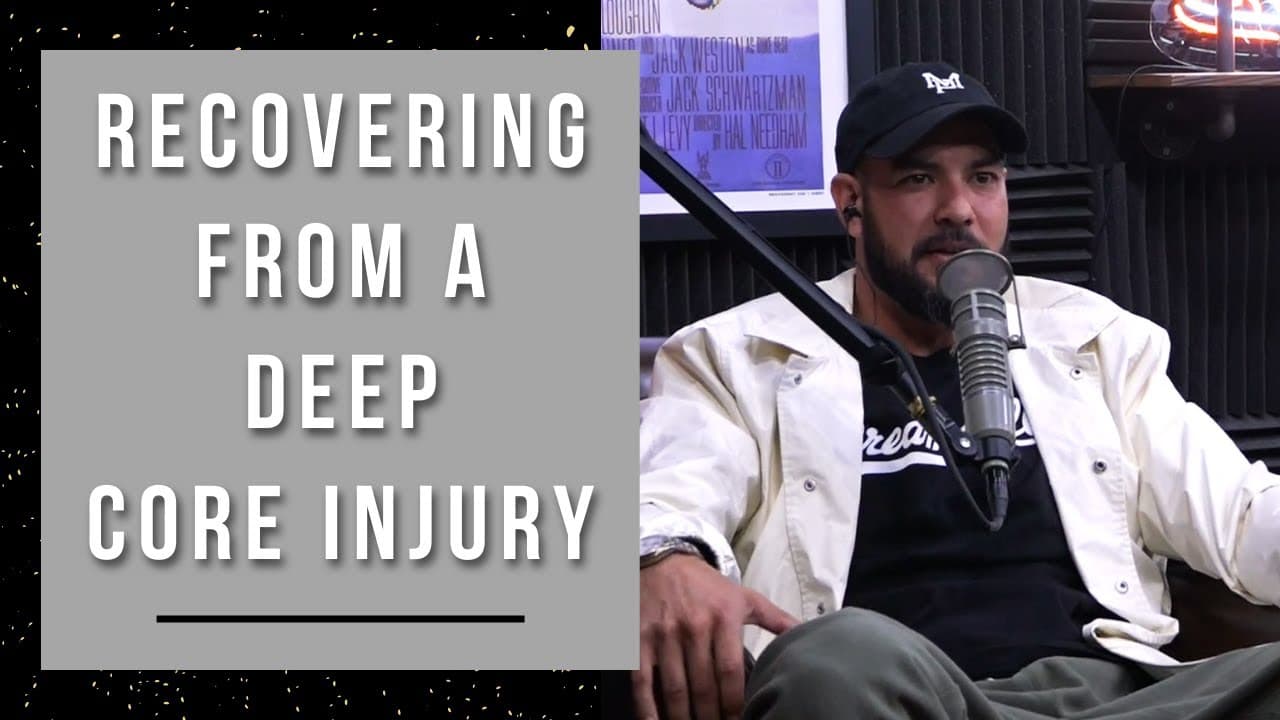
Musician Zach seeks advice on recovering from a core injury.
Transcript
our next caller is zach from new jersey hey what's up zack how can we help you hey guys um wow this is amazing i can't believe i'm talking to you but um i'm calling today because i unfortunately suffered an injury about a month ago and i'm gonna walk you through exactly what happened uh on the day of my injury but before that i feel like i should e... Read More
Key Insights
- Zach, a professional bassoonist, strained a core muscle during weightlifting, affecting his ability to play the instrument.
- The injury likely involves a deeper core muscle rather than a superficial abdominal strain, requiring specific recovery strategies.
- Avoiding the use of a weight belt during lifting is beneficial for musicians like Zach who need to brace their core differently.
- Rest and light core exercises, such as pelvic tilts and quadruped movements, are recommended for recovery.
- Exercise programming should consider the demands of a musician's profession, avoiding excessive core fatigue on practice days.
- Improper exercise order, like combining deadlifts, rows, and kettlebell swings, can increase injury risk due to core muscle fatigue.
- Musicians require significant muscle control and breath work, highlighting the need for tailored fitness programs.
- Following structured fitness programs, like MAPS Performance, can help prevent injuries by ensuring proper exercise sequencing.
Install to Summarize YouTube Videos and Get Transcripts
Explore YouTube Video Summarizer or Get YouTube Transcript Extractor
Questions & Answers
Q: What caused Zach's core injury?
Zach's core injury was likely caused by a combination of heavy deadlifting, barbell rows, and kettlebell swings, all of which fatigued his core muscles. This fatigue was exacerbated when he practiced the bassoon, an instrument that requires significant core engagement, leading to a strain in his deeper core muscles.
Q: Why is a weight belt not recommended for Zach?
A weight belt is not recommended for Zach because it encourages a muscle recruitment pattern that involves pushing out against the belt. This is contrary to the core bracing technique required for playing the bassoon, where core stability is maintained without outward pressure. Using a belt could disrupt his ability to play effectively.
Q: What exercises are suggested for Zach's recovery?
For recovery, Zach is advised to perform light core exercises such as pelvic tilts, quadruped movements, and counter-rotation exercises with resistance bands. These exercises aim to engage the core muscles gently, promoting healing without overexertion. It's important for Zach to test these movements to ensure they don't exacerbate his injury.
Q: How should Zach adjust his training program?
Zach should adjust his training program by avoiding exercises that heavily fatigue his core on days he practices the bassoon. He should follow structured programs like MAPS Performance, which emphasize proper exercise sequencing and avoid combining movements that heavily tax the core, such as deadlifts and kettlebell swings in the same session.
Q: What role does exercise order play in preventing injuries?
Exercise order is crucial in preventing injuries as it determines the sequence in which muscles are fatigued. Proper sequencing ensures that no muscle group is excessively taxed before engaging in demanding movements, reducing the risk of strains. For Zach, improper sequencing led to core fatigue and subsequent injury.
Q: Why is core strength important for musicians like Zach?
Core strength is vital for musicians like Zach because playing instruments such as the bassoon requires significant breath control and stability. A strong core supports these functions, allowing musicians to maintain posture and produce sound effectively. Weakness or injury in the core can impede their ability to perform.
Q: What are the benefits of following a program like MAPS Performance?
Following a program like MAPS Performance provides a structured approach to fitness, ensuring exercises are ordered to minimize injury risk. It offers tailored training that considers individual needs, such as Zach's requirement for core stability, and provides guidance on exercise intensity and recovery, promoting overall fitness and injury prevention.
Q: How can musicians balance fitness and practice demands?
Musicians can balance fitness and practice demands by scheduling workouts that complement their practice routine, avoiding excessive fatigue on days they need to perform. This involves selecting exercises that enhance their performance capabilities without compromising their ability to play, ensuring both fitness and musical proficiency are maintained.
Summary & Key Takeaways
-
Zach, a professional bassoonist, suffered a core muscle strain after a heavy lifting session. The injury affects his ability to play the bassoon, which requires significant core engagement.
-
The Mind Pump hosts suggest that Zach's injury likely involves a deeper core muscle rather than a simple abdominal strain, recommending rest and specific core exercises for recovery.
-
They emphasize the importance of exercise programming and sequencing, advising Zach to avoid excessive core fatigue on days he practices the bassoon and to follow structured fitness programs like MAPS Performance.
Read in Other Languages (beta)
Share This Summary 📚
Summarize YouTube Videos and Get Video Transcripts with 1-Click
Try YouTube Summary with ChatGPT & Claude or YouTube Transcript Generator
Explore More Summaries from Mind Pump Show 📚



Summarize YouTube Videos and Get Video Transcripts with 1-Click
Try YouTube Summary with ChatGPT & Claude or YouTube Transcript Generator