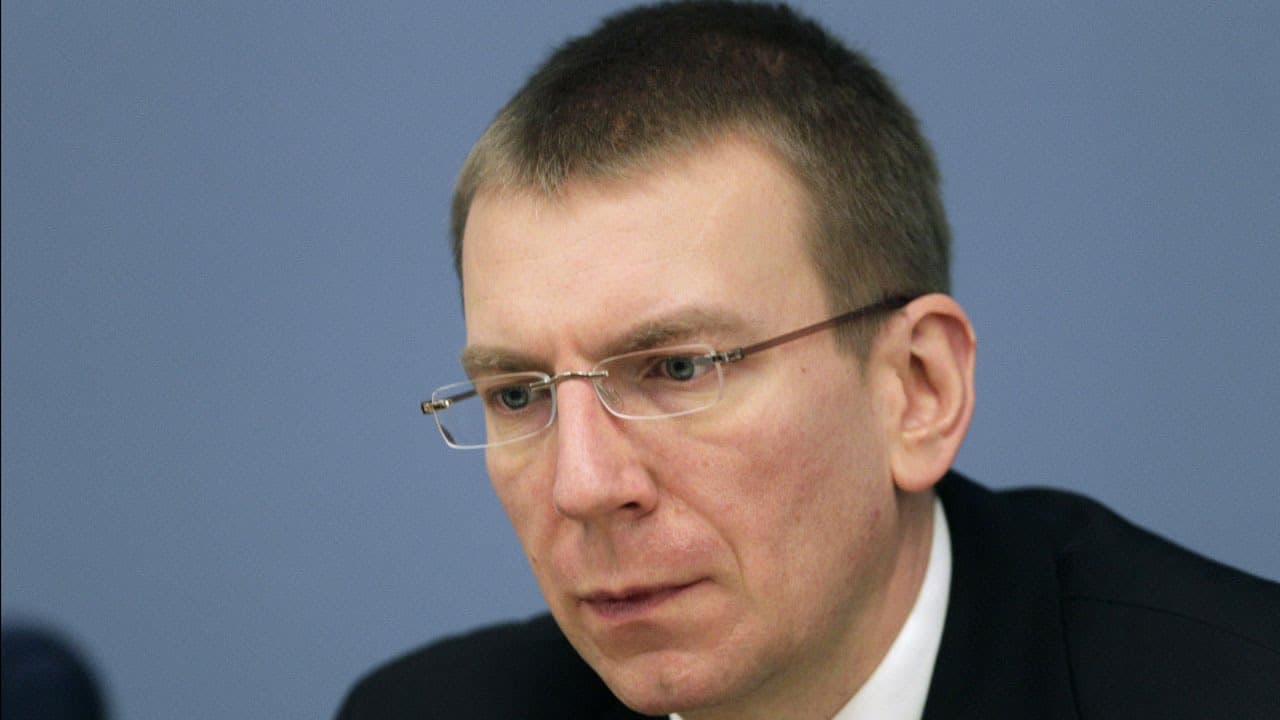
A Conversation With Edgars Rinkēvičs
TL;DR
European security dynamics have shifted post-Crimea with a focus on NATO deterrence.
Transcript
SESTANOVICH: Mr. Minister, welcome to the Council on Foreign Relations. Thank you very much for joining us. I think the obvious place for us to begin is with a look at European security issues. In the past couple of years, the European security environment and discussion of security questions by European governments I think have fundamentally chang... Read More
Key Insights
- The European security landscape has fundamentally changed since the annexation of Crimea, with NATO refocusing on core defense responsibilities.
- NATO's reassurance measures, including troop deployments in Eastern Europe, are deemed necessary but insufficient for credible deterrence by Baltic states.
- Latvia, among other Baltic states, advocates for a long-term increased NATO presence to ensure regional stability and deterrence.
- Engagement with Russia is necessary on principled terms, balancing deterrence with dialogue on issues like Ukraine and military communications.
- The unity of the European Union in response to Russian actions in Ukraine has been stronger than anticipated, maintaining sanctions and a cohesive foreign policy.
- Internal EU challenges, such as the economic divide and the migration crisis, pose significant risks to its cohesion and future stability.
- Latvia is addressing economic challenges, including tax collection and money laundering, while aiming to integrate its Russian-speaking minority.
- Energy security, particularly in diversifying gas supplies and breaking Gazprom's monopoly, is a critical focus for Latvia and the EU.
Install to Summarize YouTube Videos and Get Transcripts
Explore YouTube Video Summarizer or Get YouTube Transcript Extractor
Questions & Answers
Q: What are the key changes in European security post-Crimea?
The annexation of Crimea by Russia has significantly altered the European security landscape, prompting a shift in NATO's focus back to its core defense responsibilities. This includes increased military spending, troop deployments, and equipment placement in Eastern Europe to counter potential Russian aggression. The Baltic states, in particular, advocate for a more robust NATO presence to ensure credible deterrence and regional stability.
Q: How does Latvia view its relationship with Russia?
Latvia views its relationship with Russia as complex, requiring a balance between deterrence and dialogue. While advocating for strong NATO measures to ensure security, Latvia also recognizes the need for principled engagement with Russia on issues like Ukraine and military communications. The goal is to prevent further aggression while maintaining open channels for necessary dialogue on mutual concerns.
Q: What are the internal challenges facing the European Union?
The European Union is grappling with significant internal challenges, including economic disparities between the north and south, and differing approaches to migration between the east and west. The potential impact of Brexit adds another layer of complexity, threatening the EU's cohesion and stability. These issues require careful management to prevent further fragmentation and ensure the EU's future success.
Q: How is Latvia addressing its economic challenges?
Latvia is actively working to improve its economic performance by addressing issues like tax collection and money laundering. The government is implementing measures to enhance tax administration and impose penalties on financial institutions involved in illicit activities. Additionally, Latvia is focused on integrating its Russian-speaking minority and improving its overall economic environment to foster growth and stability.
Q: What steps is Latvia taking to enhance energy security?
Latvia is taking significant steps to enhance its energy security by diversifying its gas supplies and breaking Gazprom's monopoly. This includes legal reforms to unbundle supply and infrastructure, as well as developing interconnectors with neighboring countries. Latvia is also advocating for a comprehensive energy policy within the EU to ensure a stable and diversified energy supply, reducing dependency on a single source.
Q: How does Latvia perceive the EU's response to Russian actions in Ukraine?
Latvia perceives the EU's response to Russian actions in Ukraine as surprisingly unified and strong. Despite initial skepticism, the EU has maintained a cohesive foreign policy, including sanctions against Russia. This unity has been crucial in sending a clear message to Russia and reinforcing the EU's commitment to upholding international law and supporting Ukraine's sovereignty.
Q: What are the implications of NATO's increased presence in Eastern Europe?
NATO's increased presence in Eastern Europe, including troop deployments and equipment placement, is intended to reassure member states and deter potential Russian aggression. However, Latvia and other Baltic states believe that current measures are insufficient for credible deterrence. They advocate for a long-term, increased presence to ensure stability and send a strong message of commitment to regional security.
Q: What role does energy play in Latvia's national security strategy?
Energy plays a crucial role in Latvia's national security strategy, particularly in reducing dependency on Russian gas. By diversifying its energy sources and developing infrastructure for alternative supplies, Latvia aims to enhance its energy security and reduce potential vulnerabilities. This strategy is part of a broader EU effort to create an integrated energy market, ensuring stable and diversified energy access for member states.
Summary & Key Takeaways
-
Edgars Rinkēvičs discusses the evolving European security environment post-Crimea, highlighting NATO's shift back to its core defense responsibilities. He emphasizes the need for increased NATO presence in Eastern Europe to ensure credible deterrence against potential Russian aggression.
-
Rinkēvičs addresses Latvia's relationship with Russia, advocating for a balanced approach that combines strong deterrence measures with dialogue on issues like Ukraine. He stresses the importance of maintaining EU unity in response to Russian actions and the need for principled engagement.
-
The discussion touches on internal EU challenges such as economic disparities, migration, and the potential impact of Brexit. Rinkēvičs also highlights Latvia's efforts to improve economic performance, address money laundering, integrate its Russian-speaking minority, and enhance energy security through diversification.
Read in Other Languages (beta)
Share This Summary 📚
Summarize YouTube Videos and Get Video Transcripts with 1-Click
Try YouTube Summary with ChatGPT & Claude or YouTube Transcript Generator
Explore More Summaries from Council on Foreign Relations 📚
Summarize YouTube Videos and Get Video Transcripts with 1-Click
Try YouTube Summary with ChatGPT & Claude or YouTube Transcript Generator