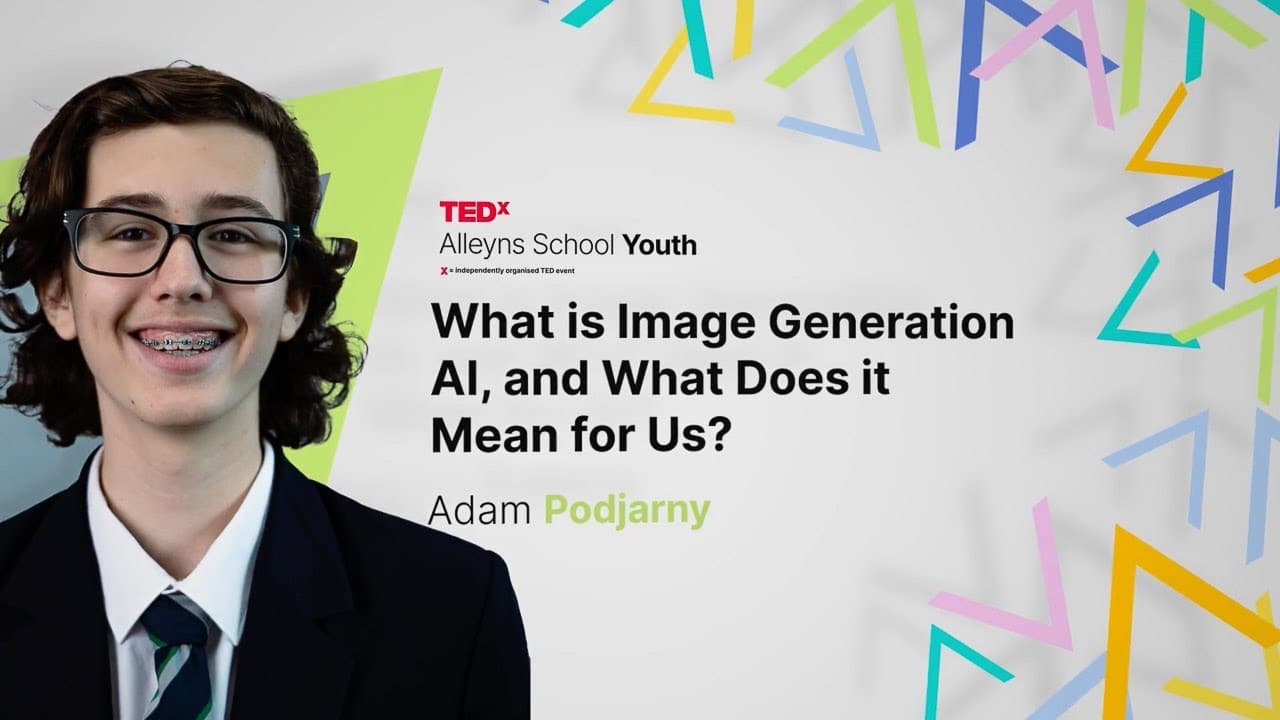
What is image generation AI and what does it mean for us? | Adam Podjarny | TEDxAlleyns School Youth
TL;DR
AI can create realistic art but comes with biases, deepfake risks, and potential harm to human artists.
Transcript
Transcriber: Rahaf Abu Sieni Reviewer: Zsuzsa Viola Which one of these two paintings do you think was made by an AI? A soulless, emotionless computer. Take a moment to really, really think about it. Just with a show of hands. Who thinks it’s this one on the left of the lady in red? Who thinks that one’s the fake? Okay. A lot of you. Who thinks it’s... Read More
Key Insights
- 🥰 AI art generation utilizes generative adversarial networks and diffusion models to create images from text prompts.
- 🥰 Biases in AI can lead to underrepresentation of minority groups in generated art.
- ✳️ Deepfakes created by AI pose risks to personal privacy and can spread disinformation.
- 🧑🎨 AI-generated art may impact human artists' careers by providing quick and cheap alternatives.
- 🥰 Ethical considerations are crucial in the use of AI in art to prevent harm and ensure responsible practices.
- 🥰 AI art, while impressive, may not possess the depth and emotional complexity of human-created art.
- 🥰 Historical parallels show that new technologies in art eventually become accepted and integrated into artistic practice.
Install to Summarize YouTube Videos and Get Transcripts
Explore YouTube Video Summarizer or Get YouTube Transcript Extractor
Questions & Answers
Q: How do generative adversarial networks work in AI art generation?
Generative adversarial networks consist of two algorithms where one generates an image while the other determines if it's real or fake, improving the final image's quality through feedback loops.
Q: What are the potential dangers of AI-generated art?
AI-generated art can perpetuate biases, create convincing deepfakes, and potentially replace human artists, impacting diversity in media representation and artists' careers.
Q: How can AI-generated art affect personal privacy?
AI-generated deepfakes can spread disinformation and compromise personal privacy by placing individuals in incriminating or explicit settings without their consent.
Q: How do experts view the future impact of AI on human artists?
Experts predict that AI will significantly affect human artists, potentially diminishing demand for their work and threatening freelancers' livelihoods as AI-generated art becomes more mainstream.
Summary & Key Takeaways
-
AI can generate artwork from text prompts through generative adversarial networks and diffusion models.
-
Advantages include instant visualization, but biases in AI can lead to underrepresentation of minority groups.
-
Deepfakes and AI-generated art raise ethical concerns and threaten the livelihood of human artists.
Read in Other Languages (beta)
Share This Summary 📚
Summarize YouTube Videos and Get Video Transcripts with 1-Click
Try YouTube Summary with ChatGPT & Claude or YouTube Transcript Generator
Explore More Summaries from TEDx Talks 📚

Summarize YouTube Videos and Get Video Transcripts with 1-Click
Try YouTube Summary with ChatGPT & Claude or YouTube Transcript Generator