How Does Game Theory Affect Economic Decisions?
TL;DR
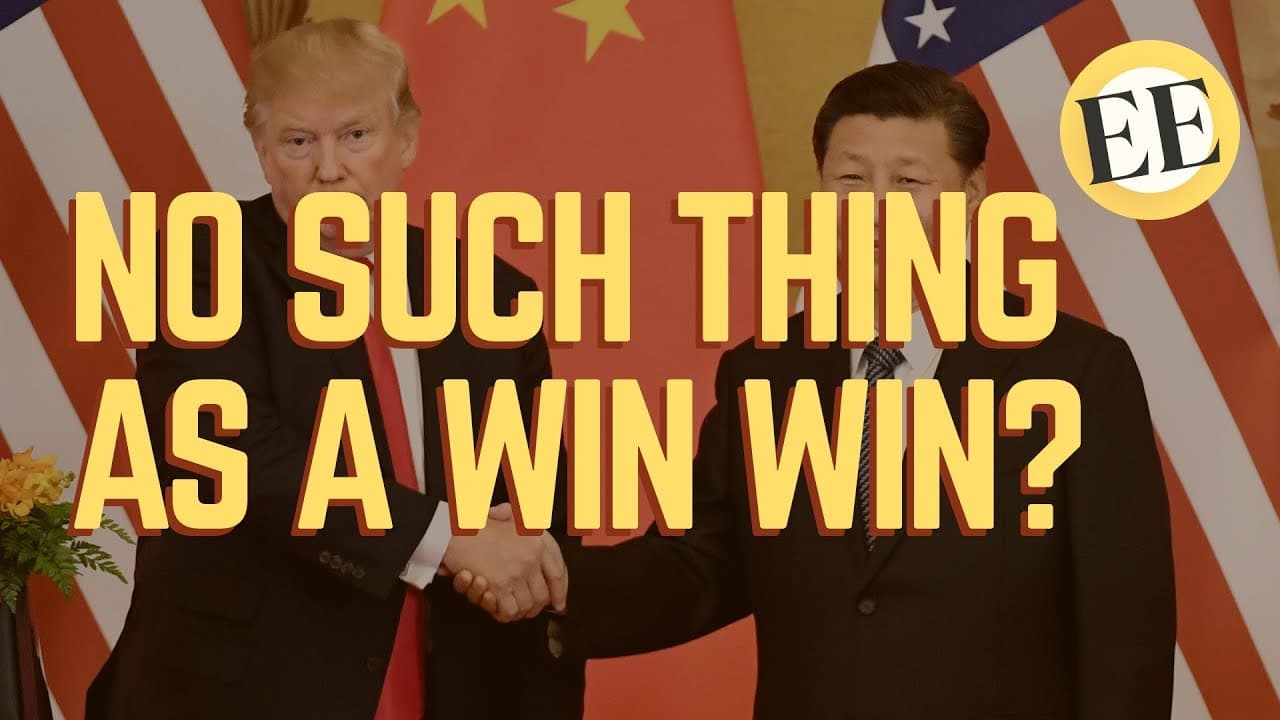
Game theory offers insights into decision-making processes by modeling competitive and cooperative scenarios. While competitive game theory often highlights rivalry, cooperative game theory emphasizes collaboration, crucial for trade agreements and economic unions. Understanding game theory helps in recognizing that economic decisions often aim for self-interest, though real-world applications may differ due to complexities and regulations.
Transcript
economics is an academic pursuit holds human nature in pretty high regard if Noack theory is based around the idea that people always make rational economic decisions and act in rational way to better their self-interest we always buy the most competitive option we always know what the best price is we work in fields that deliver us the most fiscal... Read More
Key Insights
- Game theory is a framework for analyzing decision-making between parties, applicable beyond economics.
- Competitive game theory focuses on strategies to outperform competitors, often using examples like the prisoner's dilemma.
- Cooperative game theory emphasizes collaboration, crucial for modern economic unions and trade agreements.
- The Nash equilibrium is a key concept in game theory, representing a stable state where no player benefits from changing strategies unilaterally.
- Real-world applications of game theory often differ due to complexities like consumer behavior and legal regulations.
- Trade agreements like NAFTA illustrate cooperative game theory, balancing contributions and benefits among participants.
- Competitive pricing strategies can be risky, as overly aggressive tactics may lead to legal challenges or market instability.
- Understanding game theory can aid in recognizing the self-interest-driven nature of economic decisions, despite theoretical models.
Install to Summarize YouTube Videos and Get Transcripts
Explore YouTube Video Summarizer or Get YouTube Transcript Extractor
Questions & Answers
Q: How does game theory apply to economics?
Game theory applies to economics by providing a framework to analyze decision-making processes between entities. It models interactions in competitive and cooperative contexts, helping economists understand strategies that maximize benefits. Concepts like the Nash equilibrium illustrate stable outcomes where no party benefits from unilateral changes, aiding in the analysis of market behavior and trade negotiations.
Q: What is the prisoner's dilemma in game theory?
The prisoner's dilemma is a classic example in game theory illustrating the conflict between individual rationality and collective benefit. Two prisoners must decide whether to betray each other or remain silent. While mutual silence leads to a better collective outcome, rational self-interest drives each to betray, resulting in worse outcomes for both, highlighting the challenges of competitive decision-making.
Q: What is the Nash equilibrium?
The Nash equilibrium is a concept in game theory where no player can benefit by changing their strategy while others keep theirs unchanged. It represents a stable state of mutual best responses, often used to predict outcomes in strategic interactions. This equilibrium helps in understanding how rational players might behave in competitive or cooperative scenarios, balancing self-interest with group dynamics.
Q: How does cooperative game theory differ from competitive game theory?
Cooperative game theory focuses on collaboration and mutual benefit, essential for forming alliances like trade agreements and economic unions. It emphasizes negotiation and shared gains, contrasting with competitive game theory, which analyzes strategies to outperform rivals. Cooperative game theory is crucial for understanding how entities work together to achieve collective goals, balancing inputs and benefits among participants.
Q: Why might competitive pricing strategies be risky?
Competitive pricing strategies can be risky due to potential legal challenges and market instability. Aggressive tactics, like undercutting competitors, may lead to accusations of anti-competitive behavior, attracting regulatory scrutiny. Additionally, such strategies can erode profit margins and provoke price wars, destabilizing markets and harming long-term business sustainability, making strategic pricing decisions critical.
Q: How is game theory relevant to trade agreements?
Game theory is relevant to trade agreements as it models the negotiation and cooperation between countries. Cooperative game theory helps in balancing contributions and benefits, ensuring fair trade terms. By analyzing strategic interactions, game theory aids in forming agreements that maximize mutual economic prosperity, as seen in examples like NAFTA, where countries collaborate for shared growth.
Q: What role does consumer behavior play in game theory applications?
Consumer behavior plays a significant role in game theory applications by influencing market dynamics and decision-making processes. Real-world scenarios often diverge from theoretical models due to consumer preferences, perceived value, and purchasing habits. Understanding these behaviors helps refine game theory models, ensuring they accurately reflect market conditions and guide strategic business decisions.
Q: How does game theory explain self-interest in economic decisions?
Game theory explains self-interest in economic decisions by modeling how entities prioritize their own benefits in strategic interactions. It assumes rational actors seek to maximize personal gains, often leading to outcomes that reflect individual rather than collective interests. This perspective helps analyze market behavior, highlighting the tension between personal incentives and broader economic cooperation.
Summary & Key Takeaways
-
Game theory provides a framework for understanding decision-making in both competitive and cooperative contexts. Competitive game theory often uses the prisoner's dilemma to illustrate strategic choices, while cooperative game theory is essential for forming trade agreements. Despite its theoretical nature, game theory's insights into rational decision-making are relevant for real-world economic interactions.
-
The Nash equilibrium is a central concept in game theory, representing a stable outcome where no player benefits from changing strategies independently. However, real-world scenarios often diverge from theoretical models due to factors like consumer behavior and anti-competitive regulations, highlighting the complexity of applying game theory in practice.
-
Cooperative game theory plays a significant role in economic unions and trade deals, where countries negotiate to maximize mutual benefits. Examples like NAFTA demonstrate how contributions and benefits are balanced among participants, emphasizing the importance of collaboration in achieving economic prosperity.
Read in Other Languages (beta)
Share This Summary 📚
Summarize YouTube Videos and Get Video Transcripts with 1-Click
Try YouTube Summary with ChatGPT & Claude or YouTube Transcript Generator
Explore More Summaries from Economics Explained 📚




Summarize YouTube Videos and Get Video Transcripts with 1-Click
Try YouTube Summary with ChatGPT & Claude or YouTube Transcript Generator