What Led to the Rwandan Genocide?
TL;DR
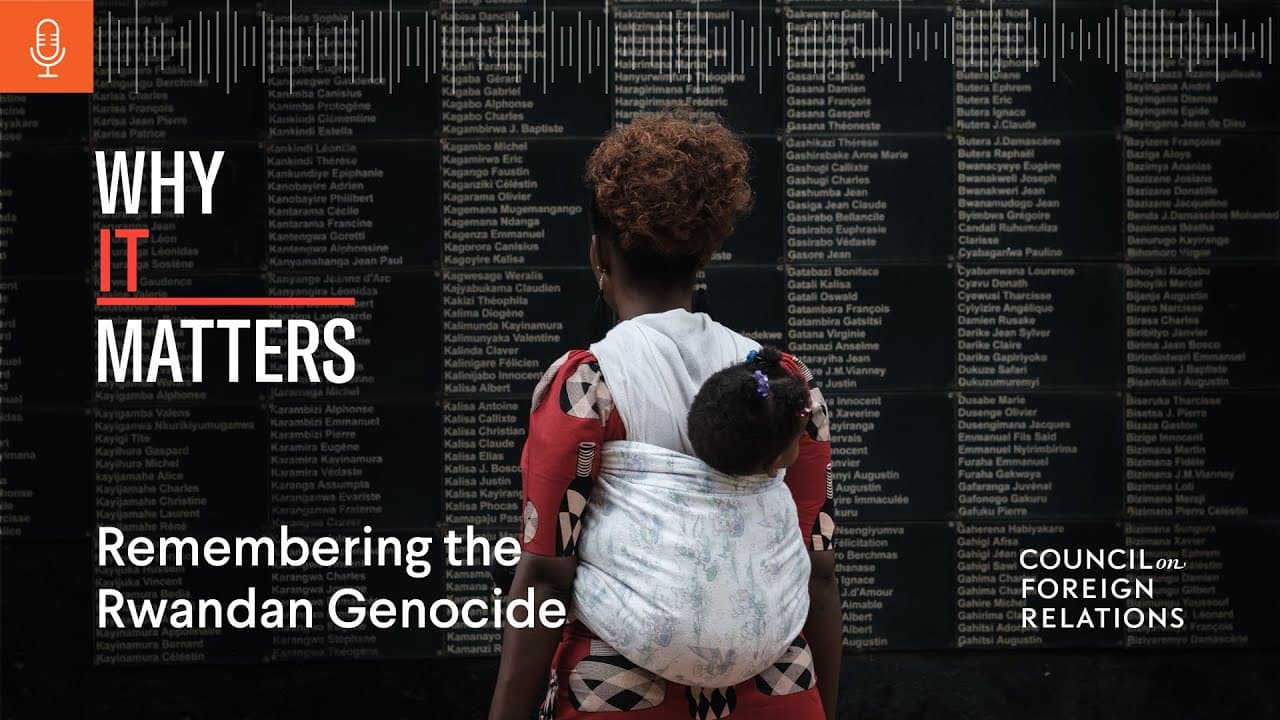
In 1994, Rwanda experienced a genocide where approximately 800,000 people, mostly Tutsis, were killed in 100 days. The genocide was fueled by ethnic tensions stoked by colonial history and exacerbated by propaganda from extremist Hutu leaders. The international community, including the United States, largely failed to intervene in time, highlighting the challenges of preventing mass atrocities.
Transcript
Claude GATEBUKE: I knew for sure that day was my last day. I was gonna die that day. While I was counting my minutes and my seconds, I wanted the world to know what is happening to us, that the whole truth will eventually come out of what really happened in this place. On the eve of April 1994, Rwanda was by far the most densely populated count... Read More
Key Insights
- Rwanda was the most densely populated country in sub-Saharan Africa before the genocide.
- The genocide resulted in the death of 800,000 people and the displacement of over 2 million.
- Ethnic tensions between Hutus and Tutsis were exacerbated by Belgian colonial policies.
- Radio Mille Collines incited violence by broadcasting propaganda against Tutsis.
- The genocide was marked by mass killings primarily carried out with machetes.
- International response was delayed due to political and logistical challenges.
- UN peacekeepers were not equipped to handle the violence and were limited to monitoring.
- The aftermath of the genocide left Rwanda with ongoing ethnic tensions and political challenges.
Install to Summarize YouTube Videos and Get Transcripts
Explore YouTube Video Summarizer or Get YouTube Transcript Extractor
Questions & Answers
Q: How did the Rwandan genocide start?
The Rwandan genocide began in April 1994 following the assassination of President Juvénal Habyarimana. This event triggered mass ethnic killings primarily targeting Tutsis. The genocide was fueled by long-standing ethnic tensions between Hutus and Tutsis, which were exacerbated by colonial history and propaganda from extremist Hutu leaders.
Q: What role did radio play in the Rwandan genocide?
Radio played a critical role in the Rwandan genocide by broadcasting propaganda that incited violence against Tutsis. Radio Mille Collines, in particular, was used by extremist Hutu leaders to dehumanize Tutsis and encourage ordinary Hutus to participate in the killings, referring to Tutsis as 'cockroaches' and urging their extermination.
Q: Why did the international community fail to intervene in Rwanda?
The international community failed to intervene in Rwanda due to a combination of geopolitical distractions, lack of clear information, and reluctance to label the events as genocide. Many countries, including the United States, were hesitant to commit resources to an African conflict, especially after the recent failure in Somalia, and there was a lack of consensus on how to respond.
Q: What were the immediate consequences of the Rwandan genocide?
The immediate consequences of the Rwandan genocide included the death of approximately 800,000 people, the displacement of over 2 million, and the destabilization of the region. The genocide left deep scars on Rwandan society, leading to ongoing ethnic tensions and a humanitarian crisis with refugees suffering from disease and lack of resources.
Q: How did the genocide affect Rwanda's political landscape?
The genocide significantly altered Rwanda's political landscape, leading to the rise of the Rwandan Patriotic Front (RPF) led by Paul Kagame, who ended the genocide and established a new government. However, Kagame's regime has been criticized for authoritarian practices, including silencing dissent and maintaining tight control over the country.
Q: What lessons can be learned from the Rwandan genocide?
The Rwandan genocide teaches the importance of early intervention in preventing mass atrocities. It highlights the need for the international community to respond swiftly to warning signs of genocide and to prioritize humanitarian intervention over political hesitation. It also underscores the dangers of ethnic propaganda and the long-term impact of colonial legacies.
Q: How has Rwanda changed since the genocide?
Since the genocide, Rwanda has experienced significant economic growth and stability under Paul Kagame's leadership. The country has become a major contributor to UN peacekeeping missions and is seen as a model for post-conflict recovery. However, political repression and unresolved ethnic tensions remain challenges for Rwanda's development.
Q: What is the current perception of Rwanda in the international community?
Rwanda is viewed as a key partner by many Western countries due to its stability and economic growth. However, there is also criticism of its authoritarian governance and human rights abuses. The international community's perception is influenced by both guilt over past inaction during the genocide and recognition of Rwanda's progress since then.
Summary & Key Takeaways
-
The Rwandan genocide in 1994 resulted in the death of approximately 800,000 people, primarily Tutsis, over a span of 100 days. Ethnic tensions, exacerbated by colonial history and incitement through radio propaganda, led to mass killings. The international community, including the United States, failed to intervene promptly, highlighting the complexities of preventing such atrocities.
-
The genocide involved widespread participation from ordinary Hutus, incited by extremist leaders, and was characterized by brutal violence using machetes. The lack of timely international intervention was partly due to geopolitical distractions and the absence of a clear legal determination of genocide at the time.
-
Post-genocide Rwanda remains under the leadership of Paul Kagame, who ended the genocide but faces criticism for authoritarian practices. The genocide's legacy continues to affect Rwanda's ethnic relations and international perceptions, serving as a cautionary tale about the consequences of inaction in the face of mass atrocities.
Read in Other Languages (beta)
Share This Summary 📚
Summarize YouTube Videos and Get Video Transcripts with 1-Click
Try YouTube Summary with ChatGPT & Claude or YouTube Transcript Generator
Explore More Summaries from Council on Foreign Relations 📚

Summarize YouTube Videos and Get Video Transcripts with 1-Click
Try YouTube Summary with ChatGPT & Claude or YouTube Transcript Generator