Taxonomy and the Tree of Life
TL;DR
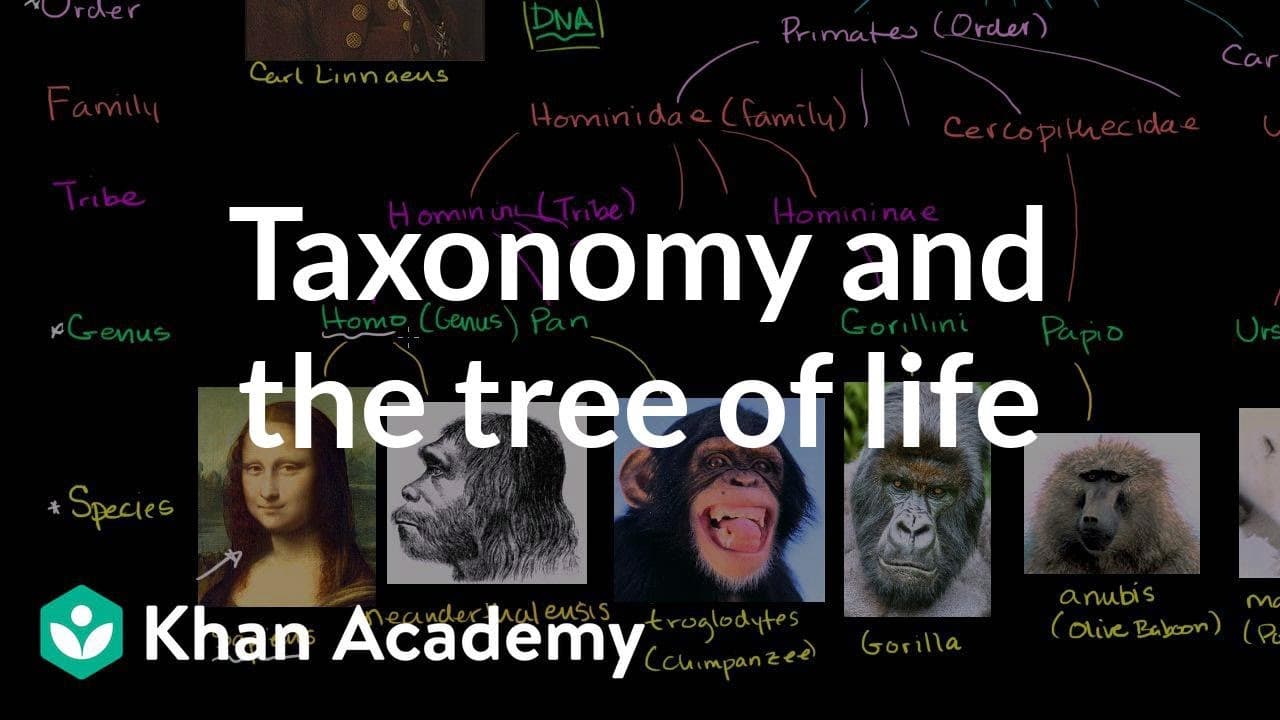
Carl Linnaeus is known as the father of modern taxonomy for his classification system, which organized living things into various categories.
Transcript
This right here is a picture of Carl Linnaeus, and I'm sure I'm mispronouncing the word. He's a Swedish gentleman who lived in the 1700s, and he's known as the father of modern taxonomy. And the word taxonomy, if you just split up into its original root, it really is the science of really classifying things. But when people talk about taxonomy-- an... Read More
Key Insights
- 👨 Carl Linnaeus is considered the father of modern taxonomy for his classification system.
- 👻 His hierarchical structure and tree of life allowed for a better understanding of the relationships between organisms.
- ❓ Modern taxonomy has advanced through the incorporation of evolution and genetic evidence.
- 🥰 Classification in taxonomy is both a science and an art, and there is ongoing debate on the best criteria for grouping organisms.
- 🌲 The study of taxonomy helps us understand our place in the broader tree of life and the commonalities we share with other living things.
- 🧬 Our understanding of taxonomy has advanced through the study of DNA and the ability to compare genetic similarities between species.
- 🌱 Taxonomy extends beyond animals and includes plants, bacteria, and other organisms.
Install to Summarize YouTube Videos and Get Transcripts
Explore YouTube Video Summarizer or Get YouTube Transcript Extractor
Questions & Answers
Q: Who is Carl Linnaeus and why is he important in the field of taxonomy?
Carl Linnaeus is a Swedish scientist known as the father of modern taxonomy. He revolutionized the classification of living things by organizing them into hierarchical categories based on their similarities and differences.
Q: What was Linnaeus' innovation in taxonomy?
Linnaeus's innovation was grouping similar species into genera, genera into orders, and creating a hierarchical structure known as the tree of life. This system allowed for a better understanding of the relationships between different organisms.
Q: How has taxonomy evolved since Linnaeus' time?
Taxonomy has evolved through advancements in our understanding of evolution and the availability of genetic evidence. This has allowed for a more precise classification of organisms and a better understanding of their relationships.
Q: What tools did Linnaeus have to classify organisms?
Linnaeus relied on his powers of observation to classify organisms. He looked for similarities and differences in their characteristics, such as fur, reproductive methods, and spinal columns.
Summary & Key Takeaways
-
Carl Linnaeus developed a classification system for living things based on their similarities and differences.
-
He grouped similar species into genera, genera into orders, and continued this hierarchy to create a tree of life.
-
Modern taxonomy has advanced with evolution and genetic evidence, allowing for more precise classifications.
Read in Other Languages (beta)
Share This Summary 📚
Summarize YouTube Videos and Get Video Transcripts with 1-Click
Try YouTube Summary with ChatGPT & Claude or YouTube Transcript Generator
Explore More Summaries from Khan Academy 📚



Summarize YouTube Videos and Get Video Transcripts with 1-Click
Try YouTube Summary with ChatGPT & Claude or YouTube Transcript Generator