We need to change how we bury the dead
TL;DR
Traditional burials are environmentally harmful and costly.
Transcript
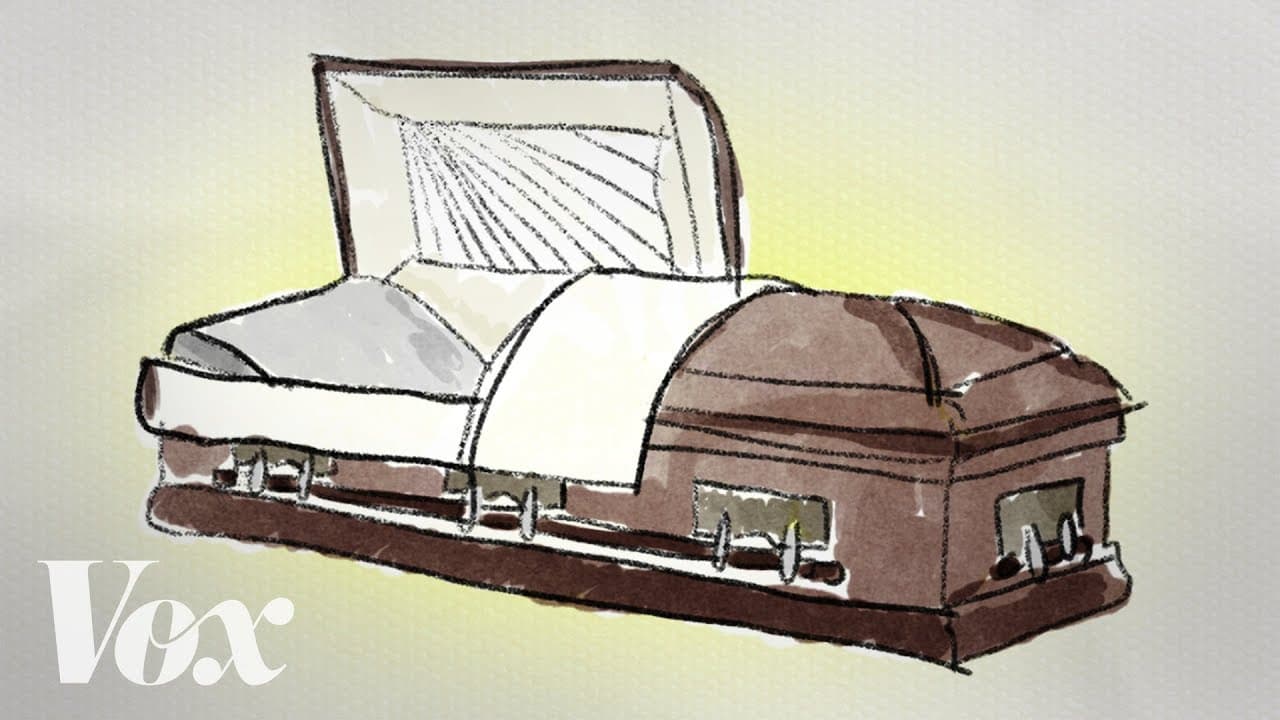
When I say “funeral” this is probably what you think of, right? The cemetery, the casket, the gorgeous floral arrangements. Vin Diesel stylishly going two buttons undone on the dress shirt. But what if I told you that other than Dominic Toretto’s effortless style, this was probably the worst way you could dispose of a body? This traditional casket ... Read More
Key Insights
- Modern burial practices are environmentally harmful, involving chemical embalming, metal caskets, and burial vaults, which consume resources and emit pollutants.
- The average cost of a traditional burial ranges from $10,000 to $12,000, with some families paying significantly more due to predatory industry practices.
- Cremation is a more affordable and space-efficient alternative, costing around $1,400, but it still has environmental drawbacks.
- Promession is an innovative method involving freezing and freeze-drying the body, though not yet approved for human use.
- Alkaline hydrolysis is an environmentally friendly option that dissolves the body using water and lye, leaving only bones after 12 hours.
- Natural burial involves placing unembalmed bodies in biodegradable containers, promoting natural decomposition and land preservation.
- With an aging population, the space required for traditional burials is unsustainable, necessitating a shift to greener practices.
- The funeral industry has faced legal challenges for price-fixing and selling unnecessary services to grieving families.
Install to Summarize YouTube Videos and Get Transcripts
Explore YouTube Video Summarizer or Get YouTube Transcript Extractor
Questions & Answers
Q: What are the environmental impacts of traditional burials?
Traditional burials involve chemical embalming, metal caskets, and burial vaults, which consume significant resources and emit pollutants. The embalming process uses formaldehyde, a known carcinogen, which can leach into the ground and pose health risks. Additionally, the space required for traditional graves is unsustainable as the population ages.
Q: How does the cost of cremation compare to traditional burials?
Cremation is significantly more affordable than traditional burials. While a typical burial can cost between $10,000 and $12,000, cremation costs around $1,400. This price difference makes cremation a more accessible option for many families, though it still has some environmental drawbacks.
Q: What is promession and how does it work?
Promession is an innovative burial method that involves freezing the body with liquid nitrogen and then rapidly vibrating it to break it into tiny particles. The remains are then freeze-dried, and harmful metals are removed. This process results in a fine dust similar to cremated remains, but it is not yet approved for human use.
Q: What are the benefits of alkaline hydrolysis?
Alkaline hydrolysis is an environmentally friendly burial method that uses water and lye to dissolve body tissues, leaving only bones after about 12 hours. It produces zero toxic emissions and has a much smaller carbon footprint compared to cremation. This method mimics natural decomposition and is a sustainable alternative to traditional practices.
Q: What is natural burial and why is it considered eco-friendly?
Natural burial involves placing unembalmed bodies in biodegradable containers or directly in the ground, allowing them to decompose naturally. This method is eco-friendly because it avoids the use of toxic chemicals and metal caskets, and it can help preserve and restore land and wildlife by promoting natural processes.
Q: Why is there a need to reform burial practices?
With an aging population and millions of people reaching life expectancy soon, the space required for traditional burials is unsustainable. Reforming burial practices to adopt more environmentally friendly methods is crucial to prevent excessive land use and reduce the environmental impact of current practices.
Q: What legal challenges has the funeral industry faced?
The funeral industry has faced legal challenges, including class action lawsuits for conspiring to fix casket prices at artificially high levels. The industry has also been criticized for engaging in predatory business practices, such as selling unnecessary services to grieving families, further increasing the cost of funerals.
Q: How does cremation impact the environment?
While cremation is more space-efficient and affordable than traditional burials, it still has environmental impacts. The process involves burning the body, which releases carbon emissions and other pollutants into the atmosphere. Although it uses fewer resources than traditional burials, it is not entirely eco-friendly.
Summary & Key Takeaways
-
Traditional burial practices are costly and environmentally damaging, involving chemical embalming and resource-intensive caskets. The funeral industry has been criticized for predatory pricing and unnecessary services. As the population ages, sustainable alternatives are necessary.
-
Cremation offers a cheaper and less space-consuming option compared to traditional burials, but it still has environmental impacts. Emerging methods like promession and alkaline hydrolysis promise greener solutions, though they are not yet widely available.
-
Natural burial is the simplest and most eco-friendly option, allowing bodies to decompose naturally. With millions reaching life expectancy soon, reforming burial practices is crucial to prevent unsustainable land use.
Read in Other Languages (beta)
Share This Summary 📚
Summarize YouTube Videos and Get Video Transcripts with 1-Click
Try YouTube Summary with ChatGPT & Claude or YouTube Transcript Generator
Explore More Summaries from Vox 📚

Summarize YouTube Videos and Get Video Transcripts with 1-Click
Try YouTube Summary with ChatGPT & Claude or YouTube Transcript Generator