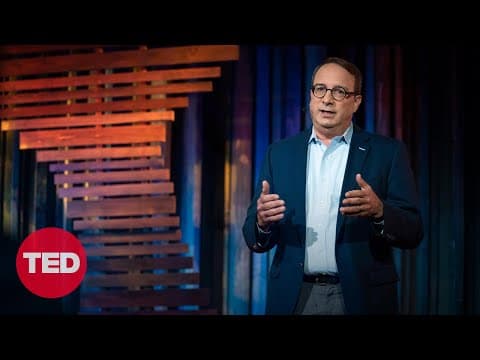
Harvey Fineberg: Are we ready for neo-evolution?

TL;DR
In the future, advancements in genetic technology will allow us to choose and manipulate our genes, leading to a new form of evolution called neo-evolution.
Transcript
How would you like to be better than you are? Suppose I said that, with just a few changes in your genes, you could get a better memory -- more precise, more accurate and quicker. Or maybe you'd like to be more fit, stronger, with more stamina. Would you like to be more attractive and self-confident? How about living longer with good health? Or per... Read More
Key Insights
- 🧪 Genetic advancements: The speaker discusses the potential for genetic changes, such as improving memory and fitness, and the possibility of extending human lifespan. These advancements could greatly impact human abilities and health.
- 🌳 Evolution: The speaker emphasizes the importance of understanding the role of evolution in shaping humans. Our genetic makeup connects us to other species and our basic cellular machinery is similar. Evolutionary processes have allowed us to adapt and survive in different environments.
- 🦠 Human-bacteria relationship: Humans carry more bacteria in their gut than they have cells in the rest of their body. These bacteria play a crucial role in digestion and protecting against certain diseases. The relationship between humans and bacteria is symbiotic and essential for our health.
- 🚀 Possibilities of future evolution: The speaker explores three possibilities for future human evolution. The first is that we have reached a state of equilibrium and will not evolve further. The second is that natural evolution will continue in response to environmental changes. The third possibility is a new form of evolution guided by human choices and genetic modifications.
- 💊 Potential for genetic modifications: Advances in technology, such as the Human Genome Project, have made genetic modifications increasingly possible. The ability to cure or prevent diseases through genetic changes and create desired attributes raises ethical questions about how these choices will be made in the future.
- 🧬 Rapid advancements: The cost and time required for genetic sequencing and manipulation have drastically decreased in recent years. The speed at which these advancements are occurring suggests that the ability to modify genes will become more accessible and commonplace.
- 🤔 Ethical considerations: As the power to make genetic modifications becomes more widespread, important ethical questions arise. How will these choices be made and for what purposes? Will society become more uniform or more versatile? Wisdom will be crucial in navigating these complex decisions.
- 🌍 Individual and societal impact: Genetic advancements have the potential to greatly impact individuals and society as a whole. Healthier offspring, enhanced attributes, and prolonged life are among the possibilities. How these advancements are used will shape the future of humanity.
Install to Summarize YouTube Videos and Get Transcripts
Explore YouTube Video Summarizer or Get YouTube Transcript Extractor
Questions & Answers
Q: How does evolution favor those best adapted to their environment?
Evolution is all about survival and success in a given environment. It doesn't necessarily favor the biggest, strongest, or smartest, but rather those organisms that are best adapted to their specific surroundings. For example, thermophilic bacteria have evolved to thrive in the extreme heat of underwater steam vents, a harsh environment that would be lethal for many other organisms.
Q: What factors may prevent further evolution of the human species?
There are two main factors that could potentially halt the evolution of the human species. Firstly, advances in medicine have allowed us to preserve genes that would have been selected out in the past, altering the course of natural selection. Secondly, human migration and intermixing have reduced the isolation required for evolution to occur. As a result, the human species may have reached a state of equilibrium with its environment, hindering further evolutionary changes.
Q: What are the possibilities for the future of evolution?
There are three possibilities for the future of evolution. Firstly, we may not evolve further as a species due to the preservation of genes and our ability to adapt the environment to our needs. Secondly, natural evolution may still occur through isolation and environmental changes as humans colonize new planets. Lastly, there is the possibility of neo-evolution, where individuals can actively choose and modify their genes to eliminate diseases or acquire desired traits.
Q: How will advancements in genetic technology impact the future of evolution?
Advancements in genetic technology, such as the decreasing cost of sequencing the human genome, will enable individuals to make genetic adjustments for disease prevention or enhancement of desired attributes. As the technology becomes more accessible, it may be possible to modify the genes of offspring, leading to a future where neo-evolution could occur on a much faster timescale than traditional evolution.
Q: What are the potential ethical implications of neo-evolution?
Neo-evolution raises significant ethical questions, including issues of fairness, equality, and societal impact. Will the ability to genetically modify offspring lead to a society where certain traits are selectively favored, creating divisions and inequalities? Additionally, the long-term consequences and unforeseen risks of modifying our genes remain uncertain, highlighting the need for careful consideration and ethical guidelines in this field.
Answer: The ability to choose and modify our genes will pose complex ethical challenges. How do we ensure equal access to genetic enhancements? How do we prevent the creation of a "designer baby" culture that values certain traits over others? Society must grapple with these questions and develop ethical frameworks to guide the responsible use of genetic technology. Balancing individual desires with the broader impact on society will be crucial in shaping a future that is both ethically sound and beneficial for all.
Summary & Key Takeaways
-
Evolution has shaped the diversity of life on Earth, but what if we could guide its course?
-
The possibility of neo-evolution, where individuals can choose and modify their genes, is becoming increasingly feasible.
-
This raises questions about the future of our species and the potential impact of these choices on society.
Read in Other Languages (beta)
Share This Summary 📚
Summarize YouTube Videos and Get Video Transcripts with 1-Click
Try YouTube Summary with ChatGPT & Claude or YouTube Transcript Generator
Explore More Summaries from TED 📚



Summarize YouTube Videos and Get Video Transcripts with 1-Click
Try YouTube Summary with ChatGPT & Claude or YouTube Transcript Generator