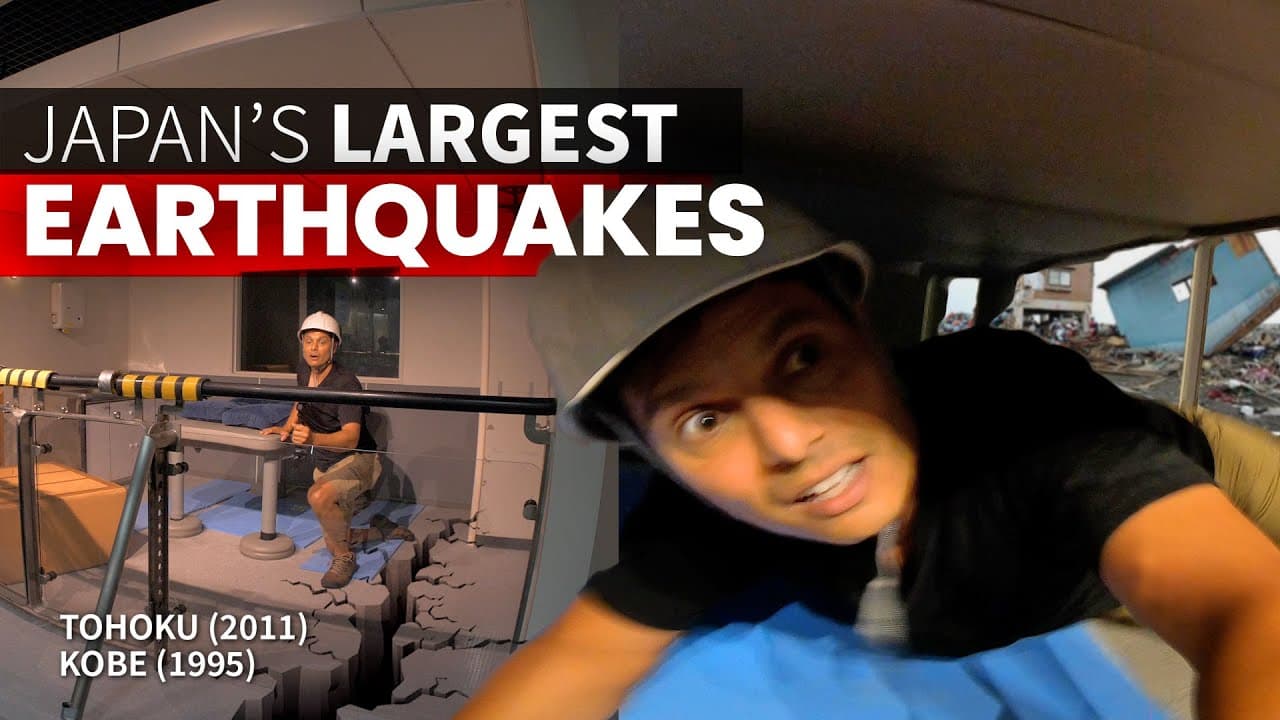
How Japan's Largest Earthquakes Really Felt | Tohoku (2011) Kobe (1995) ★ ONLY in JAPAN
TL;DR
The Tokyo Fire Department's disaster learning center provides valuable information and simulations to help people survive earthquakes and typhoons in Japan.
Transcript
John Daub: In Japan, an earthquake can happen at any time. What do you do when one occurs? So I called the Tokyo Fire Department to ask them the specific measures that we should take when one happens. And they told me they have a disaster learning center here in Sumida ward between Kinshicho station and the Tokyo Skytree. They also have an earthqua... Read More
Key Insights
- 🗾 The Tokyo Fire Department's disaster learning center offers valuable insights and simulations to educate individuals on surviving earthquakes and typhoons in Japan.
- 🤝 Earthquakes in Japan are not measured in magnitude like in other countries, but rather using the shindo intensity scale, which measures the level of shaking.
- 🍝 Earthquake simulations recreate past earthquakes, providing individuals with a realistic experience and reminding them of the need for preparation and quick reactions.
- 🍂 Staying indoors during an earthquake is generally safer, but it's important to be aware of objects that might fall and evacuate if necessary.
- 🌍 International visitors are often more cautious during earthquakes, while locals may have become accustomed to them.
- 🤯 The memory and impact of past earthquakes, such as the Great Tohoku Earthquake of 2011, are still vivid in the minds of those who experienced them.
- 🪈 Training and preparedness are crucial in order to minimize panic and effectively protect oneself and others during a disaster situation.
Install to Summarize YouTube Videos and Get Transcripts
Explore YouTube Video Summarizer or Get YouTube Transcript Extractor
Questions & Answers
Q: What is the purpose of the Tokyo Fire Department's disaster learning center?
The center aims to educate people on disaster preparedness, providing training and simulations to help individuals protect and save their loved ones during a disaster situation.
Q: How does the center simulate earthquakes?
The center has an earthquake simulator that recreates the shaking experienced during past earthquakes in Japan by using data recorded by seismometers. Visitors can experience the intensity of earthquakes and learn how to react calmly and make better decisions.
Q: What should international visitors know about earthquakes in Japan?
While Japan's infrastructure is built to withstand strong earthquakes, it is recommended to stay indoors during an earthquake and protect your head. However, if there are objects that might fall indoors, it is safer to evacuate the area.
Q: Why is earthquake training important?
Training allows individuals to familiarize themselves with earthquake scenarios, helping them react appropriately and minimize panic during a real earthquake. Being prepared and knowing how to protect oneself can save lives.
Key Insights:
- The Tokyo Fire Department's disaster learning center offers valuable insights and simulations to educate individuals on surviving earthquakes and typhoons in Japan.
- Earthquakes in Japan are not measured in magnitude like in other countries, but rather using the shindo intensity scale, which measures the level of shaking.
- Earthquake simulations recreate past earthquakes, providing individuals with a realistic experience and reminding them of the need for preparation and quick reactions.
- Staying indoors during an earthquake is generally safer, but it's important to be aware of objects that might fall and evacuate if necessary.
- International visitors are often more cautious during earthquakes, while locals may have become accustomed to them.
- The memory and impact of past earthquakes, such as the Great Tohoku Earthquake of 2011, are still vivid in the minds of those who experienced them.
- Training and preparedness are crucial in order to minimize panic and effectively protect oneself and others during a disaster situation.
- The importance of caring for and helping others after a disaster is highlighted, showing the resilience and sense of community in Japan.
Summary & Key Takeaways
-
The Tokyo Fire Department's disaster learning center in Sumida ward provides insights and simulations to educate people on how to survive earthquakes and typhoons.
-
The center offers videos, interactive quizzes, and simulators to demonstrate the dangers of earthquakes and the importance of staying indoors during typhoons.
-
Earthquake simulations recreate the shaking experienced during past earthquakes in Japan, emphasizing the need for prior training and preparation.
Read in Other Languages (beta)
Share This Summary 📚
Summarize YouTube Videos and Get Video Transcripts with 1-Click
Try YouTube Summary with ChatGPT & Claude or YouTube Transcript Generator
Explore More Summaries from ONLY in JAPAN * John Daub 📚





Summarize YouTube Videos and Get Video Transcripts with 1-Click
Try YouTube Summary with ChatGPT & Claude or YouTube Transcript Generator