How Japanese Fireworks are Made & Launched ★ ONLY in JAPAN
TL;DR
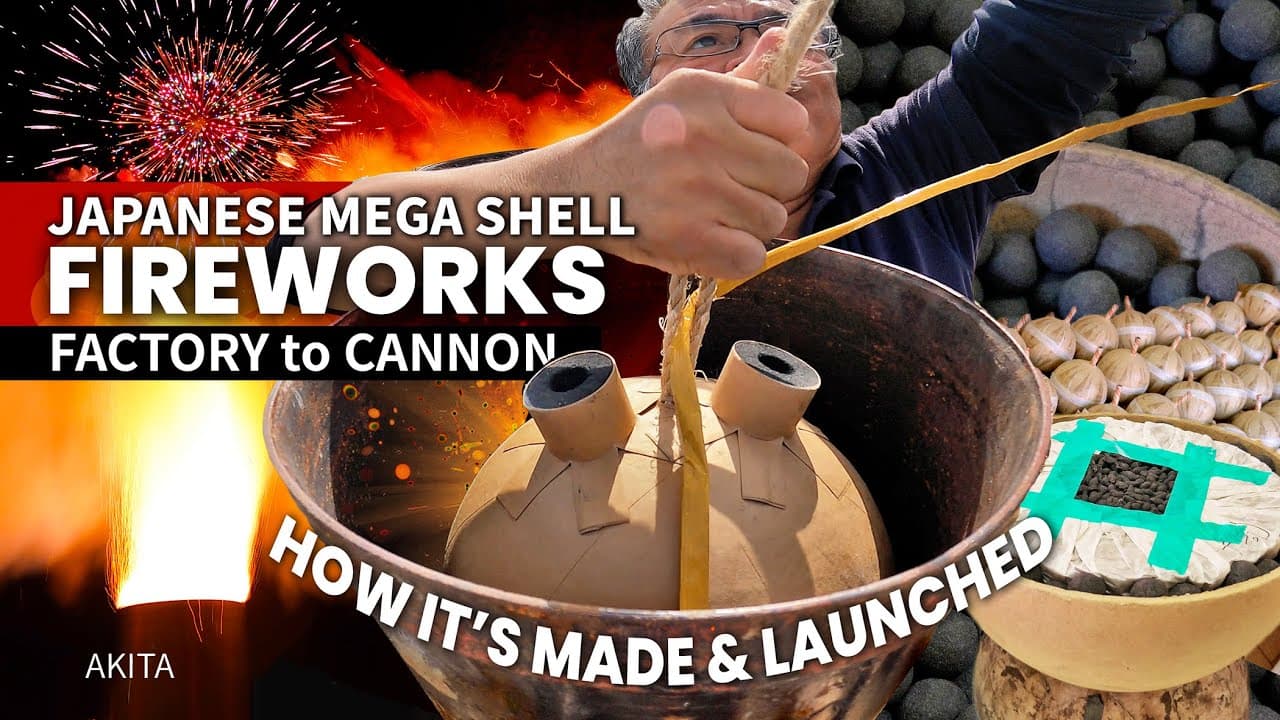
This content takes viewers inside a Japanese fireworks factory to witness the careful craftsmanship behind making and launching large, handcrafted shell fireworks.
Transcript
John Daub: So here we are in Yamanashi on the foothills of Mount Fuji. This is a shakudama No 10 size shell that's so big, you cannot fire these in Tokyo. And tonight we're going to be firing these up. But more than that I'm going to be taking you inside of a Japanese fireworks manufacturing plant to see how Japanese fireworks are made. And then of... Read More
Key Insights
- 🎆 Japanese fireworks are a significant part of the country's culture and are enjoyed by people of all ages, with festivals held throughout the country.
- 🚀 The size of the fireworks shells used in Japan varies, with smaller shells making up the bulk of fireworks festivals in urban areas, while larger shells are used in sparsely populated areas. ⏰ Making fireworks is a time-consuming process that involves handcrafted techniques passed down through generations at family-run companies.
- 📏 The shells for larger fireworks, such as the number 10 shakudama, are loaded carefully and tapped down to ensure an even explosion several hundred meters into the sky.
- 💥 The shells are powered by a charge made from the husks of Akita komachi rice, showcasing the unique use of local ingredients in fireworks production.
- 💼 Fireworks companies collaborate to create spectacular displays, as seen in the Omagari Fireworks Festival, where five different makers worked together.
- 🌸 Fireworks festivals in Japan are a summer tradition and attract large crowds, with people gathering throughout the day to enjoy the festivities.
- 💌 Fireworks can hold personal significance in Japan, as individuals can dedicate shells to commemorate special occasions, such as retirements, births, or marriages.
Install to Summarize YouTube Videos and Get Transcripts
Explore YouTube Video Summarizer or Get YouTube Transcript Extractor
Questions & Answers
Q: How are Japanese fireworks made and what is the significance of these displays in Japanese culture?
Japanese fireworks are made through a meticulous process where powder is mixed, stars are created, and shells are loaded with the stars and a charge made of rice husks. These displays hold cultural significance as they are often dedicated to important life events and are enjoyed by millions of spectators at festivals throughout the country.
Q: What makes Japanese fireworks unique compared to those in other countries?
Japanese fireworks are known for their artistry, with the arrangement of stars and the use of color-producing compounds creating visually stunning displays. The dedication of individual shells to specific people or occasions also sets Japanese fireworks apart.
Q: What is the role of the Omagari Fireworks Festival in the Japanese fireworks industry?
The Omagari Fireworks Festival is a prestigious event that showcases the best fireworks makers in Japan. It serves as a platform for competition and innovation, pushing the boundaries of what is possible in fireworks displays.
Q: How do Japanese fireworks festivals contribute to the local communities and economy?
Japanese fireworks festivals attract a large number of visitors, both locals and tourists. These events stimulate the local economy, supporting businesses such as food stalls, souvenir shops, and accommodations. Additionally, fireworks festivals foster a sense of community and cultural pride.
Q: Why are large shell fireworks often buried in the ground for launching?
Large shell fireworks, such as the nishakudama, sanshakudama, and yonshakudama, are buried in the ground to ensure stability and control during the launch. Burying them helps maintain the structural integrity of the cannons and prevents accidents during the explosion, as these shells are significantly bigger and more powerful.
Summary & Key Takeaways
-
The video explores the process of creating and launching Japanese fireworks, focusing on the production of large shell fireworks.
-
The shells are carefully handmade, with the skill passed down through generations at family-run companies.
-
The video showcases the variety of sizes and types of shell fireworks, from smaller urban displays to the massive yonshakudama shell that takes over half a year to make.
Read in Other Languages (beta)
Share This Summary 📚
Summarize YouTube Videos and Get Video Transcripts with 1-Click
Try YouTube Summary with ChatGPT & Claude or YouTube Transcript Generator
Explore More Summaries from ONLY in JAPAN * John Daub 📚




Summarize YouTube Videos and Get Video Transcripts with 1-Click
Try YouTube Summary with ChatGPT & Claude or YouTube Transcript Generator