The media and partisanship | Political partecipation | AP US Government and Politics | Khan Academy
TL;DR
The evolution of media has led to a more partisan press and a reversion towards the early days of American politics, creating challenges in promoting common interests and civic virtue.
Transcript
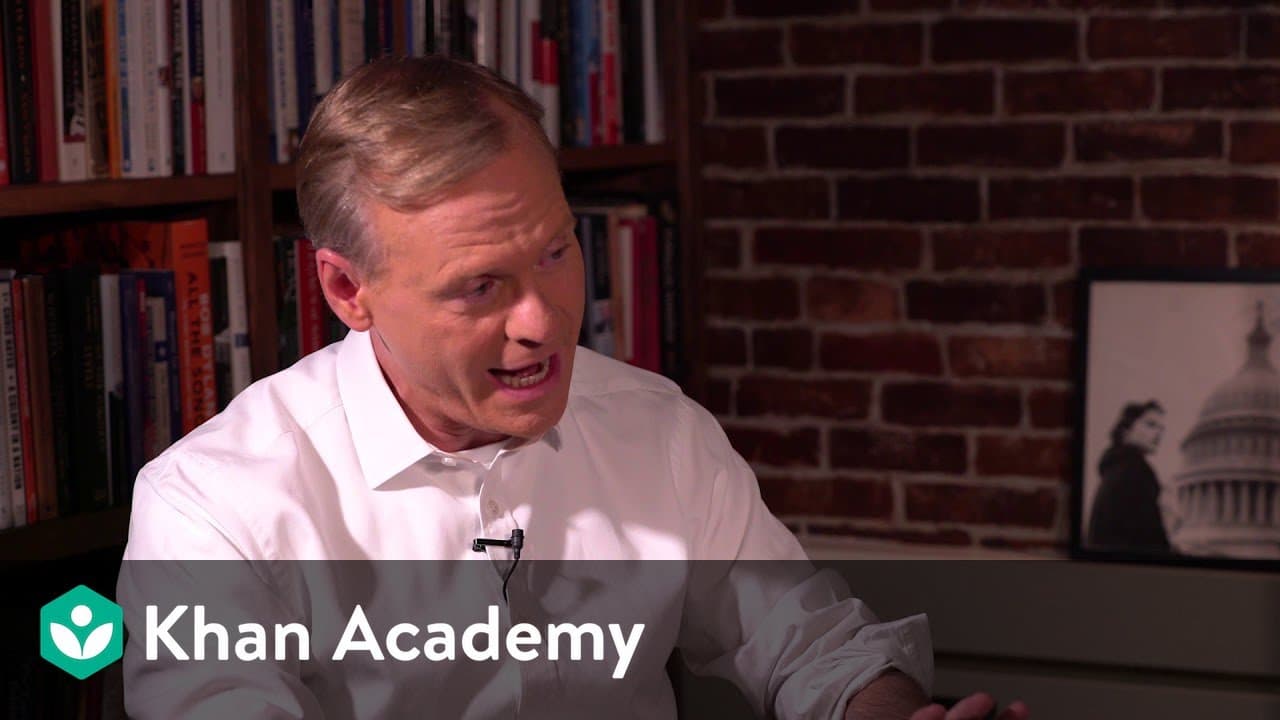
- So John, when our nation was founded there was media. It was essentially newspapers. How has the evolution of media affected the evolution of political discourse? - At the beginning of our country the editors of the rival newspapers, there was no middle of the road newspaper, you were either for one or the other, you were either a Federalist or y... Read More
Key Insights
- 🏈 Early American politics witnessed fierce partisan battles and leaking of documents between newspapers and lawmakers.
- 🖕 Media evolution aimed for a more balanced middle-ground perspective, appealing to a larger audience.
- 🤕 The digital age and partisan interests have led to a reversion towards greater partisanship in media.
- 🤑 Social media and the influx of money in politics have exacerbated polarization and hindered calm and measured conversations.
- 🛟 Polarization has been a recurring theme in American politics, with conflicts or external threats sometimes serving as catalysts for unity.
- ❓ Finding a resolution to the current polarization remains challenging without a similar catalyst.
- 🔉 The pursuit of attention and funding in the media incentivizes flamboyant and divisive arguments, overshadowing more nuanced discussions.
Install to Summarize YouTube Videos and Get Transcripts
Explore YouTube Video Summarizer or Get YouTube Transcript Extractor
Questions & Answers
Q: How has the evolution of media affected the evolution of political discourse?
Initially, media in the form of newspapers fueled partisan rivalries and leaking of documents. As media evolved, it aimed for a more middle-of-the-road perspective. However, the digital age has brought back partisan press and challenges in promoting common interests.
Q: Is the current polarization of media and politics a result of social media?
Social media and the influx of money in politics have amplified polarization. The pursuit of attention, funding, and clicks encourages flamboyant and divisive arguments, leaving calm and measured conversations unheard.
Q: Can American democracy overcome this polarization?
History has shown instances of deep divides, such as the Civil War, being resolved through conflicts or external threats that foster national unity. However, without such catalysts, finding a solution to the current polarization remains complex and challenging.
Q: How can the vast group of Americans in the middle, who seek solutions and are not swayed by bickering and ideology, be engaged in the political system?
Encouraging their participation requires a shock or crisis that reminds both partisans and apathetic individuals of the real stakes involved. This shock would redirect attention towards common interests and the need for collective action.
Summary & Key Takeaways
-
The early days of American politics saw partisan rivalries among newspaper editors and leaking of documents by lawmakers to attack each other.
-
Over time, the media aimed to appeal to a larger audience, resulting in a middle-of-the-road perspective.
-
The current state of media, influenced by digital changes and partisan interests, has led to a more partisan press and posed challenges in promoting common interests.
Read in Other Languages (beta)
Share This Summary 📚
Summarize YouTube Videos and Get Video Transcripts with 1-Click
Try YouTube Summary with ChatGPT & Claude or YouTube Transcript Generator
Explore More Summaries from Khan Academy 📚



Summarize YouTube Videos and Get Video Transcripts with 1-Click
Try YouTube Summary with ChatGPT & Claude or YouTube Transcript Generator