What Are Cell Membranes and How Do They Function?
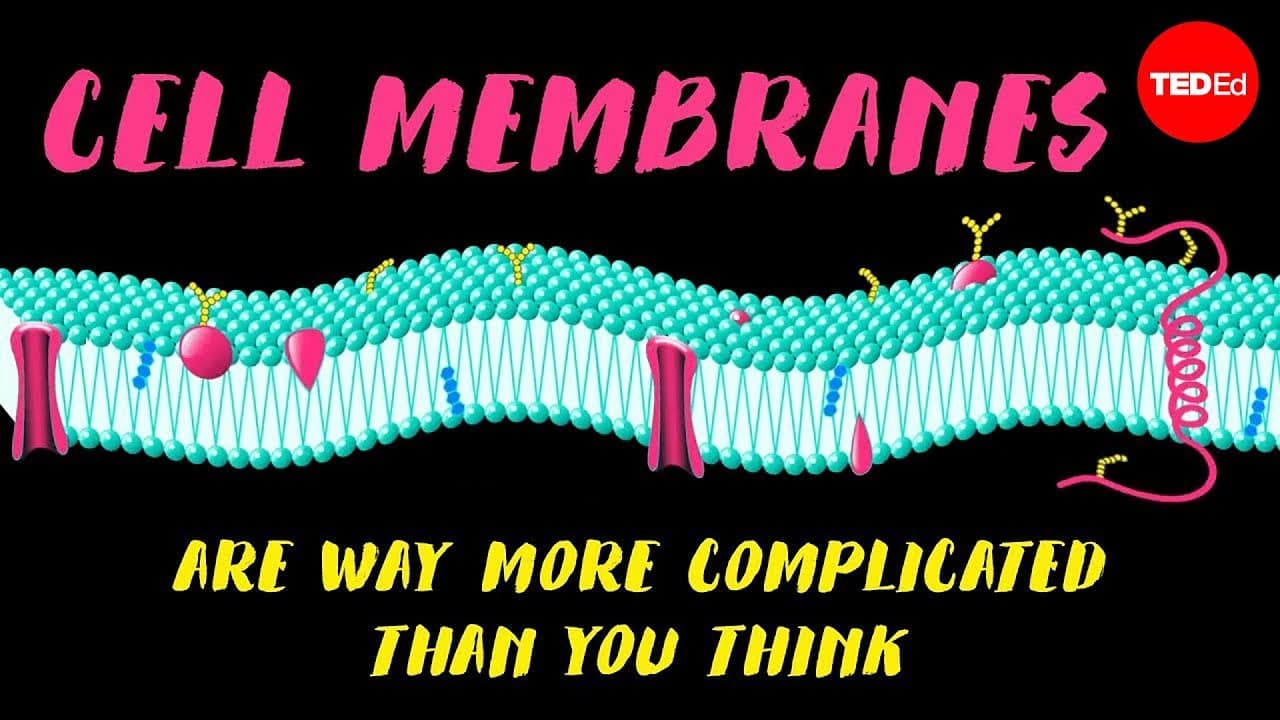
TL;DR
Cell membranes are crucial for cellular integrity, composed of phospholipids, proteins, and cholesterol that create a fluid mosaic structure. This complexity allows membranes to protect cell contents, facilitate selective molecule movement, and enable communication between cells. Their dynamic nature is essential for various cellular processes, including transport and immune responses.
Transcript
Cell membranes are structures of contradictions. These oily films are hundreds of times thinner than a strand of spider silk, yet strong enough to protect the delicate contents of life: the cell's watery cytoplasm, genetic material, organelles, and all the molecules it needs to survive. How does the membrane work, and where does that strength com... Read More
Key Insights
- 🤔 Cell membranes are thin, strong structures that protect cell contents.
- ❓ The fluid mosaic model describes the dynamic and functional nature of cell membranes.
- 🤩 Phospholipids, proteins, and cholesterol are key components of cell membranes.
- 🦻 Proteins in cell membranes aid in molecule transport and cell communication.
- 🖐️ Membrane proteins play a role in immune response and cell defense.
- ❓ Cell membranes are crucial for selective molecule movement in and out of cells.
- 👻 The fluid mosaic structure allows for cell flexibility and functionality.
Install to Summarize YouTube Videos and Get Transcripts
Explore YouTube Video Summarizer or Get YouTube Transcript Extractor
Questions & Answers
Q: What components make up the structure of cell membranes?
Cell membranes consist of phospholipids forming a bilayer, with proteins, carbohydrates, and cholesterol embedded throughout the structure.
Q: How do molecules move across the cell membrane?
Non-polar molecules can pass through easily, while polar and charged molecules require transmembrane proteins to create channels for selective transport.
Q: How do cell membranes participate in cell communication?
Cell communication occurs through the release and capture of proteins between cells, with proteins in the membrane helping in this process.
Q: How do cell membranes defend against infections?
The cell membrane protects against harmful toxins by utilizing proteins and developing defense mechanisms like nano-sponges to combat membrane-breaching toxins.
Summary & Key Takeaways
-
Cell membranes are thin yet strong structures that protect cell contents and regulate molecule movement.
-
Composed of phospholipids, proteins, and cholesterol, the fluid mosaic model allows for flexibility and functionality.
-
Proteins in the membrane play key roles in transporting molecules, cell communication, and immune response.
Read in Other Languages (beta)
Share This Summary 📚
Summarize YouTube Videos and Get Video Transcripts with 1-Click
Try YouTube Summary with ChatGPT & Claude or YouTube Transcript Generator
Explore More Summaries from TED-Ed 📚






Summarize YouTube Videos and Get Video Transcripts with 1-Click
Try YouTube Summary with ChatGPT & Claude or YouTube Transcript Generator