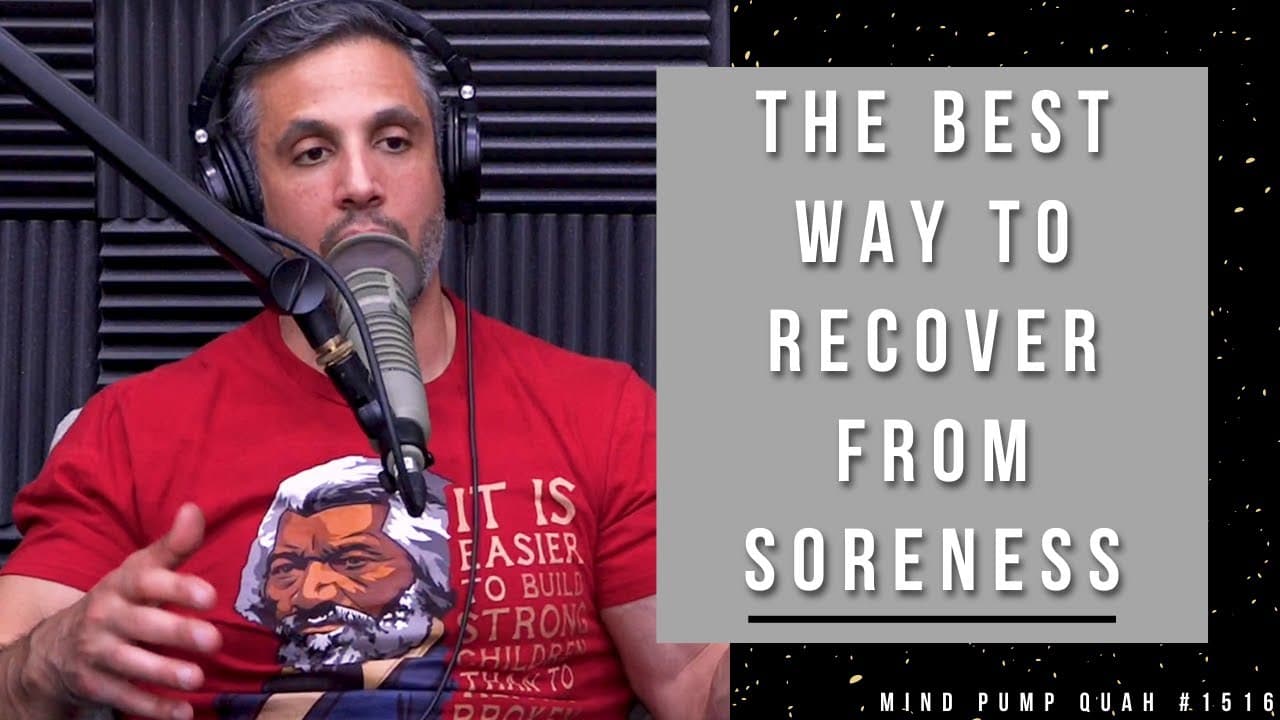
The Fastest Way to Recover from Soreness
TL;DR
Movement is key for faster recovery from soreness.
Transcript
next question is from paula angela what's the quickest way to recover from soreness oh god you know what i i've tried everything um in the past as a kid especially to because i thought that soreness there's so many products for this too i'll tell you what there is nothing that compares to movement there is nothing that compares to movement yeah to ... Read More
Key Insights
- Movement is the most effective way to alleviate soreness and speed up recovery, surpassing methods like cold therapy, massage, or sauna.
- Light resistance exercises, such as trigger sessions and stretching, help pump blood and nutrients into sore muscles, enhancing recovery.
- Contrary to popular belief, resting completely when sore can be detrimental, potentially leading to muscle loss and decreased strength.
- Incorporating infrared sauna sessions, proper hydration, and nutrition can complement movement for optimal recovery.
- Using tools like rubber bands for light exercises promotes blood flow and improves mobility in sore areas.
- Elevation exercises, such as lying with legs up against a wall, can help reduce swelling while maintaining muscle activity.
- Supplements like BCAAs and turmeric have benefits but are secondary to the impact of movement and proper recovery practices.
- A personalized recovery formula can include a combination of movement, hydration, nutrition, sauna, and stretching for best results.
Install to Summarize YouTube Videos and Get Transcripts
Explore YouTube Video Summarizer or Get YouTube Transcript Extractor
Questions & Answers
Q: What is the most effective way to recover from muscle soreness?
The most effective way to recover from muscle soreness is through movement. Engaging in light resistance exercises, such as stretching and trigger sessions, helps increase blood flow and deliver nutrients to the sore muscles, thereby enhancing recovery and reducing soreness more effectively than resting completely.
Q: Why is complete rest not recommended for soreness recovery?
Complete rest is not recommended for soreness recovery because it can lead to muscle loss and decreased strength. When sore muscles are not engaged, they do not receive the blood flow and nutrients needed for recovery. Movement helps maintain muscle activity, promoting faster recovery and preventing strength loss.
Q: How can infrared sauna sessions aid in recovery from soreness?
Infrared sauna sessions can aid in recovery from soreness by increasing circulation and promoting relaxation. The heat from the sauna helps to relax muscles and improve blood flow, which can enhance the delivery of nutrients and oxygen to the muscles, supporting the recovery process when combined with movement and proper hydration.
Q: What role does hydration play in recovering from muscle soreness?
Hydration plays a crucial role in recovering from muscle soreness as it helps maintain fluid balance and supports metabolic processes involved in recovery. Proper hydration ensures that nutrients are efficiently transported to sore muscles, aiding in the repair and recovery process. It is an essential component of an effective recovery strategy.
Q: Can supplements like BCAAs and turmeric replace movement for recovery?
Supplements like BCAAs and turmeric cannot replace movement for recovery. While they offer certain benefits, such as reducing inflammation and supporting muscle repair, they are secondary to the impact of movement. Movement is fundamental for increasing blood flow and nutrient delivery, which are crucial for effective recovery from soreness.
Q: How does elevation help in reducing soreness?
Elevation helps in reducing soreness by promoting the drainage of excess fluid and reducing swelling in the affected area. By elevating the legs or arms, gravitational forces assist in moving fluid away from the sore muscles. This, combined with light muscle activity, can enhance recovery by reducing swelling and promoting circulation.
Q: What is a trigger session, and how does it help in recovery?
A trigger session involves performing light resistance exercises on sore muscles to promote blood flow and nutrient delivery. These sessions help keep the muscles active without causing additional strain, facilitating faster recovery. By maintaining movement, trigger sessions ensure that muscles receive the necessary resources for repair and growth.
Q: Why is personalized recovery important, and what should it include?
Personalized recovery is important because it tailors the recovery process to an individual's specific needs, resources, and fitness level. It should include a combination of movement, hydration, nutrition, and lifestyle practices like sauna and stretching. This personalized approach ensures optimal recovery and performance by addressing unique recovery requirements.
Summary & Key Takeaways
-
Movement is essential for faster recovery from muscle soreness, as it promotes blood flow and nutrient delivery to the muscles. Light exercises and stretching are recommended over complete rest.
-
Incorporating practices like infrared sauna, proper hydration, and nutrition can enhance recovery when combined with movement. These methods help maintain muscle strength and prevent loss.
-
While supplements have their place, the most effective recovery strategy involves a combination of movement, stretching, and lifestyle practices tailored to individual needs and access to resources.
Read in Other Languages (beta)
Share This Summary 📚
Summarize YouTube Videos and Get Video Transcripts with 1-Click
Try YouTube Summary with ChatGPT & Claude or YouTube Transcript Generator
Explore More Summaries from Mind Pump Show 📚



Summarize YouTube Videos and Get Video Transcripts with 1-Click
Try YouTube Summary with ChatGPT & Claude or YouTube Transcript Generator