How a $10M AI Music Scam Duped Everyone
TL;DR
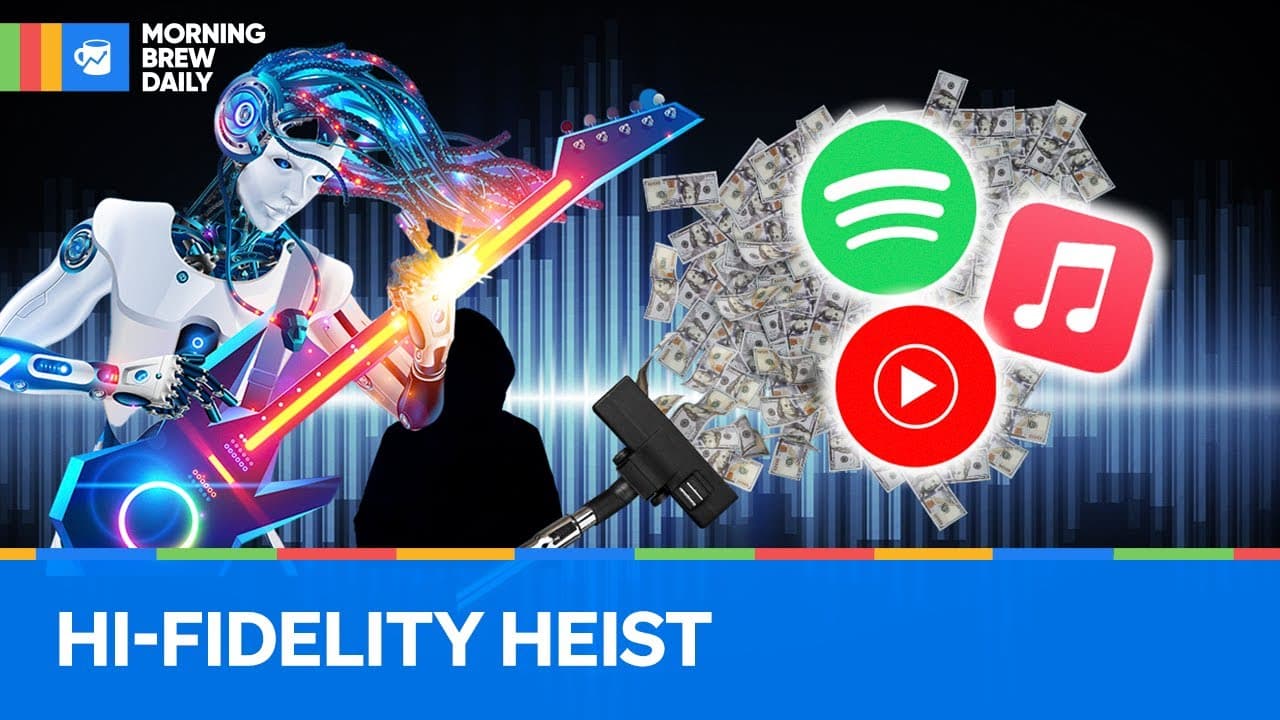
AI-generated music scam nets $10M from streaming services.
Transcript
Good Morning Brew Daily Show. I'm Neal Freyman. And I'm Toby Howell. Today, Campbell is dropping the soup from its name. Sorry, Andy Warhol, it looks like you'll need to redo your paintings. Then the story of the man who allegedly gamed the music streaming market and made off with $10 million. It's Thursday, September 12th. Let's ride. The most wat... Read More
Key Insights
- Michael Smith allegedly used AI to create fake bands and music, earning $10M through streaming services over seven years.
- The scam involved setting up bots to repeatedly play the fake songs, manipulating streaming numbers for profit.
- Smith's operation required creating over 10,000 email accounts to avoid detection by streaming services.
- This is the first criminal case involving music streaming manipulation brought by the Southern District of New York.
- The scheme highlights the challenges of AI-generated content and streaming manipulation in the music industry.
- Artists express concerns over AI music affecting their royalties, with streaming payouts being significantly low.
- Public reaction to the scam is mixed, with some impressed by the ingenuity and others worried about its impact on artists.
- The case raises questions about the prevalence of similar scams and the need for better fraud detection in streaming platforms.
Install to Summarize YouTube Videos and Get Transcripts
Explore YouTube Video Summarizer or Get YouTube Transcript Extractor
Questions & Answers
Q: What was the main strategy used in the AI music scam?
Michael Smith allegedly used AI to create a large volume of fake songs and bands, which were then uploaded to various streaming platforms. He employed bots to repeatedly play these songs, inflating streaming numbers and earning substantial royalties. The operation required creating over 10,000 email accounts to avoid detection by streaming platforms.
Q: How did the music industry react to the AI music scam?
The reaction was mixed. Some people were impressed by the ingenuity of the scam, while others were concerned about its impact on genuine artists. The case has raised awareness about the potential for AI-generated content to manipulate streaming services and the need for better fraud detection mechanisms.
Q: What challenges does AI-generated music present to the industry?
AI-generated music poses significant challenges, including the potential for fraudulent schemes like the one orchestrated by Michael Smith. It raises concerns about the integrity of streaming platforms and the fairness of royalty distributions, as AI content could potentially overshadow genuine artists' work, affecting their earnings.
Q: What are the implications of low streaming payouts for artists?
Low streaming payouts mean that artists often struggle to earn a sustainable income from their music on platforms like Spotify and Apple Music. This has led to increased reliance on live performances and merchandise sales for revenue. The situation is exacerbated by the potential for AI-generated music to siphon off royalties that would otherwise go to human artists.
Q: How did Smith's scheme avoid detection for so long?
Smith's scheme avoided detection by spreading streams across thousands of accounts, ensuring that no single song or account attracted undue attention. By creating over 10,000 email accounts, he was able to distribute the plays in a way that mimicked genuine user behavior, thereby evading the fraud detection systems of streaming platforms.
Q: What legal actions have been taken against Smith?
The Southern District of New York has brought the first criminal case involving music streaming manipulation against Michael Smith. This case sets a precedent for prosecuting similar fraudulent activities in the music industry and highlights the legal challenges associated with AI-generated content and streaming manipulation.
Q: What are the broader industry concerns related to AI music?
The rise of AI music has sparked concerns about its impact on traditional musicians and the music industry as a whole. There are fears that AI-generated content could dominate streaming platforms, making it harder for human artists to gain visibility and earn fair royalties. This has prompted calls for more stringent regulations and fraud detection measures.
Q: What potential solutions are there to prevent AI music scams?
Potential solutions include enhancing fraud detection algorithms on streaming platforms to better identify and block suspicious activities, implementing stricter regulations on AI-generated content, and ensuring transparency in royalty distributions. Collaboration between industry stakeholders and technology companies is crucial to developing effective strategies to combat such scams.
Summary & Key Takeaways
-
Michael Smith allegedly orchestrated a $10M scam using AI-generated music and bots to manipulate streaming numbers over seven years, marking the first criminal case of its kind in New York.
-
Smith's operation involved creating thousands of fake songs and distributing them across multiple streaming platforms, highlighting the vulnerabilities in the music streaming industry.
-
The case has sparked discussions about AI's role in music production, the low payouts for artists from streaming services, and the potential for similar fraudulent schemes.
Read in Other Languages (beta)
Share This Summary 📚
Summarize YouTube Videos and Get Video Transcripts with 1-Click
Try YouTube Summary with ChatGPT & Claude or YouTube Transcript Generator
Explore More Summaries from Morning Brew Daily 📚



Summarize YouTube Videos and Get Video Transcripts with 1-Click
Try YouTube Summary with ChatGPT & Claude or YouTube Transcript Generator