Human impact on aquatic environments| AP Environmental science| Khan Academy
TL;DR
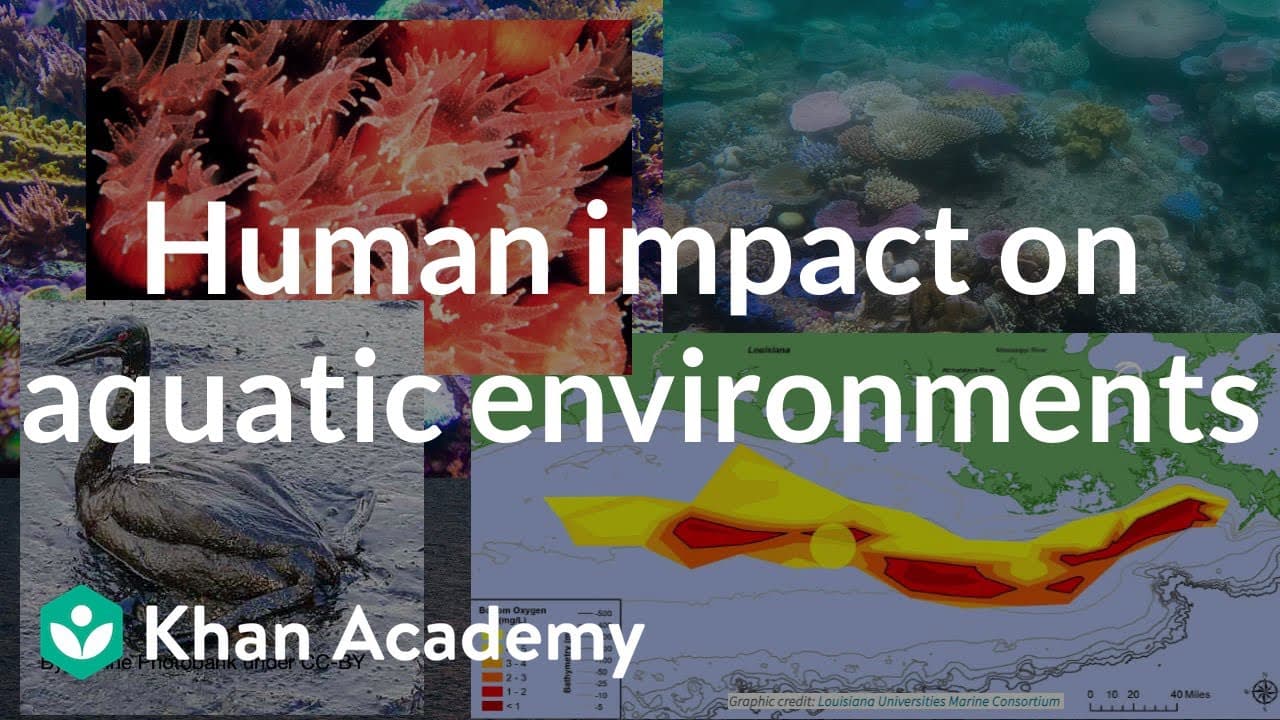
Human activities such as climate change, oil spills, and chemical runoff are devastating aquatic environments, leading to the decline of coral reefs, oil-contaminated birds, and oxygen-depleted dead zones.
Transcript
- [Narrator] When you go to the beach and you look at the ocean, it oftentimes might look fine. But as we'll see in this video, we, human beings have been stressing aquatic environments. And if we're not careful, we might completely ruin them. For example, this is what a healthy coral reef looks like. And coral are fascinating organisms. You can vi... Read More
Key Insights
- 🪸 Coral reefs are sensitive to changes in temperature and chemical composition, highlighting the vulnerability of these ecosystems.
- 🧑🌾 Oil spills have far-reaching consequences beyond contaminated birds, disrupting the natural balance and harming various species.
- 🥺 Dead zones are a result of excessive algae growth caused by chemical runoff, leading to oxygen depletion and the inability for marine life to survive.
- 😀 Human activities in one location can have widespread effects on aquatic environments thousands of miles away, highlighting the interconnectedness of these ecosystems.
- ♻️ Understanding and addressing the impact of human activities on aquatic environments is crucial for the preservation of these delicate ecosystems.
- ♻️ Responsible practices and conservation efforts are essential to mitigate the damage caused to aquatic environments.
- 🎮 Efforts to reduce climate change, control pollution, and promote sustainable practices are necessary to protect and restore aquatic ecosystems.
Install to Summarize YouTube Videos and Get Transcripts
Explore YouTube Video Summarizer or Get YouTube Transcript Extractor
Questions & Answers
Q: How does climate change impact coral reefs?
Climate change causes ocean temperatures to rise, leading to coral bleaching and the death of coral reefs. This disrupts the entire ecosystem as many organisms rely on the reefs for food and shelter.
Q: What are the consequences of oil spills on aquatic environments?
Oil spills have devastating effects on birds, fish, and the overall balance of aquatic ecosystems. Birds, in particular, get covered in oil, which hampers their ability to fly, swim, and find food.
Q: How do dead zones form in aquatic environments?
Dead zones are caused by chemical runoff, such as fertilizer and sewage, which promotes excessive algae growth. The decomposition of this algae depletes oxygen levels, making the area uninhabitable for marine life.
Q: How does human activity in one area affect aquatic environments miles away?
Chemicals and pollutants, such as those flowing into the Mississippi River, can travel thousands of miles and have significant impacts on aquatic environments. This highlights the interconnectedness of aquatic ecosystems and the need for responsible practices.
Summary & Key Takeaways
-
Coral reefs are being negatively affected by climate change, leading to bleaching and the death of coral, which disrupts the entire ecosystem and causes coastal erosion.
-
Oil spills have harmful effects on aquatic environments, including birds being covered in oil, disrupting the natural balance and harming various species.
-
Chemical runoff, such as fertilizer and sewage, can lead to the formation of dead zones due to excessive algae growth, depleting oxygen levels and making the area uninhabitable for marine life.
Read in Other Languages (beta)
Share This Summary 📚
Summarize YouTube Videos and Get Video Transcripts with 1-Click
Try YouTube Summary with ChatGPT & Claude or YouTube Transcript Generator
Explore More Summaries from Khan Academy 📚



Summarize YouTube Videos and Get Video Transcripts with 1-Click
Try YouTube Summary with ChatGPT & Claude or YouTube Transcript Generator