How to Calculate the Sum of a Telescoping Series
TL;DR
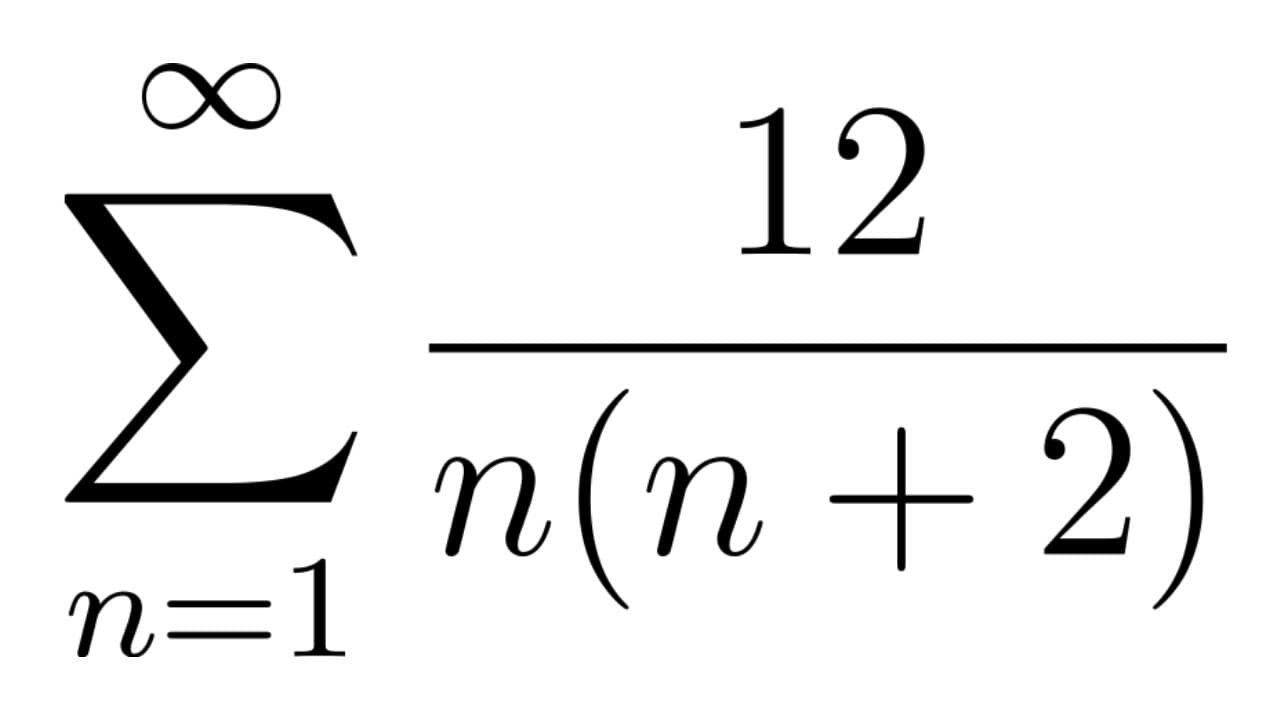
To calculate the sum of a telescoping series, use partial fractions to simplify the series into terms that cancel each other. Take the limit of the nth partial sum as n approaches infinity to find the final sum, which often results in a clean value, like 9 in this example.
Transcript
in this video we're given an infinite series and we have to find the sum of the series this is what's called a telescoping series so telescoping series and you can kind of tell because of the form here notice it appears that you can use partial fractions to rewrite this in a nice way so because of that series like this 10th to telescope strategy he... Read More
Key Insights
- 🍉 Telescoping series involve canceling terms to simplify the summation process.
- 💁 Partial fractions are used to rewrite series in a more manipulable form.
- 💭 Finding the nth partial sum is crucial in the telescoping strategy.
- 🥺 Taking the limit as n approaches infinity leads to the final sum for telescoping series.
- 🍉 Careful identification of patterns in the series helps determine canceling terms.
- 📔 The cover-up method is a technique to find coefficients in partial fraction decomposition.
- 🍹 Telescoping series require patience and attention to detail to find the final sum accurately.
Install to Summarize YouTube Videos and Get Transcripts
Explore YouTube Video Summarizer or Get YouTube Transcript Extractor
Questions & Answers
Q: What is a telescoping series in mathematics?
A telescoping series is an infinite series where most of the terms cancel each other, leaving only a finite number of terms to sum at the end.
Q: How does partial fractions play a role in solving telescoping series?
Partial fractions are used to rewrite the series in a more manageable form, making it easier to identify terms that cancel out in the telescoping process.
Q: Why is finding the nth partial sum important in telescoping series?
The nth partial sum gives a more manageable expression of the series, making it easier to identify and cancel terms that simplify the summation process.
Q: How does taking the limit as n approaches infinity help in finding the sum of a telescoping series?
Taking the limit as n approaches infinity allows us to simplify the series to its final sum by canceling out terms that approach zero, leaving behind the finite sum.
Summary & Key Takeaways
-
Telescoping series involve rewriting in partial fractions.
-
Finding the nth partial sum is crucial in telescoping series.
-
Taking the limit as n approaches infinity gives the final sum for telescoping series.
Read in Other Languages (beta)
Share This Summary 📚
Summarize YouTube Videos and Get Video Transcripts with 1-Click
Try YouTube Summary with ChatGPT & Claude or YouTube Transcript Generator
Explore More Summaries from The Math Sorcerer 📚
Summarize YouTube Videos and Get Video Transcripts with 1-Click
Try YouTube Summary with ChatGPT & Claude or YouTube Transcript Generator