Axis of Autocracies: How U.S. Rivals Are Reshaping the Global Landscape
TL;DR
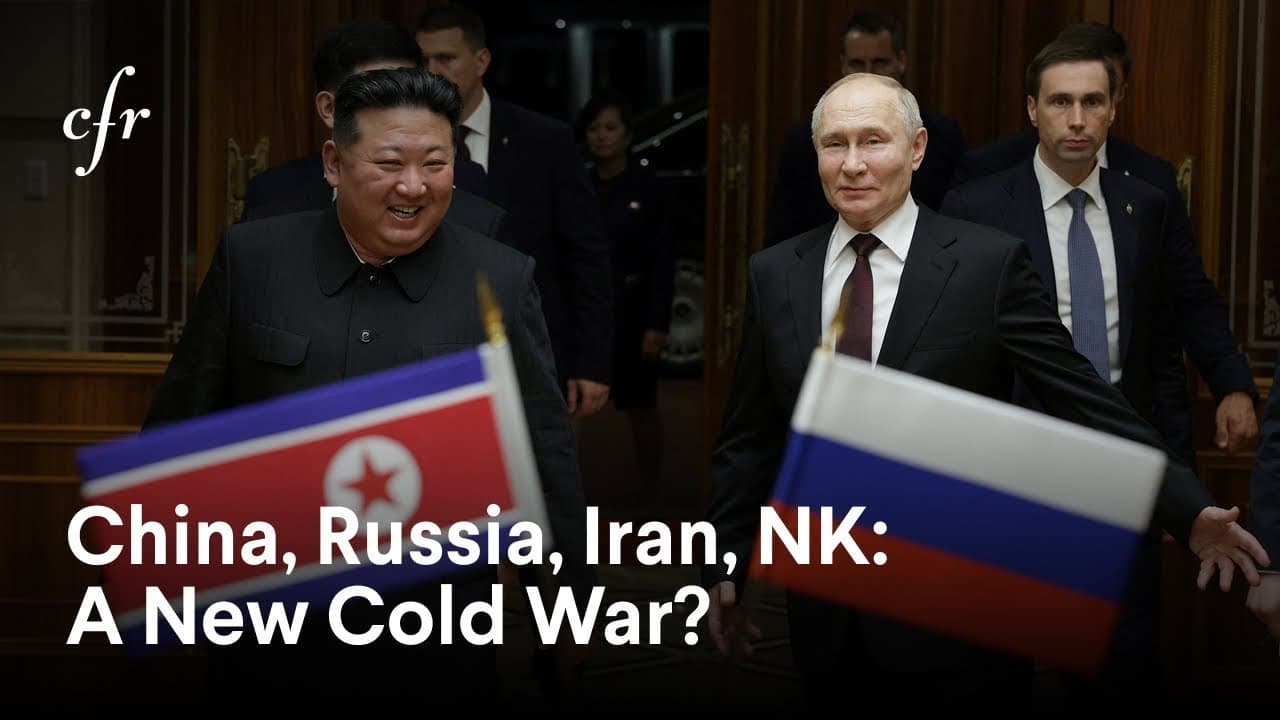
China, Russia, Iran, and North Korea deepen cooperation against U.S. influence.
Transcript
LINDSAY: Good afternoon, everyone. Welcome to the Council on Foreign Relations. I am Jim Lindsay, the Mary and David Boies distinguished senior fellow in U.S. foreign policy and director of Fellowship Affairs here at the Council. It is my great pleasure and honor to open today’s Hauser Symposium on “The Axis of Autocracies.” It is a timely topic... Read More
Key Insights
- The symposium discusses the growing cooperation among China, Russia, Iran, and North Korea, termed as the 'Axis of Autocracies,' which challenges U.S. global influence.
- These countries, despite their political differences, share a common goal of reducing U.S. global dominance, which they perceive as a threat to their national ambitions.
- The cooperation among these nations includes military support, weapons transfers, and economic backing, reshaping the geopolitical landscape.
- The U.S. foreign policy faces the challenge of understanding the nature of this cooperation, assessing its sustainability, and determining the best response.
- The symposium features three panels discussing the rise of this axis, their efforts to build support in the Global South, and U.S. response options.
- Military exercises among these countries have increased in complexity, signaling their growing cooperation and ability to challenge U.S. interests.
- The technology transfers from Russia to China, particularly in military technology, pose a significant concern for U.S. national security.
- The sustainability of this alignment is debated, with some viewing it as a tactical alliance driven by U.S. policies and common interests in countering U.S. power.
Install to Summarize YouTube Videos and Get Transcripts
Explore YouTube Video Summarizer or Get YouTube Transcript Extractor
Questions & Answers
Q: What is the main goal of the 'Axis of Autocracies'?
The main goal of the 'Axis of Autocracies,' comprising China, Russia, Iran, and North Korea, is to reduce U.S. global influence, which they perceive as a threat to their national interests and ambitions. Despite their differing political ideologies, these countries are united by their desire to challenge U.S. dominance in the global landscape.
Q: How does the cooperation among these countries manifest?
The cooperation among China, Russia, Iran, and North Korea manifests in various forms, including military support, weapons transfers, and economic backing. They have conducted joint military exercises, shared technology, and provided military aid to each other, particularly in the context of Russia's war on Ukraine. This cooperation is reshaping the geopolitical landscape and challenging U.S. interests.
Q: What are the key concerns for U.S. national security?
Key concerns for U.S. national security include the military and technological cooperation among these countries, particularly the transfer of advanced military technology from Russia to China. This poses a significant threat to U.S. interests, as it enhances the military capabilities of these countries, potentially challenging U.S. dominance in critical regions.
Q: What are the potential implications of this alignment for global geopolitics?
The alignment of China, Russia, Iran, and North Korea has significant implications for global geopolitics. It challenges the U.S.-led international order and could lead to a more multipolar world. The cooperation among these countries is reshaping alliances and power dynamics, potentially leading to increased tensions and conflicts in various regions.
Q: How sustainable is the cooperation among these countries?
The sustainability of this cooperation is debated. Some experts view it as a tactical alliance driven by common interests against U.S. dominance, while others argue that underlying tensions and differing national interests could limit its longevity. The future of this alignment depends on various factors, including U.S. foreign policy and global geopolitical developments.
Q: What role does U.S. foreign policy play in this alignment?
U.S. foreign policy plays a significant role in shaping the dynamics of this alignment. Sanctions, export controls, and other policies targeting these countries have pushed them closer together. The U.S. has the agency to influence the extent of their cooperation through its policies and diplomatic efforts, potentially mitigating the threats posed by this alignment.
Q: What are the potential risks and opportunities for the U.S. in responding to this alignment?
The U.S. faces both risks and opportunities in responding to this alignment. Risks include the potential for increased tensions and conflicts, as well as the challenge of countering the growing military and technological capabilities of these countries. Opportunities lie in leveraging diplomatic channels, building alliances, and adopting strategic policies to mitigate the threats and maintain U.S. influence globally.
Q: Could this alignment expand to include other countries?
There is potential for this alignment to expand, as other countries with similar interests, such as Venezuela, Cuba, or Nicaragua, might align with these powers. Additionally, efforts by Russia to expand the BRICS and other multilateral organizations as counterweights to U.S. influence suggest that this alignment could grow, further challenging the U.S.-led international order.
Summary & Key Takeaways
-
The Hauser Symposium explores the 'Axis of Autocracies,' focusing on the cooperation between China, Russia, Iran, and North Korea. These countries, despite differing political ideologies, share a common goal of reducing U.S. global influence, posing a challenge to U.S. foreign policy. The symposium examines the nature, sustainability, and potential expansion of this cooperation.
-
The symposium includes discussions on the military and technological cooperation among these countries, with a particular focus on military exercises and technology transfers. The U.S. faces a strategic challenge in responding to this alignment, which is reshaping global geopolitical dynamics.
-
Experts debate the sustainability of this cooperation, with some viewing it as a tactical alliance driven by common interests against U.S. dominance. The symposium also considers the potential for this alignment to expand and the implications for U.S. national security and foreign policy.
Read in Other Languages (beta)
Share This Summary 📚
Summarize YouTube Videos and Get Video Transcripts with 1-Click
Try YouTube Summary with ChatGPT & Claude or YouTube Transcript Generator
Explore More Summaries from Council on Foreign Relations 📚


Summarize YouTube Videos and Get Video Transcripts with 1-Click
Try YouTube Summary with ChatGPT & Claude or YouTube Transcript Generator