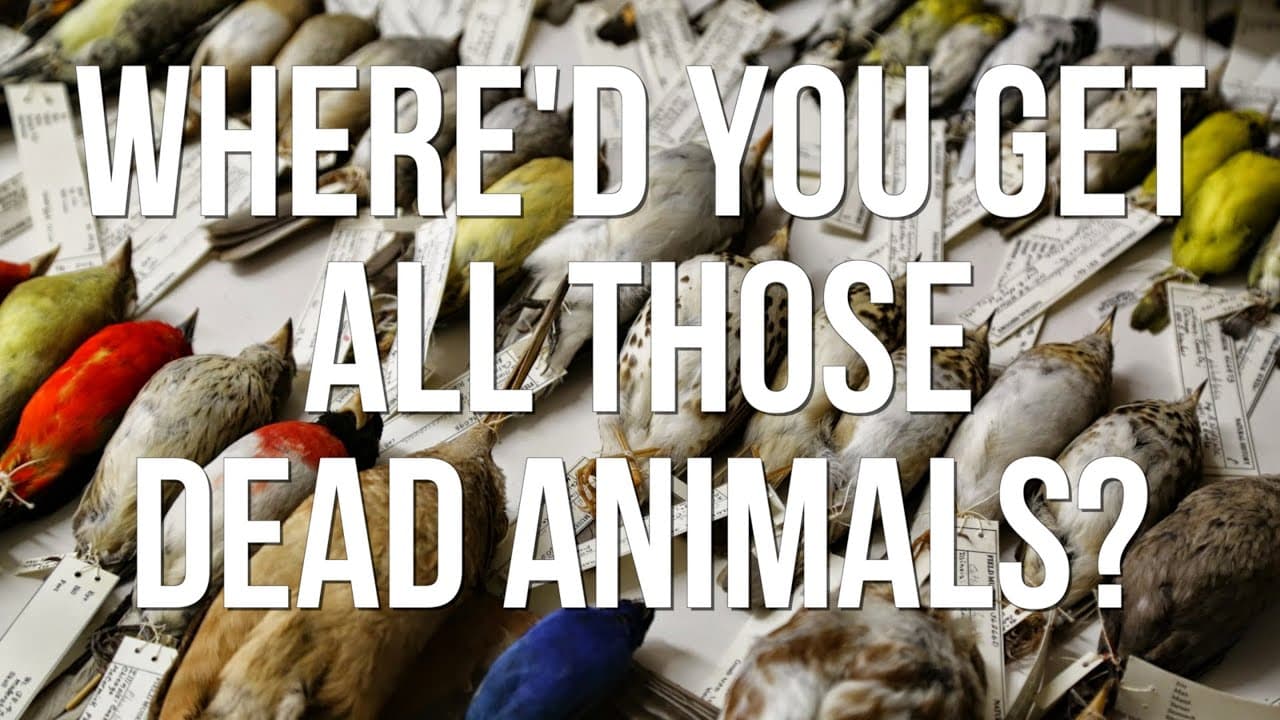
Where'd you get all those dead animals?
TL;DR
Preserving voucher specimens crucial for studying biodiversity and ecosystems.
Transcript
Over the last year and a half on The Brain Scoop, you've all watched as I've: squeezed disgusting goo out of a squirrel's face [Squirrel McNastyface], dismembered an anteater [Hosenose], taken apart a two-faced calf [The Two-Faced Calf], and dissected a wolf [Gutting the Wolf]. While this has all been a disgusting adventure into animal anatomy, it'... Read More
Key Insights
- 🪈 Voucher specimens provide a crucial historical record for studying biodiversity and ecosystems.
- 💱 Traditional specimen collection methods are essential for understanding disease spread and environmental changes.
- 🦻 Consistent monitoring through voucher specimens aids in detecting threats and informing conservation efforts.
- 🖐️ Museum collections play a vital role in studying environmental impacts and species preservation.
- 🦮 Ethical guidelines and regulations guide biologists in responsible specimen collection practices.
- 💱 Specimens collected over decades offer insights into historical environmental changes and disease origins.
- 👨🔬 Public awareness of the importance of voucher specimens is crucial for supporting scientific research and conservation efforts.
Install to Summarize YouTube Videos and Get Transcripts
Explore YouTube Video Summarizer or Get YouTube Transcript Extractor
Questions & Answers
Q: Why are voucher specimens important in biological research?
Voucher specimens provide a historical record of species distribution, genetic information, and environmental changes over time, aiding in biodiversity studies and conservation efforts.
Q: What is the controversy surrounding the collection of voucher specimens?
Some scientists recommend relying on tissue sampling and photo documentation instead of collecting voucher specimens, sparking debate on the necessity and impact of traditional specimen collection methods.
Q: How do voucher specimens contribute to understanding disease spread?
By comparing samples from afflicted animals to historical voucher specimens, researchers can identify disease origins, study spread patterns, and develop strategies to combat epidemics like the white-nose syndrome in bats.
Q: Why is consistent specimen collection important for environmental research?
By continuously monitoring populations and environmental changes through voucher specimens, researchers can detect threats, track biodiversity shifts, and make informed decisions for conservation and public health.
Summary & Key Takeaways
-
The Brain Scoop showcases dissections and preparation of animal specimens for museums, serving a scientific purpose.
-
Controversy arises as some scientists suggest ceasing the collection of voucher specimens.
-
Voucher specimens are invaluable for studying environmental changes, diseases, and informing conservation efforts.
Read in Other Languages (beta)
Share This Summary 📚
Summarize YouTube Videos and Get Video Transcripts with 1-Click
Try YouTube Summary with ChatGPT & Claude or YouTube Transcript Generator
Explore More Summaries from thebrainscoop 📚






Summarize YouTube Videos and Get Video Transcripts with 1-Click
Try YouTube Summary with ChatGPT & Claude or YouTube Transcript Generator