Jenkins Interview Questions for DevOps Experienced | AWS Cloudformation Interview Questions | Python
TL;DR
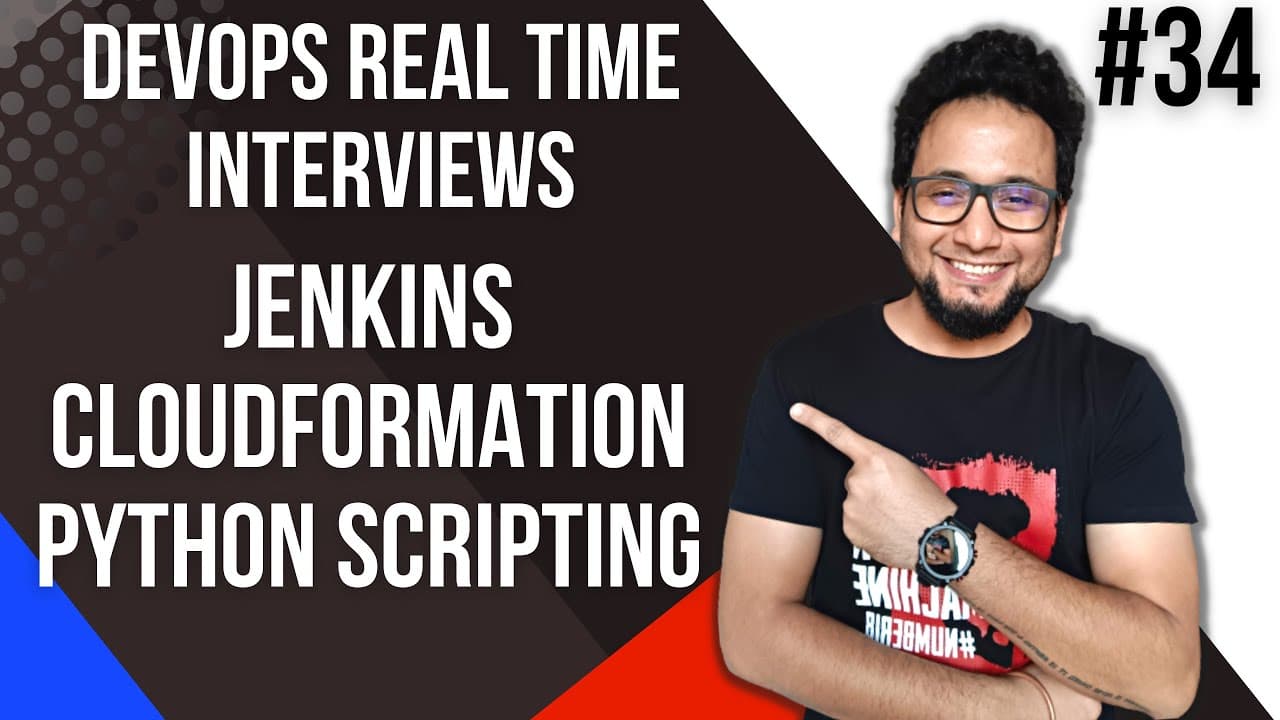
A detailed DevOps interview focusing on Jenkins, AWS CloudFormation, and scripting.
Transcript
hey folks my name is Rish and welcome back to another video in the series of devops interviews now I have a profile with me so this person is around 5 years of experience and he has worked around 2 plus years in in devops and cloud and cloud is almost equal to 3 years and then there is very uh great thing about today's interview is that I have divi... Read More
Key Insights
- The interview is divided into three parts, focusing on Jenkins, AWS CloudFormation, and scripting, providing a comprehensive understanding of each topic.
- The candidate has over five years of IT experience, with two to three years in DevOps and three years in AWS Cloud, highlighting their expertise in cloud technologies.
- Jenkins is discussed in detail, covering concepts like continuous integration, continuous deployment, and the setup of Master-Slave architecture to manage pipeline loads.
- AWS CloudFormation is explored, emphasizing its integration with AWS services and its advantages over other tools like Terraform and Pulumi for AWS-specific environments.
- The candidate explains troubleshooting and support roles in DevOps, including monitoring pipelines, resolving legacy software issues, and collaborating with other teams.
- The interview delves into the use of scripting languages, with a focus on Python and shell scripting, emphasizing the need for scripting knowledge in DevOps roles.
- The discussion includes practical scenarios such as migrating Jenkins servers, handling circular dependencies in CloudFormation, and setting up multi-branch pipelines.
- Best practices for infrastructure management, including the differences between mutable and immutable infrastructures and their implications for continuous deployment, are examined.
Install to Summarize YouTube Videos and Get Transcripts
Explore YouTube Video Summarizer or Get YouTube Transcript Extractor
Questions & Answers
Q: What are the main topics covered in the interview?
The interview covers Jenkins, AWS CloudFormation, and scripting. It is divided into three parts, focusing on roles and responsibilities, Jenkins details, and AWS CloudFormation with scripting. The candidate discusses their experience, practical scenarios, and best practices in these areas.
Q: How does the candidate handle Jenkins server migration?
The candidate suggests taking a snapshot of the Jenkins server, especially if it's running on an AWS EC2 instance. They mention using a plugin to store snapshots in the cloud, allowing for restoration on a new server. This approach ensures configurations and data are preserved during migration.
Q: What is the candidate's experience with AWS CloudFormation?
The candidate has significant experience with AWS CloudFormation, using it for infrastructure management in AWS environments. They discuss creating and deleting stacks via the management console, CLI, or SDK, and address challenges like circular dependencies, which they resolve by passing parameters.
Q: What scripting languages does the candidate use?
The candidate uses Python and shell scripting, which are essential for automation in DevOps roles. They demonstrate their scripting skills by explaining a shell script task and emphasize the importance of knowing various scripting languages like Bash and PowerShell for DevOps.
Q: How does the candidate manage multi-branch pipelines in Jenkins?
The candidate explains that they create separate pipelines for each branch, such as develop, staging, and production, rather than using a multibranch pipeline. This approach allows them to customize each pipeline according to specific branch requirements, ensuring flexibility and control.
Q: What are the candidate's thoughts on mutable vs. immutable infrastructure?
The candidate explains that immutable infrastructure allows for consistent replication of environments, ensuring no changes between deployments. Mutable infrastructure, on the other hand, may lead to issues if changes are made externally. They suggest using immutable infrastructure for projects emphasizing infrastructure as code.
Q: Why does the candidate prefer CloudFormation over other tools?
The candidate prefers CloudFormation for AWS-specific environments due to its seamless integration with AWS services and features like CFN init scripts and custom hooks. They acknowledge that tools like Terraform and Pulumi are better suited for multi-cloud environments due to their platform-agnostic nature.
Q: How does the candidate resolve circular dependencies in CloudFormation?
The candidate resolves circular dependencies by using parameters to pass resource names, avoiding direct references that cause circular dependencies. They describe a scenario involving S3 buckets and roles, where using parameters helps break the dependency cycle, ensuring successful stack creation.
Summary & Key Takeaways
-
The interview focuses on Jenkins, AWS CloudFormation, and scripting, providing insights into the candidate's experience and understanding of these technologies. Jenkins topics include continuous integration, deployment, and Master-Slave architecture.
-
AWS CloudFormation is discussed, highlighting its advantages for AWS environments and practical issues like circular dependencies. The candidate also shares their experience in troubleshooting and support roles in DevOps projects.
-
The importance of scripting in DevOps is emphasized, with discussions on Python and shell scripting. The interview also covers infrastructure management, comparing mutable and immutable infrastructures for deployment scenarios.
Read in Other Languages (beta)
Share This Summary 📚
Summarize YouTube Videos and Get Video Transcripts with 1-Click
Try YouTube Summary with ChatGPT & Claude or YouTube Transcript Generator
Explore More Summaries from LogicOps Lab 📚

Summarize YouTube Videos and Get Video Transcripts with 1-Click
Try YouTube Summary with ChatGPT & Claude or YouTube Transcript Generator