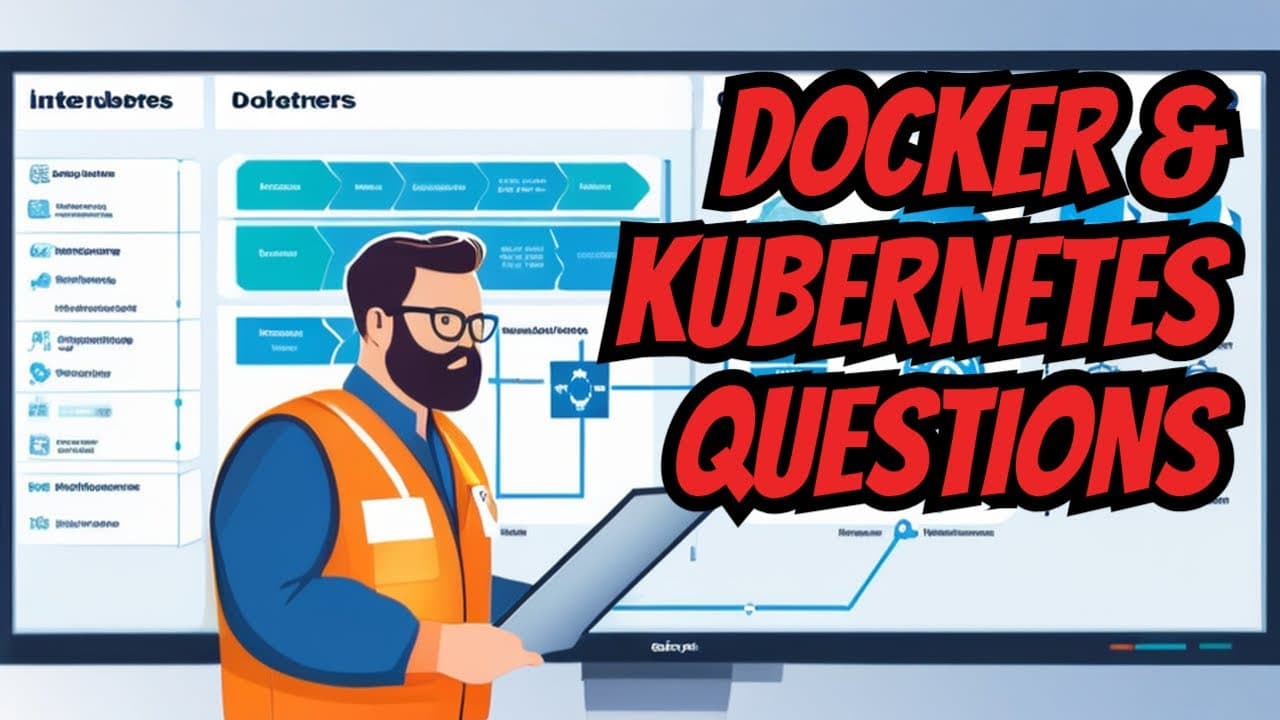
Dockerfile Interview Questions | Kubernetes Architecture Interview Questions | DevOps Real Interview
TL;DR
Interview explores Dockerfile creation and Kubernetes architecture in DevOps.
Transcript
Read and summarize the transcript of this video on Glasp Reader (beta).
Key Insights
- The interview focuses on a candidate with 8 years of IT experience, including 4+ years in DevOps, highlighting expertise in Terraform, Kubernetes, and Azure Cloud.
- The Dockerfile section involves practical steps to containerize a Java application, emphasizing the importance of using base images, setting environment variables, and utilizing Docker commands.
- The Kubernetes discussion covers the architecture, including master and node components, and details the interaction between API servers, controller managers, schedulers, and etcd.
- The interviewer uses screen sharing and interactive tools to guide the candidate through the process, ensuring a comprehensive understanding of the technical concepts.
- The candidate demonstrates knowledge of Docker commands like 'docker build' and 'docker exec', explaining their roles in building and testing Docker images.
- Kubernetes components such as kube-proxy, kubelet, and container runtime are discussed, highlighting their roles in managing pods and facilitating communication between nodes.
- The interview addresses the use of network plugins like Flannel and Weave for pod communication across different nodes in a Kubernetes cluster.
- The session concludes with practical insights into managing Kubernetes clusters using tools like kubectl and the importance of setting environment variables for successful deployment.
Install to Summarize YouTube Videos and Get Transcripts
Explore YouTube Video Summarizer or Get YouTube Transcript Extractor
Questions & Answers
Q: What is the candidate's experience in DevOps?
The candidate has over 8 years of IT experience, with more than 4 years in DevOps. They have worked extensively with Terraform and Kubernetes for about 3 years and have also gained significant experience with Azure Cloud over 2 to 3 years.
Q: How does the candidate approach Dockerfile creation for a Java application?
The candidate outlines a step-by-step process for creating a Dockerfile, starting with selecting a base image, setting environment variables, and using Docker commands like 'docker build' and 'docker exec'. They emphasize the importance of defining application paths and setting up necessary environment variables within the Dockerfile.
Q: What are the key components of Kubernetes architecture discussed in the interview?
The interview covers Kubernetes architecture, focusing on components like the API server, controller manager, scheduler, and etcd within the master node. It also explores node components such as kubelet, kube-proxy, and container runtime, explaining their roles in managing and orchestrating containers.
Q: How does the candidate explain the interaction between Kubernetes components?
The candidate describes how the API server interacts with etcd to manage cluster configuration details, while the controller manager handles node control and replication. The scheduler distributes loads across nodes, and kubelet facilitates communication between master and node components.
Q: What tools and commands are highlighted for managing Kubernetes clusters?
The interview highlights tools like kubectl for managing Kubernetes clusters, emphasizing the importance of setting environment variables for successful deployment. Commands such as 'kubectl get pods' and 'kubectl get ns' are discussed for monitoring cluster components and namespaces.
Q: What role do network plugins play in Kubernetes communication?
Network plugins like Flannel and Weave are crucial for facilitating communication between pods across different nodes in a Kubernetes cluster. They enable seamless networking and container orchestration, ensuring efficient data exchange and resource management within the cluster.
Q: How does the candidate demonstrate practical knowledge during the interview?
The candidate actively participates in interactive sessions, using screen sharing to illustrate Dockerfile creation and Kubernetes architecture. They provide detailed explanations of Docker commands, Kubernetes components, and network plugins, showcasing their practical understanding of DevOps processes.
Q: What insights are shared about Docker commands and their usage?
The candidate explains the use of Docker commands like 'docker build' for creating images and 'docker exec' for testing them. They highlight the significance of using flags like '-f' for specifying Dockerfile paths and '-t' for tagging images, demonstrating a thorough understanding of Docker operations.
Summary & Key Takeaways
-
The interview explores Dockerfile creation and Kubernetes architecture, focusing on practical steps to containerize applications and manage Kubernetes clusters. The candidate demonstrates knowledge of Docker commands and Kubernetes components, providing insights into DevOps practices.
-
The interviewer guides the candidate through Docker and Kubernetes concepts using screen sharing and interactive tools, ensuring a comprehensive understanding of technical processes. The discussion covers Dockerfile steps, Kubernetes architecture, and node communication.
-
Key topics include the use of Docker commands for building and testing images, Kubernetes components like kubelet and kube-proxy, and network plugins for pod communication. The session emphasizes practical knowledge and DevOps expertise in managing cloud environments.
Read in Other Languages (beta)
Share This Summary 📚
Summarize YouTube Videos and Get Video Transcripts with 1-Click
Try YouTube Summary with ChatGPT & Claude or YouTube Transcript Generator
Explore More Summaries from LogicOps Lab 📚
Summarize YouTube Videos and Get Video Transcripts with 1-Click
Try YouTube Summary with ChatGPT & Claude or YouTube Transcript Generator