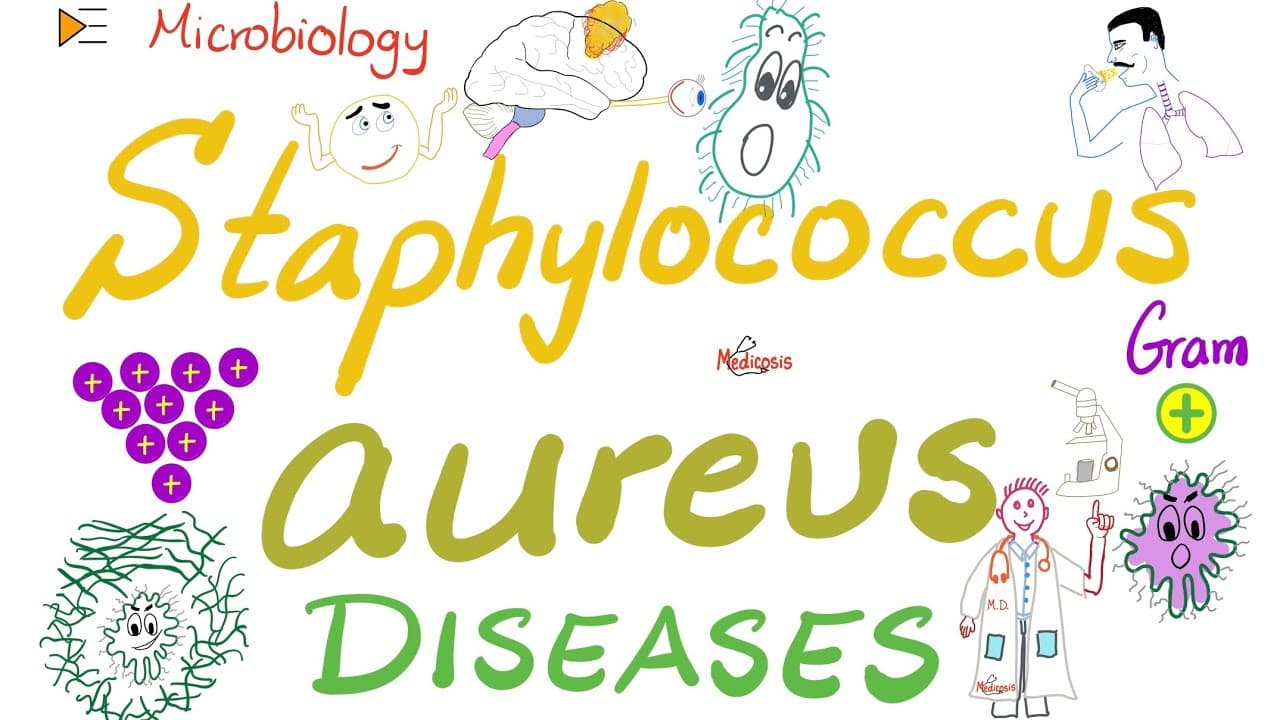
Staphylococcus Aureus Diseases | Skin, Toxic Shock Syndrome, Food 🥘 poisoning ☠️ | Microbiology 🧫
TL;DR
Comprehensive overview of Staphylococcus aureus infections and their medical implications.
Transcript
hey guys it's mitochosis perfectionist where medicine makes perfect sense and today we shall continue our playlist titled microbiology and infectious diseases in video number one we had an introduction about medical microbiology video number two is about gram-positive gram negative and the gram stain video number 3 was talking just about th... Read More
Key Insights
- Staphylococcus aureus is a gram-positive coccus, catalase and coagulase positive, known for clustering like grapes and appearing golden under the microscope.
- The bacteria can cause a range of skin infections including folliculitis, abscesses, furuncles, carbuncles, and impetigo, often requiring different treatment approaches.
- Staphylococcus aureus is capable of causing severe diseases like toxic shock syndrome and food poisoning through the production of toxins rather than direct bacterial invasion.
- Toxic shock syndrome is linked to the use of tampons and can lead to multi-organ failure if not promptly addressed, caused by the TSST-1 toxin.
- Food poisoning from Staphylococcus aureus is due to enterotoxins, causing rapid onset of symptoms like watery diarrhea and vomiting, typically resolving within 24 hours.
- The bacteria can lead to systemic infections such as endocarditis, osteomyelitis, and pneumonia, often requiring aggressive antibiotic therapy.
- Staphylococcal scalded skin syndrome, primarily affecting children, is characterized by skin peeling and is caused by exfoliative toxins.
- Differentiating between infections caused by the bacteria itself and those caused by toxins is crucial for effective treatment, as antibiotics are ineffective against toxins.
Install to Summarize YouTube Videos and Get Transcripts
Explore YouTube Video Summarizer or Get YouTube Transcript Extractor
Questions & Answers
Q: What distinguishes Staphylococcus aureus from other staphylococci?
Staphylococcus aureus is distinguished from other staphylococci by its ability to produce coagulase, an enzyme that clots plasma. This bacterium is also catalase positive and appears as golden clusters under the microscope, which is why it is named 'aureus', meaning golden. These characteristics help differentiate it from other species like Staphylococcus epidermidis and Staphylococcus saprophyticus.
Q: What are the primary diseases caused by Staphylococcus aureus?
Staphylococcus aureus is responsible for a wide range of diseases, including skin infections such as folliculitis, abscesses, furuncles, and carbuncles. It can also cause systemic conditions like toxic shock syndrome, food poisoning, endocarditis, osteomyelitis, and pneumonia. The severity and nature of these infections vary, with some being toxin-mediated and others resulting from direct bacterial invasion.
Q: How does Staphylococcus aureus cause toxic shock syndrome?
Toxic shock syndrome caused by Staphylococcus aureus is primarily due to the production of toxic shock syndrome toxin-1 (TSST-1). This toxin acts as a superantigen, leading to a massive immune response that can result in fever, rash, hypotension, and multi-organ failure. The condition is often associated with tampon use, but can also occur from wound infections or contaminated injections.
Q: What is the role of enterotoxins in Staphylococcus aureus infections?
Enterotoxins produced by Staphylococcus aureus are responsible for food poisoning, characterized by rapid onset of symptoms such as nausea, vomiting, and watery diarrhea. These toxins are heat-stable, meaning they can survive cooking processes, and cause symptoms by acting directly on the gastrointestinal tract. Enterotoxin A is particularly associated with food poisoning, while enterotoxin B can cause pseudomembranous colitis.
Q: Why are antibiotics ineffective against toxin-mediated Staphylococcus aureus diseases?
Antibiotics target bacterial cells by disrupting their cell walls, protein synthesis, or other vital processes. However, in toxin-mediated diseases like food poisoning or toxic shock syndrome, the symptoms are caused by toxins, not the bacteria themselves. Since toxins are not living organisms, antibiotics cannot neutralize them, necessitating supportive care and toxin-specific treatments instead.
Q: What are the key virulence factors of Staphylococcus aureus?
Staphylococcus aureus possesses several virulence factors that enhance its pathogenicity. These include protein A, which binds to antibodies and inhibits phagocytosis, and coagulase, which helps localize infections by clotting fibrinogen. The bacterium also produces various toxins, such as TSST-1, enterotoxins, and exfoliative toxins, contributing to its ability to cause diverse infections.
Q: How does Staphylococcus aureus cause skin infections?
Staphylococcus aureus causes skin infections through direct invasion of the skin and hair follicles. It can lead to conditions like folliculitis, abscesses, furuncles, and carbuncles. The bacteria's production of coagulase helps localize the infection by forming fibrin clots, while its ability to produce pus (pyogenic infection) results in the characteristic painful, red, and swollen lesions.
Q: What is the significance of coagulase production in Staphylococcus aureus?
Coagulase production is significant in Staphylococcus aureus because it allows the bacteria to clot plasma, helping to localize and protect the infection site from the host immune response. This characteristic distinguishes it from other staphylococci, enabling it to cause more severe and invasive infections. Coagulase is a key factor in the formation of abscesses and other localized infections.
Summary & Key Takeaways
-
Staphylococcus aureus is a gram-positive bacterium known for causing a variety of infections, ranging from superficial skin conditions to severe systemic diseases. It is catalase and coagulase positive, often presenting in clusters under the microscope.
-
The bacteria can cause skin infections like folliculitis and impetigo, as well as more serious conditions such as toxic shock syndrome and food poisoning, the latter two being toxin-mediated rather than direct bacterial invasion.
-
Treatment varies significantly between infections caused by the bacteria and those caused by toxins, with antibiotics being effective against bacterial infections but not against toxin-induced conditions, highlighting the importance of accurate diagnosis.
Read in Other Languages (beta)
Share This Summary 📚
Summarize YouTube Videos and Get Video Transcripts with 1-Click
Try YouTube Summary with ChatGPT & Claude or YouTube Transcript Generator
Explore More Summaries from Medicosis Perfectionalis 📚



Summarize YouTube Videos and Get Video Transcripts with 1-Click
Try YouTube Summary with ChatGPT & Claude or YouTube Transcript Generator