Types Of Impurities - Water Treatment and Analysis - Applied Chemistry 2
TL;DR
Water contains suspended, dissolved, colloidal, and biological impurities that affect its quality and safety.
Transcript
click the bell icon to get latest videos from equator hello friends today we are going to study about the different types of impurities that are present in water water in its any firm will have impurities in it whether it is from rivers seas Springs or even the natural water we get from rain let us see all the different kinds of impurities that wat... Read More
Key Insights
- 💦 Water impurities come in various forms: suspended particles, dissolved substances, colloidal particles, and biological contaminants, affecting water quality differently.
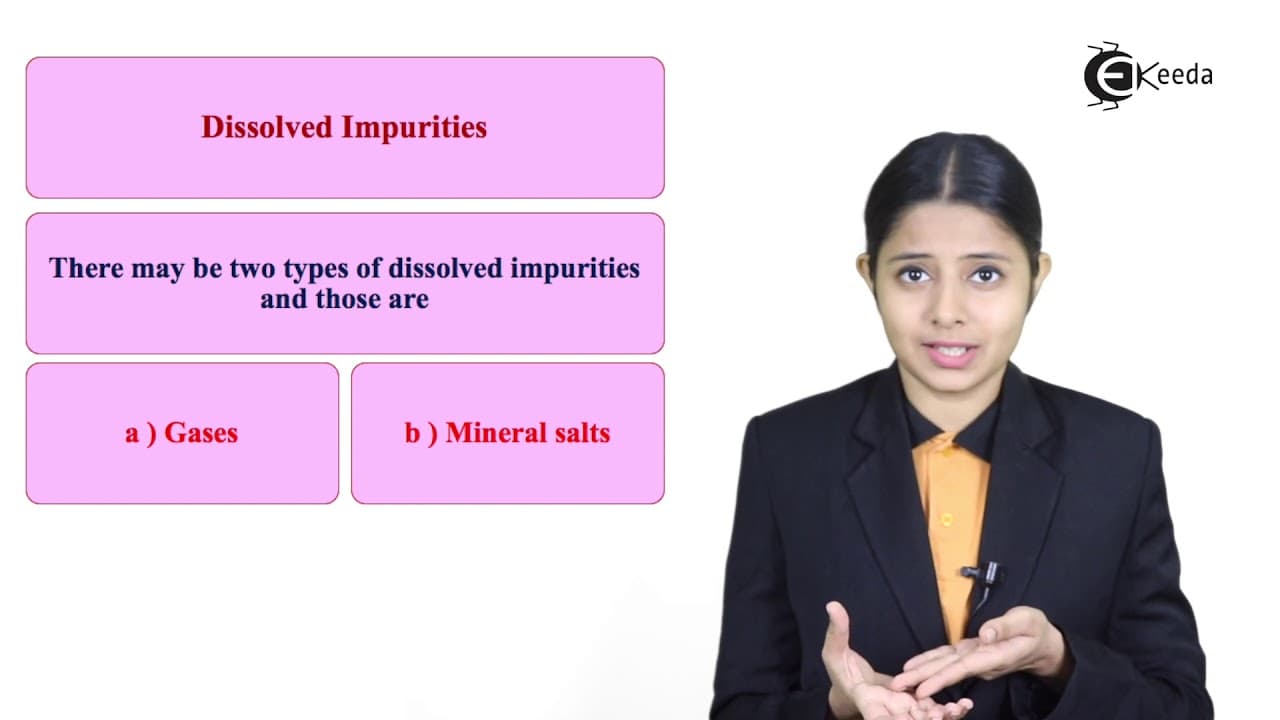
- 💦 Suspended impurities like mud and algae impact water turbidity, while dissolved impurities such as gas impurities and mineral salts affect water invisibly.
- 💦 Colloidal particles with charges repel each other, making them challenging to remove from water without coagulants.
- 💦 Biological impurities, including harmful bacteria and microorganisms, pose health risks if not removed from water before consumption.
- 😒 Understanding the types of impurities in water is crucial for ensuring its safety and suitability for human use.
- 😣 Filtering water is essential to remove impurities like biological contaminants, which can cause severe illnesses if ingested.
- 💦 Chemical pollutants and mineral salts dissolved in water can affect its taste, odor, and overall quality, emphasizing the need for purification methods.
Install to Summarize YouTube Videos and Get Transcripts
Explore YouTube Video Summarizer or Get YouTube Transcript Extractor
Questions & Answers
Q: What are suspended impurities in water?
Suspended impurities are visible particles like mud and algae that make water turbid and affect its color, challenging to remove even by filtration methods.
Q: How do dissolved impurities in water contribute to its quality?
Dissolved impurities, including gas impurities like those from acid rain and mineral salts from rocks, impact water quality without being visibly apparent, requiring advanced testing for detection.
Q: What are colloidal impurities, and why are they challenging to remove from water?
Colloidal impurities consist of tiny particles with charges that repel each other, making them difficult to settle or filter out naturally, requiring coagulants for removal.
Q: Why are biological impurities in water a concern for human health?
Biological impurities, such as bacteria and microorganisms, can cause diseases like typhoid and cholera if consumed, emphasizing the importance of purifying water before human use.
Summary & Key Takeaways
-
Water can have various impurities like suspended (visible particles), dissolved (invisible substances), colloidal (tiny particles repelling each other), and biological (microorganisms).
-
Suspended impurities, like mud, clay, and algae, affect water's turbidity and color.
-
Dissolved impurities, such as gas impurities from the atmosphere and mineral salts from rocks, are unseen contaminants.
Read in Other Languages (beta)
Share This Summary 📚
Summarize YouTube Videos and Get Video Transcripts with 1-Click
Try YouTube Summary with ChatGPT & Claude or YouTube Transcript Generator
Explore More Summaries from Ekeeda 📚






Summarize YouTube Videos and Get Video Transcripts with 1-Click
Try YouTube Summary with ChatGPT & Claude or YouTube Transcript Generator