What Is the Endocrine System and Its Functions?
TL;DR
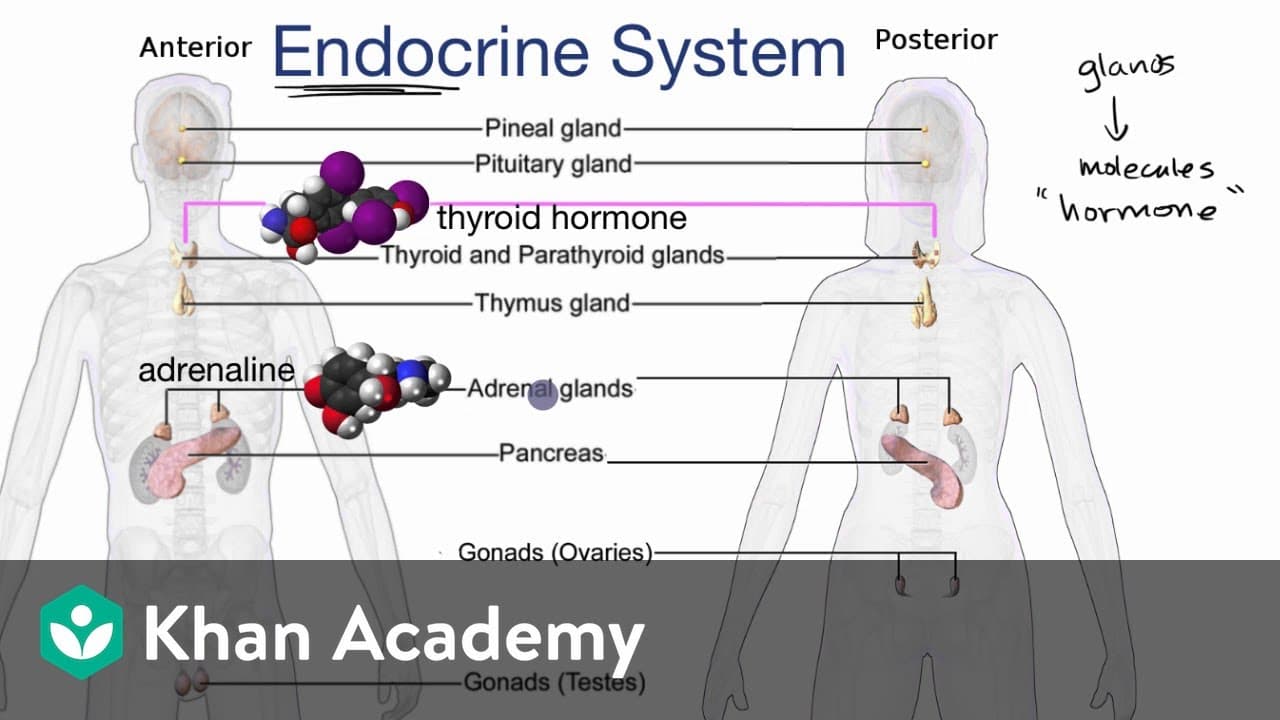
The endocrine system is a network of glands that secrete hormones into the bloodstream to regulate various bodily functions, including metabolism, stress response, and homeostasis. Key glands include the thyroid, adrenal glands, and sex glands, which produce hormones like thyroid hormone, adrenaline, estrogen, and testosterone, essential for maintaining stability within the body.
Transcript
- [Instructor] What you see in these pictures, this is a forward view of a transparent man or a semitransparent man, and this is a posterior, or back view of a semitransparent woman. But what these organs that are depicted, these organs secrete molecules into the bloodstream, and an organ that secretes things, these are called glands, and they secr... Read More
Key Insights
- 🏴 The endocrine system consists of glands that secrete hormones into the bloodstream to regulate bodily functions.
- 🥳 Hormones are molecules that set things in motion in other parts of the body, helping maintain homeostasis.
- 🏴 Common endocrine glands include the thyroid, adrenal, and sex glands, producing hormones like thyroid hormone, adrenaline, estrogen, and testosterone.
- 🧑🚒 Hormones can have different effects on different cells, impacting metabolism, fight-or-flight response, and other bodily functions.
- 🥺 Hormonal imbalances can lead to disorders such as hyperthyroidism, hypothyroidism, or diabetes.
- 🥰 The endocrine system plays a pivotal role in regulating body temperature, blood pressure, and heart rate.
- 🤩 Homeostasis, or maintaining stability, is a key concept associated with the role of the endocrine system.
Install to Summarize YouTube Videos and Get Transcripts
Explore YouTube Video Summarizer or Get YouTube Transcript Extractor
Questions & Answers
Q: What is the role of hormones in the body?
Hormones are molecules secreted by glands in the endocrine system that regulate various bodily functions. They are released into the bloodstream and act on different cells to initiate specific physiological processes.
Q: What are some common examples of endocrine glands and their associated hormones?
Examples include the thyroid gland (produces thyroid hormone, which regulates metabolism), adrenal glands (produce adrenaline, involved in the fight-or-flight response), and ovaries/testes (produce estrogen/testosterone, associated with female/male bodily functions).
Q: How do hormones impact the body?
Hormones can have diverse effects on the body because they are released into the bloodstream and can act on different cells. They play crucial roles in regulating body temperature, blood pressure, heart rate, and other physiological processes.
Q: What happens when there is an imbalance in hormone production?
Hormonal imbalances can lead to disorders such as hyperthyroidism (excess thyroid hormone, overactive metabolism) or hypothyroidism (inadequate thyroid hormone, underactive metabolism). Imbalances in insulin can result in conditions like Type 1 or Type 2 diabetes.
Summary & Key Takeaways
-
The endocrine system is a network of glands that secrete hormones into the bloodstream to regulate different parts of the body.
-
Hormones are molecules that set things in motion in other parts of the body, helping to regulate body functions.
-
Common endocrine glands and hormones include the thyroid gland (produces thyroid hormone), adrenal glands (produce adrenaline), and ovaries/testes (produce estrogen/testosterone).
Read in Other Languages (beta)
Share This Summary 📚
Summarize YouTube Videos and Get Video Transcripts with 1-Click
Try YouTube Summary with ChatGPT & Claude or YouTube Transcript Generator
Explore More Summaries from Khan Academy 📚



Summarize YouTube Videos and Get Video Transcripts with 1-Click
Try YouTube Summary with ChatGPT & Claude or YouTube Transcript Generator