Rodney Brooks: Why we will rely on robots
TL;DR
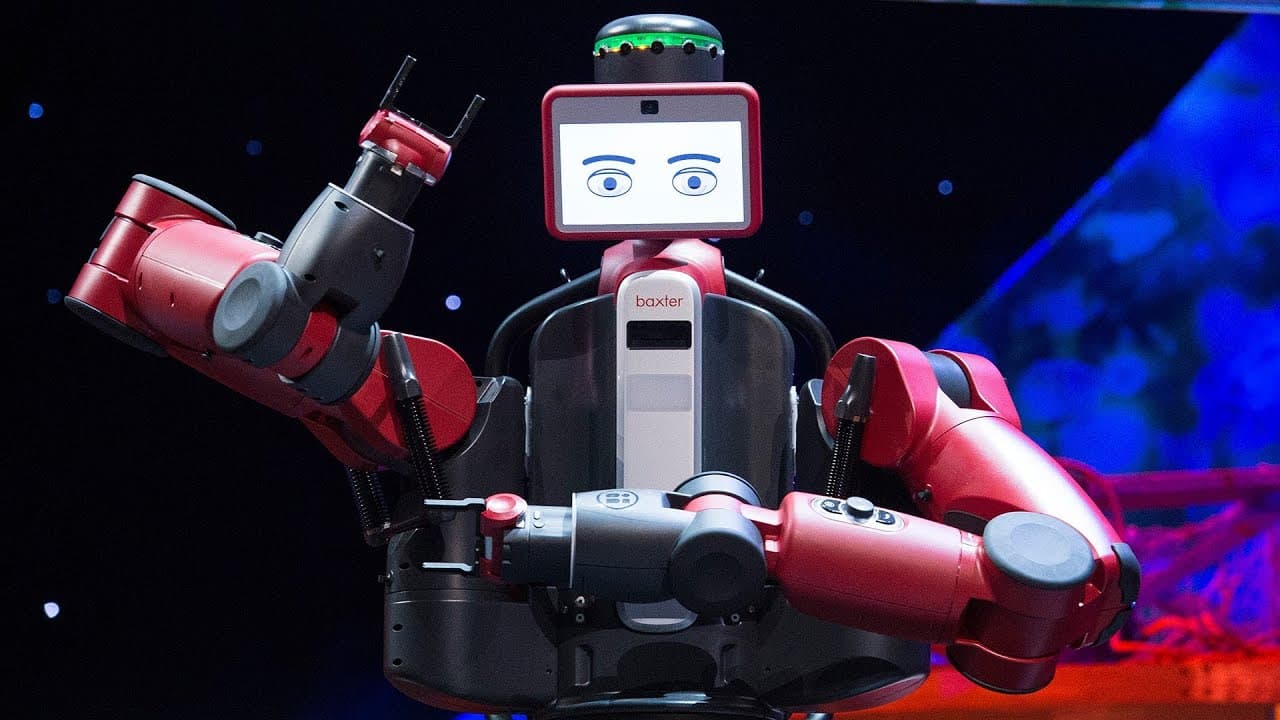
In this content, the speaker discusses the fear of job loss due to artificial intelligence and robots, and presents Baxter as a robot that ordinary people can interact with in an industrial setting.
Transcript
Well, Arthur C. Clarke, a famous science fiction writer from the 1950s, said that, "We overestimate technology in the short term, and we underestimate it in the long term." And I think that's some of the fear that we see about jobs disappearing from artificial intelligence and robots. That we're overestimating the technology in the short term. But ... Read More
Key Insights
- 🤖 The fear of job loss due to technology is overestimated in the short term but underestimated in the long term.
- 📚 The need for librarians increased after the introduction of mainframe computers in 1957, but decreased with the advent of the internet and search engines.
- 💼 Office workers became programmers of spreadsheets when PC's were introduced in the 1980s, increasing their capabilities.
- 🤖 Robots like PackBot and TUGs are being used in hospitals and dangerous situations to take over mundane tasks and free up time for healthcare professionals.
- 🏭 Factory robots are seen as dangerous and inaccessible to ordinary workers, but robots like Baxter are designed for interaction in an industrial setting.
- 💼 Current factory workers are aging, and tools like robots can help them collaborate and continue working.
- 🌍 Climate change and demographics, including an aging population, will require the use of robots for tasks that become harder as people get older.
- 🦳 Robotics can provide dignity and control to older individuals by assisting with tasks that would otherwise rely on scarce caregivers.
Install to Summarize YouTube Videos and Get Transcripts
Explore YouTube Video Summarizer or Get YouTube Transcript Extractor
Questions & Answers
Q: Are fears about jobs disappearing due to artificial intelligence and robots valid?
It's possible that our fears about job loss due to artificial intelligence and robots are overestimated in the short term. However, in the long term, we may actually underestimate the need for technology to fill in the gaps created by demographic changes and the increasing number of jobs that need to be done.
Q: Has the fear of losing jobs to technology been present for a long time?
Yes, the fear of losing jobs to technology is not a recent phenomenon. Evidence of this can be seen as far back as 1957 when the introduction of a mainframe computer in a company's library led to concerns among librarians that their jobs would disappear. However, it took several decades and the advent of the internet and search engines for the need for librarians to decline significantly.
Q: Did the number of jobs for librarians increase or decrease after the introduction of mainframe computers?
Contrary to the fears of librarians in the 1950s, the number of jobs for librarians actually increased for a long time after the introduction of mainframe computers. It was only later, with the rise of the internet and search engines, that the need for librarians decreased. In fact, wages for librarians grew faster than wages for other jobs during that same time period.
Q: How did the introduction of spreadsheets in the 1980s impact office workers?
The introduction of spreadsheets in the 1980s transformed office work. Instead of being mere calculation tools, spreadsheets were designed to empower office workers, allowing them to become programmers of spreadsheets. This increased their capabilities and enabled them to do more than just mundane computations.
Q: How are robots being used in different areas of our lives currently?
Robots have become increasingly prevalent in various aspects of our lives. For instance, in the military, robots like the PackBot are used to handle dangerous tasks such as detecting roadside bombs. In hospitals, robots like the TUGs are employed to transport items like dirty sheets and dishes, allowing nurses and nurse's aides to dedicate more time to patient care. Robots are gradually becoming integrated into our daily lives, serving different purposes and enhancing efficiency.
Q: Why does the speaker emphasize the importance of ordinary workers being able to interact with robots in industrial settings?
The speaker believes that the technology of factory robots has often created a divide between workers and the machines. To address this, the speaker emphasizes the need for ordinary workers to be able to interact with robots in an industrial setting. This would empower workers to collaborate with robots, increase their capabilities, and provide them with tools they can easily learn to use.
Q: How can robots help address the challenges of an aging population?
With an aging population and a shortage of caregivers, robots can play a vital role in maintaining the quality of life for older individuals. As people age and become more frail, tasks that were once simple can become increasingly difficult. Robots can assist with everyday activities like grocery shopping, bringing in groceries, or driving to visit loved ones. By relying on robots, individuals can maintain their independence and have more control over their own lives as they age.
Summary & Key Takeaways
-
Arthur C. Clarke's statement about overestimating technology in the short term and underestimating it in the long term explains the fear of job disappearance due to artificial intelligence and robots.
-
The usage of technology throughout history, such as the example of librarians and spreadsheets, shows that jobs can increase and evolve alongside technological advancements.
-
The introduction of robots like Baxter in industrial settings allows for collaboration between humans and technology, providing tools for workers to become trainers and adapt to changing demographics and job demands.
Read in Other Languages (beta)
Share This Summary 📚
Summarize YouTube Videos and Get Video Transcripts with 1-Click
Try YouTube Summary with ChatGPT & Claude or YouTube Transcript Generator
Explore More Summaries from TED 📚



Summarize YouTube Videos and Get Video Transcripts with 1-Click
Try YouTube Summary with ChatGPT & Claude or YouTube Transcript Generator