Critical Theory - Marxism
TL;DR
Marxist and Neo-Marxist theories analyze global inequality and power dynamics through critiques of capitalism.
Transcript
Hey everyone! Noah here. Welcome back. In this video, we're going look at another of the critical theories of international relations, namely Marxist and neo-marxist approaches. Marxism has its roots in the economic analysis and critique of capitalism developed by Karl Marx and Frederick Engles in the 1800's. Marx and Engels were primarily concerne... Read More
Key Insights
- 🌐 Marxist and Neo-Marxist approaches offer critical perspectives on global inequalities and economic exploitation.
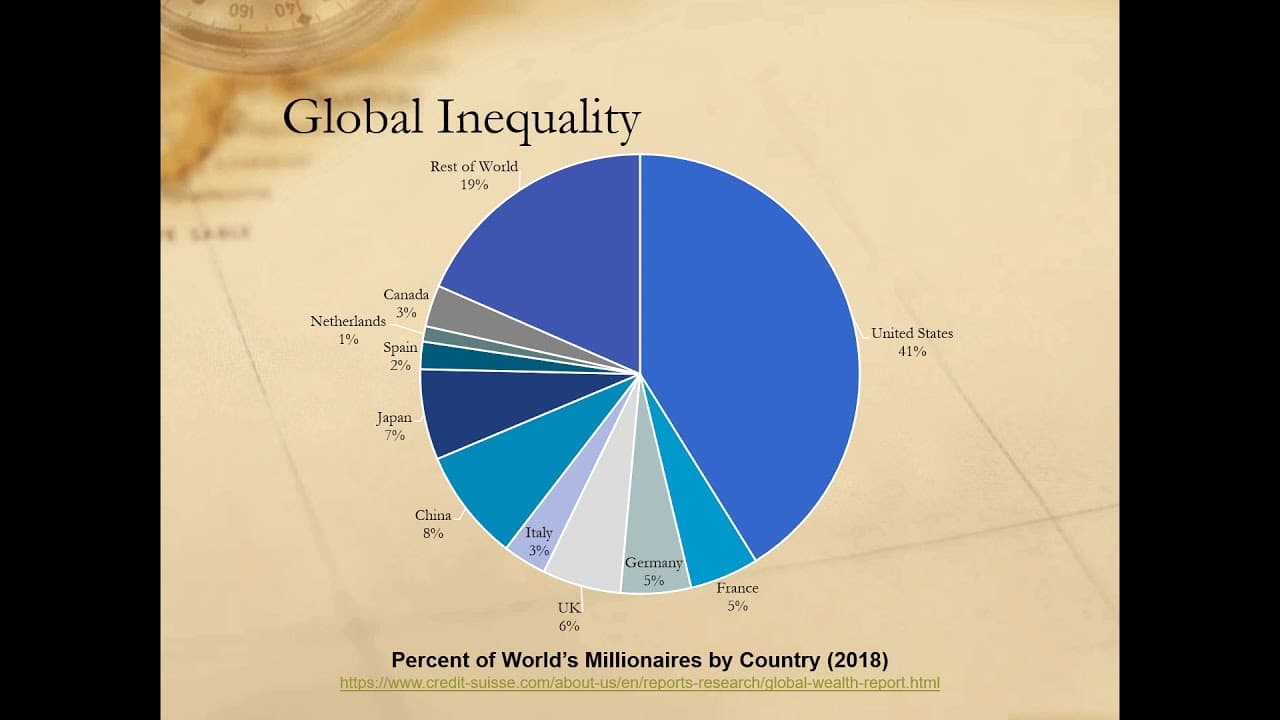
- ❓ The concentration of wealth in the top percentages highlights societal disparities.
- ✊ Concepts like mode of production and base-superstructure relations shape power structures in society.
- ❓ Antonio Gramsci's theory of hegemony emphasizes ideological dominance in maintaining authority.
- 💯 Neo-Marxist theories like Dependency and World Systems Theory analyze global structural constraints and core-periphery dynamics.
- ✊ Critiques of capitalism and economic determinism are central to Marxist approaches in understanding power dynamics.
- 🥅 Marxist scholars emphasize understanding the source and impact of economic inequality as a primary goal.
Install to Summarize YouTube Videos and Get Transcripts
Explore YouTube Video Summarizer or Get YouTube Transcript Extractor
Questions & Answers
Q: What are the major theorists and concepts in Marxist approaches to international relations?
Major theorists include Marx, Lenin, Samir Amin, Immanuel Wallerstein, and Antonio Gramsci. Concepts such as mode of production, base, and superstructure are fundamental to understanding power dynamics.
Q: How does Marxist theory explain global inequality trends?
Marxists analyze wealth concentration and economic exploitation among different world populations. The core-periphery division in the world economy perpetuates inequality and underdevelopment in the global South.
Q: What is Antonio Gramsci's theory of hegemony?
Gramsci's concept of hegemony emphasizes intellectual and moral leadership by ruling classes to influence society's values as common sense. It highlights the power of ideas and consensus over coercion in maintaining authority.
Q: How do Neo-Marxist theories like Dependency and World Systems Theory contribute to understanding global power dynamics?
Dependency Theory explores how the global South faces structural constraints in economic development due to global economic systems, while World Systems Theory analyzes core-periphery dynamics in the international economy.
Summary & Key Takeaways
-
Marxist approaches to international relations focus on economic analysis and critique of capitalism from Marx to Lenin and beyond.
-
Global inequality trends are apparent through wealth concentration data among different world populations.
-
Key Marxist concepts of mode of production, base, and superstructure define societal power dynamics.
Read in Other Languages (beta)
Share This Summary 📚
Summarize YouTube Videos and Get Video Transcripts with 1-Click
Try YouTube Summary with ChatGPT & Claude or YouTube Transcript Generator
Explore More Summaries from Noah Zerbe 📚

Summarize YouTube Videos and Get Video Transcripts with 1-Click
Try YouTube Summary with ChatGPT & Claude or YouTube Transcript Generator