How to complete a research ethics application
TL;DR
Dr. Lyndon Walker shares essential tips for completing ethics applications in human research.
Transcript
hi i'm dr lyndon walker the following video here on youtube is a compilation of the segments from my skillshare course on completing an ethics application so you can watch through here on youtube you can also click the link below the video if you want to work through it on skillshare skillshare often will offer 7 and 14 day premium memberships whic... Read More
Key Insights
- 🗯️ Ethics applications are a mandatory step for any research involving human participants to ensure their safety and rights.
- 👻 The consent process must be clear and allow participants the freedom to decline or withdraw without repercussions.
- 👂 Various ethical challenges exist, including handling sensitive topics and ensuring research design is sound.
- 👨🔬 Ethical research contributes to academic credibility and can significantly influence the quality of research outcomes.
- 🤩 Sample size justification and appropriate data handling protocols are key components for a successful ethics submission.
- ❓ Understanding jurisdiction-specific ethical guidelines and legal requirements is crucial for researchers.
- 💦 Cultural sensitivity should be integrated into research processes, particularly when working with marginalized or vulnerable groups.
Install to Summarize YouTube Videos and Get Transcripts
Explore YouTube Video Summarizer or Get YouTube Transcript Extractor
Questions & Answers
Q: Why is obtaining ethics approval necessary for research involving human participants?
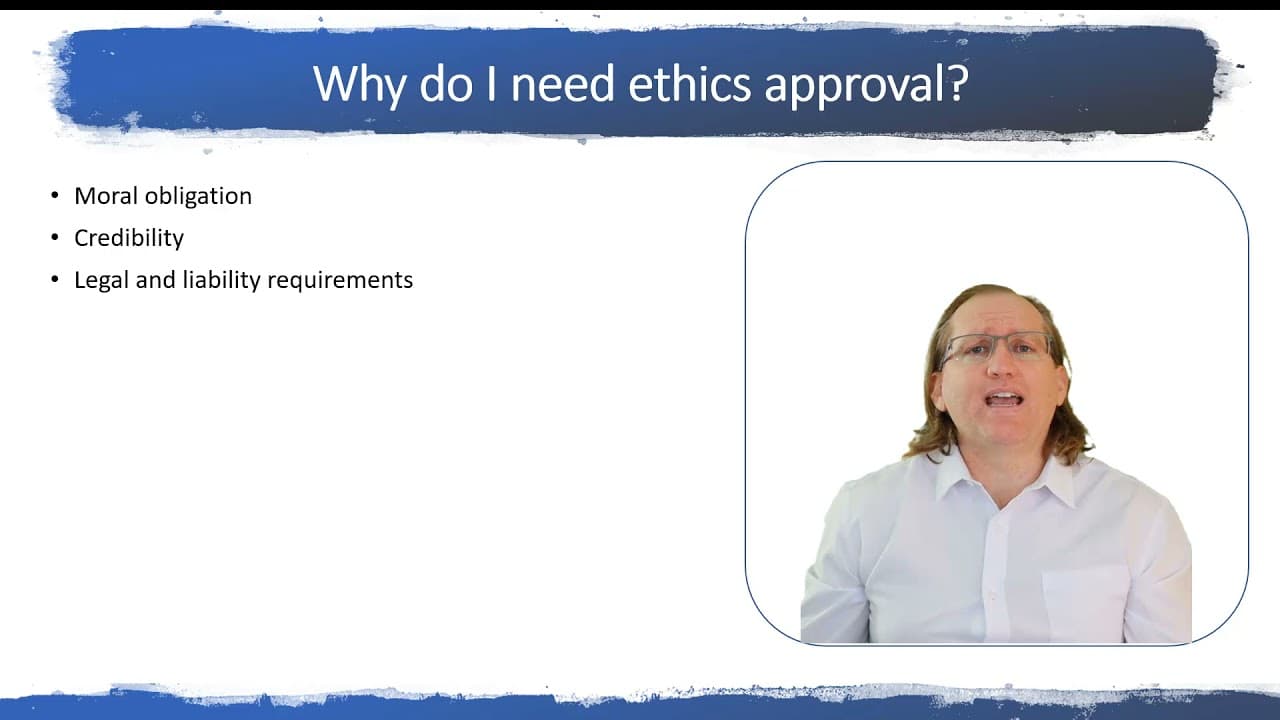
Obtaining ethics approval is essential because it ensures that the research is conducted ethically, protecting participants from potential harm. It also grants credibility to the research as it undergoes a peer-review process. Legal requirements vary by country, and failure to secure ethics approval could lead to personal liability and academic consequences, such as rejection of thesis or publication.
Q: What information is typically required in an ethics application?
An ethics application typically requires detailed descriptions of the research project, including the rationale, methodology, data collection methods, and participant consent processes. Researchers must also address potential ethical concerns, storage of data, and plans for analysis and dissemination. This thorough documentation helps ethics committees evaluate adherence to ethical principles.
Q: How can researchers ensure participant consent is informed and voluntary?
Researchers can ensure informed and voluntary consent by providing clear, straightforward information about the study’s purpose, procedures, risks, and benefits. Participants should be made aware of their right to withdraw at any time without penalty. Obtaining signed consent forms and requiring parental consent for minors are crucial elements of this process.
Q: What are some common ethical issues researchers need to navigate?
Researchers often face ethical issues such as ensuring the welfare of vulnerable populations, navigating power dynamics between researchers and participants, and managing potential biases in participant recruitment. Other concerns include data privacy, conflicts of interest, and the handling of sensitive information, which all require careful consideration throughout the research process.
Q: What practical tips does Dr. Walker offer for a successful ethics application submission?
Dr. Walker advises researchers to find exemplary applications to model their submissions after, plan ahead to allow time for approvals, complete all sections of the application thoroughly, and seek advice when needed. Clear communication and adherence to timelines are essential for avoiding delays and ensuring a streamlined process.
Q: What are the consequences of not obtaining ethics approval before starting research?
Without ethics approval, researchers may face severe consequences such as personal liability for any harm that occurs during the study, denial of degree completion by academic institutions, and refusal of journal publications. Additionally, lacking ethics approval can harm a researcher’s reputation, making it difficult to find collaborators or job opportunities in the future.
Summary & Key Takeaways
-
Dr. Lyndon Walker presents a detailed guide on completing ethics applications for human research, emphasizing the necessity of ethical approval before data collection.
-
The video outlines key principles and common requirements for ethics applications, stressing informed consent, participant confidentiality, and minimizing harm.
-
Walker discusses various ethical issues researchers may face, such as participant vulnerability and conflicts of interest, and offers practical tips for smooth completion of applications.
Read in Other Languages (beta)
Share This Summary 📚
Summarize YouTube Videos and Get Video Transcripts with 1-Click
Try YouTube Summary with ChatGPT & Claude or YouTube Transcript Generator
Explore More Summaries from Dr Lyndon Walker 📚





Summarize YouTube Videos and Get Video Transcripts with 1-Click
Try YouTube Summary with ChatGPT & Claude or YouTube Transcript Generator