Is The Survival of Humanity Economically Viable?
TL;DR
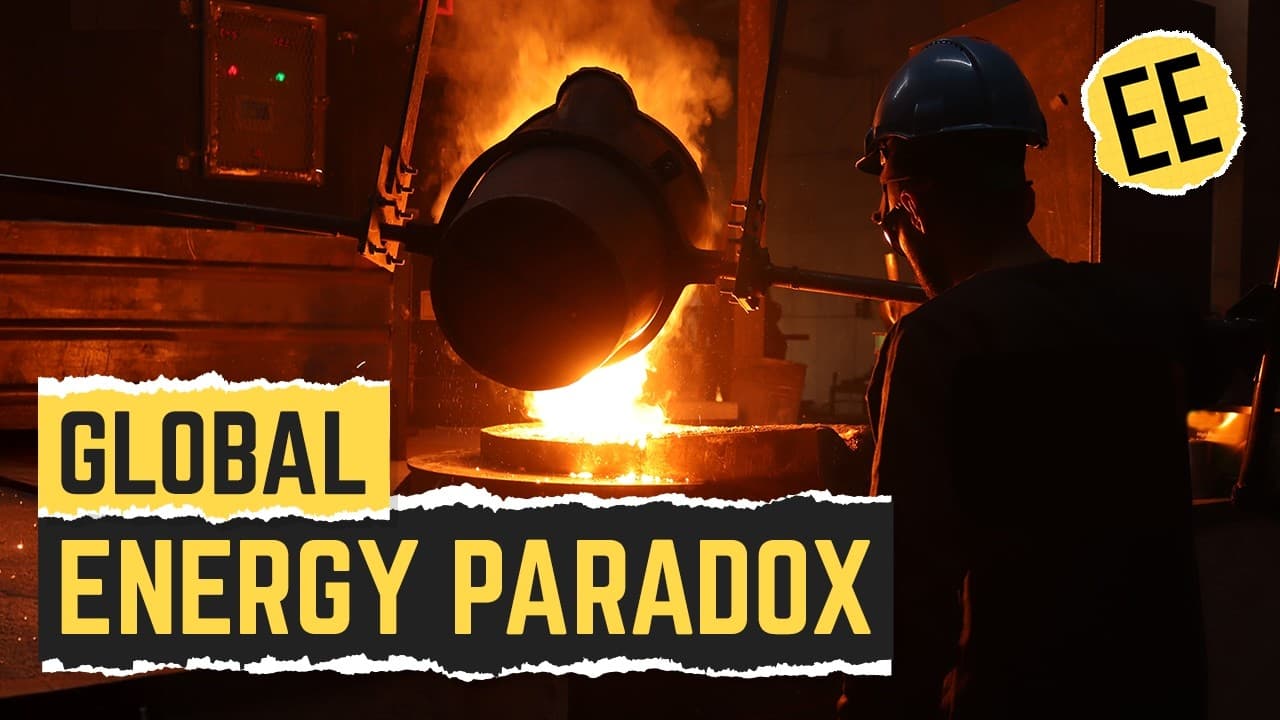
Balancing energy abundance, security, and net zero is economically challenging.
Transcript
Economies have always and will always run on energy. For an economy to prosper, energy needs to be cheap. For an economy to be safe from geopolitical shocks, energy needs to be secure. And now to meet new global commitments, energy eventually needs to be green in whatever form that may take. Now in reality, most economies are struggling to achieve ... Read More
Key Insights
- Energy is crucial for economic prosperity, requiring a balance between being cheap, secure, and environmentally friendly, but achieving all three is challenging.
- Global energy prices have surged since 2000, causing economic strain and highlighting the need for a sustainable energy approach.
- The economic costs of global warming, including extreme weather and reduced agricultural productivity, are projected to significantly impact global GDP by 2100.
- Mitigating climate change is economically viable, costing 2-3% of global GDP annually, compared to a 23-50% GDP loss from unmitigated warming by 2100.
- Renewable energies, particularly wind and solar, are vital for achieving energy abundance and security, but they face challenges like intermittency and storage.
- Nuclear energy offers a stable, low-carbon power source but requires significant upfront investment and faces political challenges.
- Carbon pricing is a potential solution to incentivize decarbonization, but current schemes are insufficiently impactful due to low pricing and free allowances.
- Achieving net zero by 2050 demands global cooperation and strong government intervention to align economic incentives with environmental goals.
Install to Summarize YouTube Videos and Get Transcripts
Explore YouTube Video Summarizer or Get YouTube Transcript Extractor
Questions & Answers
Q: Why is energy crucial for economic prosperity?
Energy is essential for powering industries, transportation, and infrastructure, all of which are fundamental to economic growth. Access to affordable and secure energy allows countries to boost industrial output, create jobs, and increase real incomes, as demonstrated by cases like the American shale boom and Iceland's geothermal energy utilization.
Q: What are the economic costs of global warming?
Global warming leads to extreme weather events, reduced agricultural productivity, and decreased labor supply, all of which negatively impact economic assets and productivity. These factors contribute to a projected reduction in global GDP by 23-50% by 2100 if current warming trends continue, emphasizing the need for mitigation efforts.
Q: How does the cost of mitigating climate change compare to the cost of inaction?
Mitigating climate change is estimated to cost 2-3% of global GDP annually, which is significantly lower than the projected 23-50% GDP loss from unmitigated global warming by 2100. This economic analysis supports the argument that investment in climate mitigation is a financially sound decision for long-term prosperity.
Q: What role do renewable energies play in achieving net zero?
Renewable energies like wind and solar are crucial for reducing carbon emissions and achieving net zero by 2050. They offer the potential for energy independence and security, but challenges such as intermittency and energy storage need to be addressed to maximize their effectiveness in meeting global energy demands.
Q: Why is nuclear energy considered a viable solution for clean energy?
Nuclear energy provides a stable and reliable source of low-carbon power, making it an essential component of a diversified energy strategy. It offers energy security and stable prices, as seen in France, but requires significant upfront investment and faces political challenges related to safety and proliferation concerns.
Q: What is carbon pricing and how does it help reduce emissions?
Carbon pricing is a market-based approach to reducing emissions by assigning a cost to carbon emissions. It incentivizes businesses and consumers to lower their carbon footprint by reflecting the social cost of emissions in market prices. However, current schemes often fall short due to low pricing and generous free allowances.
Q: What are the challenges in achieving global cooperation on climate change?
Global cooperation on climate change is hindered by geopolitical tensions, differing national interests, and economic disparities. Richer countries are less motivated to act as they face fewer immediate impacts, while poorer countries demand the right to use fossil fuels for development, complicating coordinated global efforts.
Q: How can government intervention support achieving net zero by 2050?
Government intervention is crucial for aligning economic incentives with environmental goals. Policies such as carbon pricing, subsidies for renewable energy, and investment in energy infrastructure can drive the transition to a low-carbon economy. Strong policy frameworks and international cooperation are essential to achieve net zero by 2050.
Summary & Key Takeaways
-
The video explores the economic challenges of balancing energy abundance, security, and environmental sustainability amidst rising global energy prices.
-
It discusses the economic impacts of global warming, including damage from extreme weather and reduced agricultural productivity, projecting significant GDP losses by 2100.
-
The video advocates for renewable energy and nuclear power as solutions, emphasizing the need for carbon pricing and global cooperation to achieve net zero by 2050.
Read in Other Languages (beta)
Share This Summary 📚
Summarize YouTube Videos and Get Video Transcripts with 1-Click
Try YouTube Summary with ChatGPT & Claude or YouTube Transcript Generator
Explore More Summaries from Economics Explained 📚





Summarize YouTube Videos and Get Video Transcripts with 1-Click
Try YouTube Summary with ChatGPT & Claude or YouTube Transcript Generator