Mass spectrometry | Atomic structure and properties | AP Chemistry | Khan Academy
TL;DR
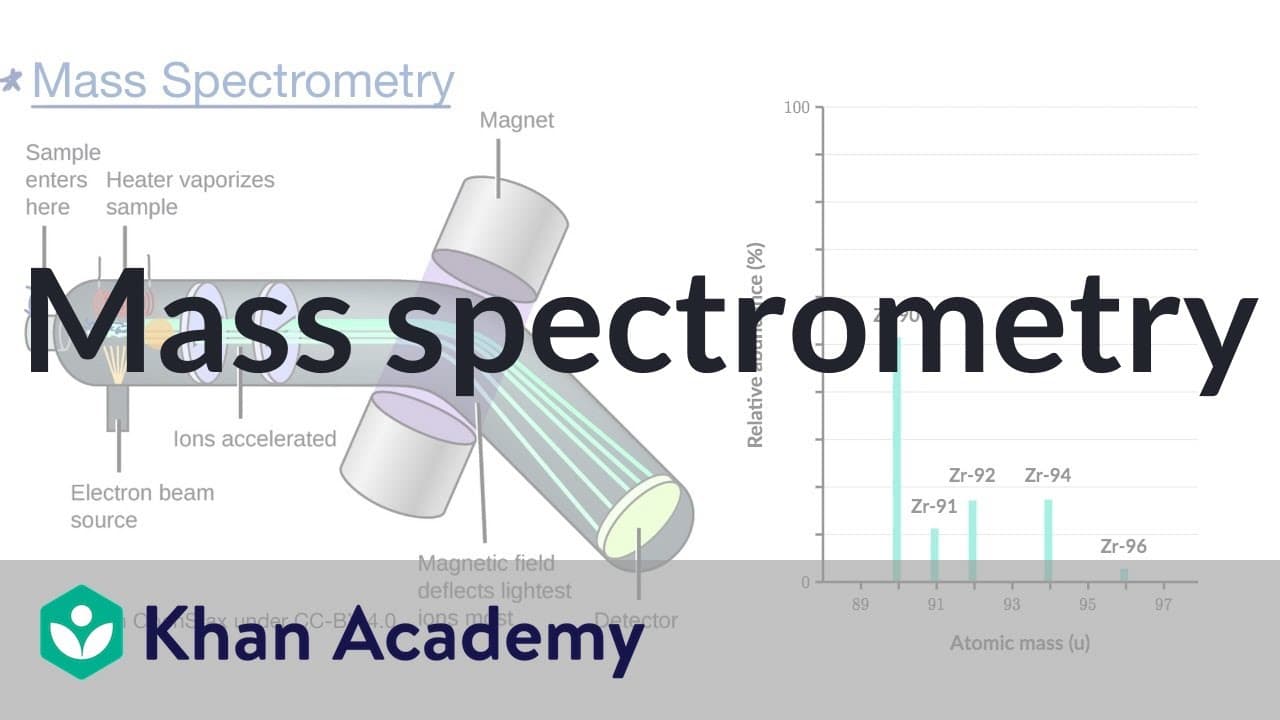
Chemists use mass spectrometry to determine the different isotopes of an element and their relative abundance by ionizing atoms, accelerating them through a magnetic field, and detecting the deflection of ions with different masses.
Transcript
- [Instructor] In other videos, we have talked about the idea that, even for a given element, you might have different versions of that element, and we call those different versions isotopes. And each isotope of an element can have a different atomic mass. And that stems from the idea that, if it's a given element, it's going to have the same numbe... Read More
Key Insights
- 🫀 Isotopes of an element have different atomic masses due to variations in the number of neutrons.
- 😑 Mass spectrometry involves ionizing atoms, accelerating them, and detecting the deflection of ions with different masses.
- 😑 The deflection of ions in a magnetic field allows for the determination of isotopes and their abundance.
Install to Summarize YouTube Videos and Get Transcripts
Explore YouTube Video Summarizer or Get YouTube Transcript Extractor
Questions & Answers
Q: How do chemists determine the different isotopes of an element?
Chemists use a technique called mass spectrometry which involves ionizing atoms, accelerating them through a magnetic field, and observing the deflection of ions with different masses.
Q: What is the purpose of ionizing atoms in mass spectrometry?
Ionizing atoms gives them a charge, allowing them to be accelerated through electric plates and then into a magnetic field for deflection based on their mass.
Q: How does mass spectrometry determine the abundance of isotopes?
By detecting ions at different points in the detector, chemists can identify the abundance of each isotope. More ions hitting a certain part of the detector indicate a higher abundance of that isotope.
Q: What information does the resulting graph from mass spectrometry provide?
The graph shows the various isotopes of an element and their abundance percentages based on the deflection of ions in the magnetic field.
Summary & Key Takeaways
-
Chemists use mass spectrometry to identify different isotopes of an element and their abundance.
-
Mass spectrometry involves ionizing atoms, accelerating them through a magnetic field, and detecting the deflection of ions with different masses.
-
The resulting data can be used to create a graph showing the isotopes and their percentages.
Read in Other Languages (beta)
Share This Summary 📚
Summarize YouTube Videos and Get Video Transcripts with 1-Click
Try YouTube Summary with ChatGPT & Claude or YouTube Transcript Generator
Explore More Summaries from Khan Academy 📚



Summarize YouTube Videos and Get Video Transcripts with 1-Click
Try YouTube Summary with ChatGPT & Claude or YouTube Transcript Generator