What Are Zener Diodes and How Do They Work?
TL;DR
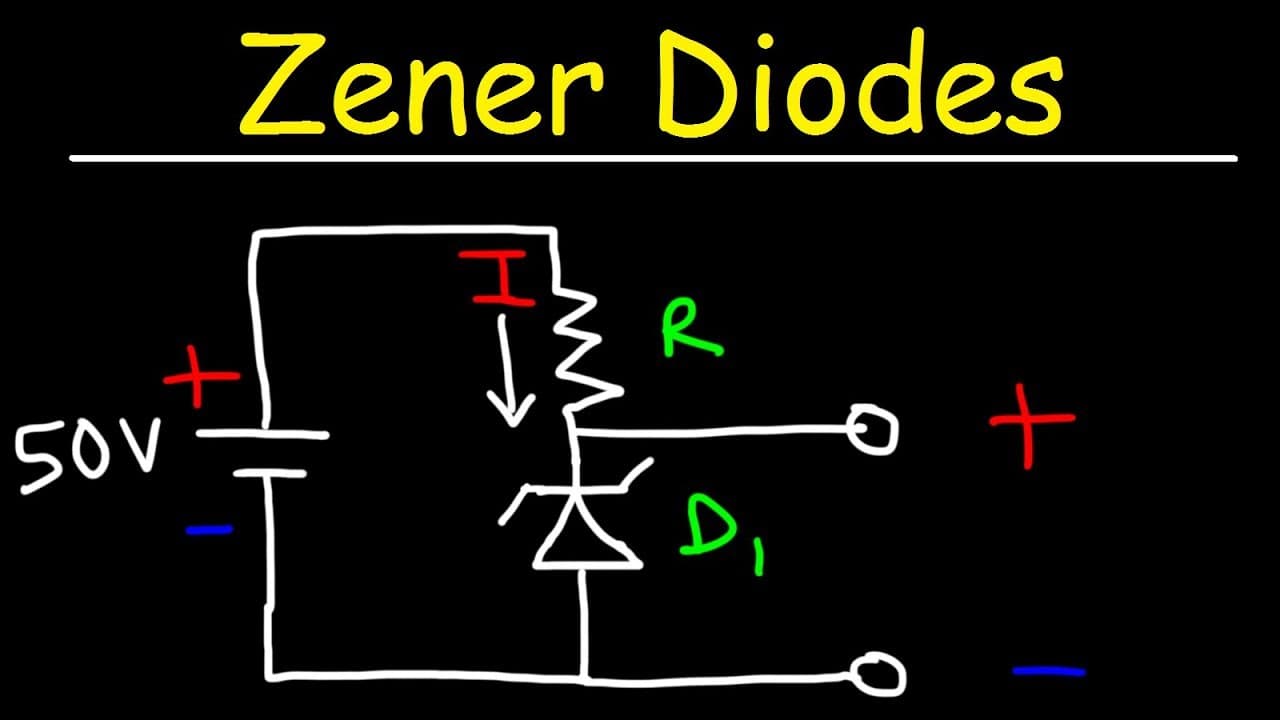
Zener diodes can conduct current both forwards and backwards, making them essential for voltage regulation. When reverse voltage exceeds a zener diode's rating, it remains at a constant voltage, effectively regulating the circuit. This property allows for accurate current calculations and usage in various applications like clamping circuits and protecting against voltage spikes.
Transcript
in this lesson we're going to talk about zener diodes but to begin let's compare the zener diode to a conventional diode on the right this is the symbol for a zener diode now a conventional diode is designed to allow conventional current to flow in the forward direction so this would be the positive terminal and this would be the negative terminal ... Read More
Key Insights
- 👻 Zener diodes allow current flow in both directions, making them useful for voltage regulation.
- ⚡ The voltage across a zener diode remains constant as long as the current remains within certain limits.
- ❓ The current in a circuit with a zener diode can be calculated using a simple formula.
- 🗜️ Zener diodes can be used in combination to create clamping circuits.
- ⚡ Zener diodes are commonly used in electronic circuits for voltage regulation and protection against voltage spikes.
- ⚡ The reverse breakdown voltage of a zener diode determines its operating characteristics.
- 👋 Zener diodes can be used to convert an AC sine wave into a clamp wave with a specific voltage range.
Install to Summarize YouTube Videos and Get Transcripts
Explore YouTube Video Summarizer or Get YouTube Transcript Extractor
Questions & Answers
Q: What is the difference between a conventional diode and a zener diode?
Conventional diodes only allow current to flow in the forward direction, while zener diodes allow current flow in both forward and reverse directions.
Q: How does a zener diode work in reverse bias mode?
When a zener diode is in reverse bias mode, it maintains a relatively constant voltage (rating) as long as the current remains within certain limits.
Q: What happens when the input voltage is lower than the reverse breakdown voltage of a zener diode?
No current flows through the circuit in this case, and the circuit is considered off.
Q: How can the current in a circuit with a zener diode be calculated?
The current can be calculated using the formula: Current = (Input Voltage - Total Reverse Zener Voltage) / Resistance.
Summary & Key Takeaways
-
Zener diodes operate in reverse bias mode and have a specific reverse breakdown voltage.
-
When the reverse voltage applied to the zener diode is below its rating, no current flows through the circuit.
-
When the reverse voltage exceeds the zener diode's rating, the circuit is on, and the voltage across the zener diode remains constant.
Read in Other Languages (beta)
Share This Summary 📚
Summarize YouTube Videos and Get Video Transcripts with 1-Click
Try YouTube Summary with ChatGPT & Claude or YouTube Transcript Generator
Explore More Summaries from The Organic Chemistry Tutor 📚


Summarize YouTube Videos and Get Video Transcripts with 1-Click
Try YouTube Summary with ChatGPT & Claude or YouTube Transcript Generator