How to Pronounce Negative Contractions in English
TL;DR
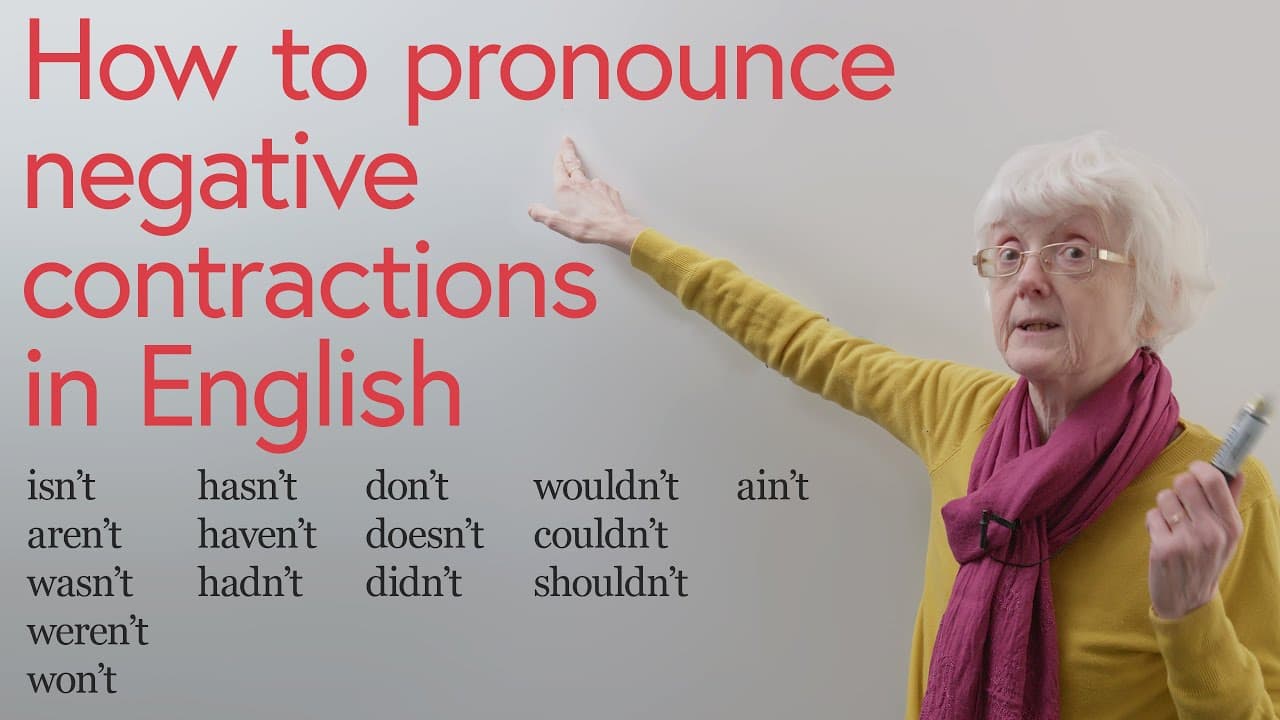
To pronounce negative contractions in English correctly, replace 'not' with an apostrophe and omit the 'o', such as 'isn't' for 'is not' and 'won't' for 'will not'. Familiarize yourself with common forms like 'aren't', 'don't', and informal options like 'ain't', but use the latter cautiously in formal settings.
Transcript
Hello. I'm Gill at engVid. And today, we have a lesson on contractions. And you may already have seen a previous lesson I've done on contractions with the personal pronoun and the verb, with an apostrophe. This is a second one in that series, with negative contractions. Okay. So, you might find it useful to look at the other one first, before you l... Read More
Key Insights
- 😯 Negative contractions help in informal English communication for quicker and more natural speech.
- 💁 Specific verbs like "to be", "to have", and "do" have distinct negative contraction forms.
- 😁 Informal variations like "ain't" exist but should be used with caution in formal settings.
- 🙊 Negative contractions often reflect how people speak in everyday conversation, favoring brevity and informality.
- 🤮 Remembering the rule of omitting the "o" and using an apostrophe helps in forming negative contractions correctly.
Install to Summarize YouTube Videos and Get Transcripts
Explore YouTube Video Summarizer or Get YouTube Transcript Extractor
Questions & Answers
Q: What is the purpose of using negative contractions in English?
Negative contractions are used in informal speech to shorten phrases like "is not" to "isn't" for quicker and easier communication.
Q: How do negative contractions differ from standard verb forms?
Negative contractions omit the "o" from the word "not" and replace it with an apostrophe to indicate the missing letter, like in "didn't" for "did not."
Q: Are there specific rules to follow when forming negative contractions in English?
Yes, negative contractions follow specific patterns based on the verb being used, such as "hasn't" for "has not" and "won't" for "will not."
Q: Why are informal variations like "ain't" mentioned in the lesson?
Informal variations like "ain't" are introduced to show non-standard negative contractions, which may be used in casual speech but are not recommended for formal contexts.
Summary & Key Takeaways
-
Negative contractions abbreviate phrases like "is not" to "isn't" for informal speaking.
-
Various verbs such as "to be", "to have", and "do" have specific negative contraction forms.
-
Informal variations like "ain't" exist but are considered non-standard for formal contexts.
Read in Other Languages (beta)
Share This Summary 📚
Summarize YouTube Videos and Get Video Transcripts with 1-Click
Try YouTube Summary with ChatGPT & Claude or YouTube Transcript Generator
Explore More Summaries from Learn English with Gill · engVid 📚




Summarize YouTube Videos and Get Video Transcripts with 1-Click
Try YouTube Summary with ChatGPT & Claude or YouTube Transcript Generator