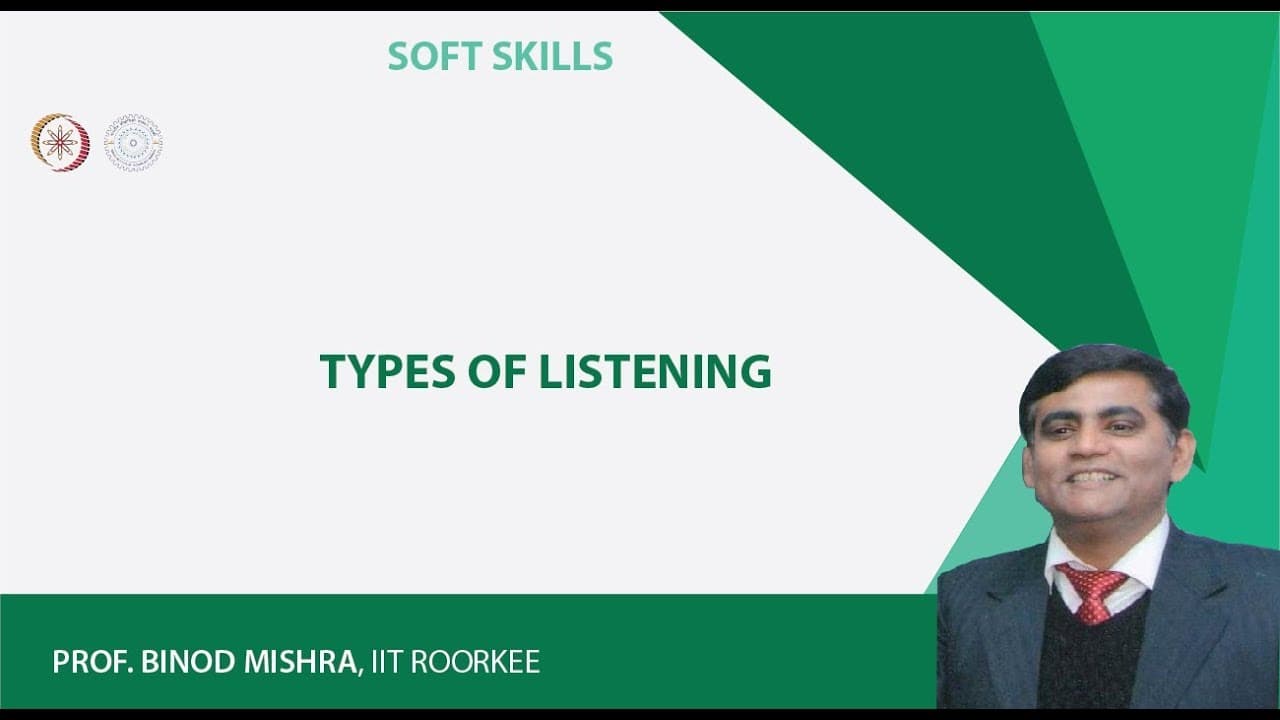
What Are the Different Types of Listening?
TL;DR
Different types of listening include combative, attentive, reflective, content, empathic, appreciative, analytical, and prejudiced listening. Each type serves a unique purpose and is suited to specific situations. Effective listening enhances communication, aids problem-solving, and fosters better relationships in both personal and professional settings.
Transcript
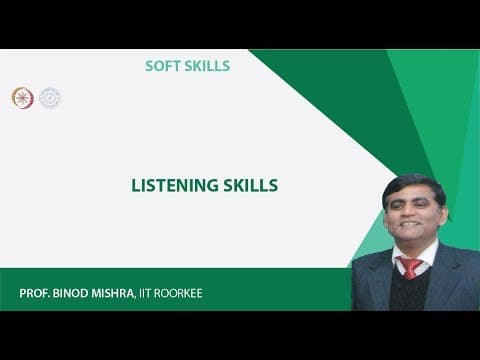
hello friends in the previous lecture we talked about listening skills as one of the ingredients of soft skills and if you have listened to me well you remember i focused on the need of a specific kind of listening i hope you are listening to me but then what is this a specific kind of listening and in this lecture we are going to talk about the di... Read More
Key Insights
- Combative listening involves listening with a mindset of opposition, which hinders effective communication.
- Attentive listening requires paying equal attention to every word, facilitating better understanding.
- Reflective listening combines listening with analysis, enhancing personal knowledge.
- Content listening focuses on gathering information for dissemination or official purposes.
- Empathic listening involves understanding and sharing feelings, crucial for resolving personal and professional issues.
- Appreciative listening is about valuing and acknowledging others' ideas or performances.
- Analytical listening involves evaluating different perspectives, essential in conflict resolution and negotiations.
- Prejudiced listening is biased and obstructs genuine understanding, often leading to miscommunication.
Install to Summarize YouTube Videos and Get Transcripts
Explore YouTube Video Summarizer or Get YouTube Transcript Extractor
Questions & Answers
Q: What is combative listening?
Combative listening is a type of listening where the listener is focused on opposing or combating the speaker's message. This often leads to ineffective communication as the listener is more concerned with rebuttal than understanding the message. It involves listening with a mindset of protest, which can prevent proper comprehension and dialogue.
Q: How does reflective listening work?
Reflective listening involves not only hearing the speaker's words but also analyzing and relating them to one's own knowledge and experience. This type of listening is crucial for personal development as it allows the listener to gain deeper insights and understanding. Reflective listening helps in making informed decisions by evaluating the information critically.
Q: What is empathic listening and why is it important?
Empathic listening is the practice of understanding and sharing the feelings of the speaker. It is crucial in both personal and professional settings as it helps in building trust and resolving conflicts. By listening empathically, one can provide support and advice, making the speaker feel understood and valued, which enhances relationships.
Q: Why is appreciative listening significant?
Appreciative listening is important because it involves valuing and acknowledging the speaker's ideas, performances, or contributions. This type of listening encourages creativity and innovation, as people feel motivated and appreciated. It is particularly significant in environments where new ideas are shared, such as brainstorming sessions or artistic performances.
Q: What role does analytical listening play in conflict resolution?
Analytical listening plays a crucial role in conflict resolution by allowing the listener to evaluate different perspectives and gather all necessary information before making a decision. It involves listening to all parties involved, which helps in understanding the root cause of the conflict and finding a fair and unbiased solution.
Q: How does prejudiced listening affect communication?
Prejudiced listening negatively affects communication as it involves bias and preconceived notions that prevent the listener from understanding the speaker's message. This type of listening can lead to misunderstandings and conflicts, as the listener is often focused on their own beliefs rather than genuinely engaging with the speaker's perspective.
Q: What are the external factors affecting listening?
External factors affecting listening include noise, venue, and timing. Noise can disrupt concentration, making it difficult to focus on the speaker. The venue should be conducive to listening, free from distractions. Timing is also crucial, as meetings or discussions should be scheduled at convenient times to ensure participants are attentive and engaged.
Q: What internal factors can hinder effective listening?
Internal factors that hinder effective listening include a person's state of mind, ego, and language comprehension. A distracted or preoccupied mind cannot focus on the speaker. Ego can prevent individuals from valuing the speaker's message. Language barriers can also obstruct understanding if the speaker's language or vocabulary is unfamiliar to the listener.
Summary & Key Takeaways
-
Listening is a multifaceted skill with types such as combative, attentive, reflective, content, empathic, appreciative, analytical, and prejudiced listening. Each type serves distinct purposes, from resolving conflicts to appreciating new ideas. Effective listening is vital in both personal and professional contexts, aiding in communication, problem-solving, and relationship building.
-
Combative listening involves opposition, while attentive listening focuses on understanding every word. Reflective listening adds analysis to comprehension, making it a powerful tool for personal growth. Content listening is about gathering information for dissemination, while empathic listening addresses emotional needs.
-
Appreciative listening values and acknowledges contributions, whereas analytical listening is crucial for conflict resolution and negotiations. Prejudiced listening, on the other hand, is biased and often leads to miscommunication. Developing effective listening skills enhances communication and fosters better relationships.
Read in Other Languages (beta)
Share This Summary 📚
Summarize YouTube Videos and Get Video Transcripts with 1-Click
Try YouTube Summary with ChatGPT & Claude or YouTube Transcript Generator
Explore More Summaries from Soft Skills 📚
Summarize YouTube Videos and Get Video Transcripts with 1-Click
Try YouTube Summary with ChatGPT & Claude or YouTube Transcript Generator