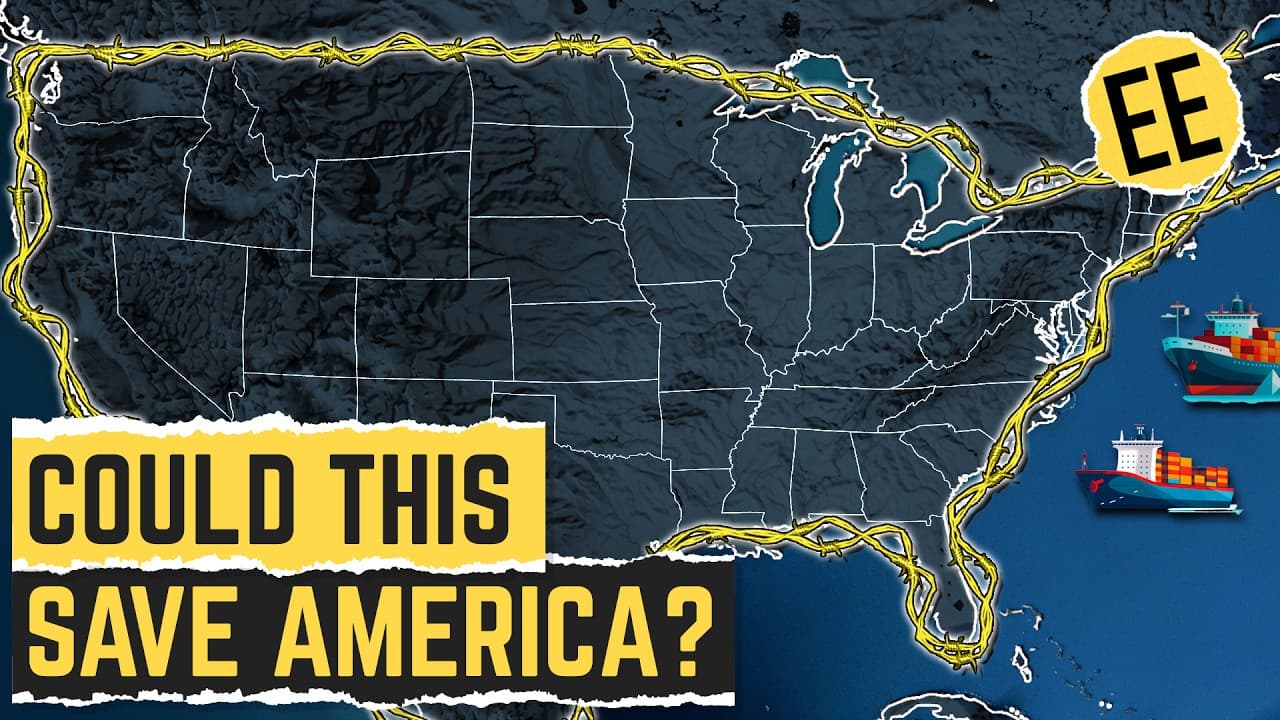
Should the USA Shut Off to Save Its Economy?
TL;DR
The USA may need drastic measures to maintain economic dominance.
Transcript
this episode of Economics explained is brought to you by brilliant in straight up numbers the USA is the largest economy to have ever existed in history It produced more economic output last year than the entire world did in 1993 just 30 years ago it's impossible to say by almost any metric that the influence of the USA is not going to shape the gl... Read More
Key Insights
- The USA, despite being the largest economy, faces challenges from China and India, which are projected to surpass it by 2050.
- Globalization has benefited international companies and developing countries but has led to wage stagnation and job losses in advanced economies.
- The USA's consumer spending has increased significantly, overshadowing investment and government spending, which could hurt long-term economic growth.
- Infrastructure in developing countries is rapidly advancing, while Western economies struggle to maintain aging systems.
- Debt is a major issue for the USA, with household debt rising due to income disparities and high real estate costs.
- Some economists propose the USA should close off from global trade to protect its economy, a drastic measure unlikely to be implemented.
- Technological advancements and automation may reduce dependency on outsourced labor, potentially reshaping global trade dynamics.
- The USA's military spending supports global trade routes, benefiting other countries while adding to its economic burden.
Install to Summarize YouTube Videos and Get Transcripts
Explore YouTube Video Summarizer or Get YouTube Transcript Extractor
Questions & Answers
Q: What are the main challenges facing the USA's economy?
The USA's economy faces challenges from rising global competitors like China and India, projected to surpass it by 2050. Additionally, globalization has resulted in job losses and wage stagnation in advanced economies, while increasing consumer spending overshadows investment and government spending, potentially hurting long-term growth.
Q: How has globalization impacted different economic groups?
Globalization has benefited international companies and workers in developing countries, providing access to lower-cost manufacturing and new markets. However, it has led to job losses and wage stagnation in advanced economies, particularly for non-technical manufacturing workers, and has increased economic burdens on the US federal government.
Q: Why is consumer spending a concern for the USA's economy?
Consumer spending in the USA has increased from 60% to 68% of GDP, overshadowing investment and government spending. This shift could hurt long-term economic growth as it reduces funds for maintaining infrastructure and investing in promising industries, which are crucial for future economic capacity.
Q: What role does infrastructure play in global economic competition?
Infrastructure is crucial for economic growth, with developing countries rapidly advancing in building modern systems to support local industries. In contrast, Western economies struggle to maintain aging infrastructure, which could hinder their economic competitiveness and growth in the long term.
Q: What is the impact of debt on the USA's economy?
Debt is a significant issue for the USA, with household debt rising due to income disparities and high real estate costs. This debt is concentrated in real estate, driven by policies favoring property investment over other productive investments, potentially limiting economic growth and exacerbating financial instability.
Q: What drastic measures do some economists propose for the USA?
Some economists propose that the USA should close off from global trade and default on its debts to protect its economy. This extreme measure is unlikely to be implemented but highlights the need for a conversation on the USA's economic strategy and the impact of globalization on its economic position.
Q: How might technological advancements affect global trade dynamics?
Technological advancements and automation may reduce dependency on outsourced labor by enabling machinery to produce even highly technical items at lower costs than human labor. This shift could reshape global trade dynamics, potentially reducing the comparative advantage of low-cost manufacturing in developing countries.
Q: What is the USA's role in supporting global trade routes?
The USA spends significantly on its military to support global trade routes, ensuring the security of trade and maintaining peace in vital regions. This spending benefits other countries, even non-allies, by providing safe oceans and relative global peace, while adding to the USA's economic burden.
Summary & Key Takeaways
-
The USA is currently the largest economy but faces challenges from China and India, which are projected to surpass it by 2050. Globalization has benefited international companies and developing countries but has led to job losses and wage stagnation in advanced economies.
-
Consumer spending in the USA has increased significantly, overshadowing investment and government spending. This shift could hurt long-term economic growth. Meanwhile, infrastructure in developing countries is rapidly advancing, while Western economies struggle to maintain aging systems.
-
Some economists propose the USA should close off from global trade to protect its economy, a drastic measure unlikely to be implemented. Technological advancements and automation may reduce dependency on outsourced labor, potentially reshaping global trade dynamics.
Read in Other Languages (beta)
Share This Summary 📚
Summarize YouTube Videos and Get Video Transcripts with 1-Click
Try YouTube Summary with ChatGPT & Claude or YouTube Transcript Generator
Explore More Summaries from Economics Explained 📚





Summarize YouTube Videos and Get Video Transcripts with 1-Click
Try YouTube Summary with ChatGPT & Claude or YouTube Transcript Generator