Expensive wine is for suckers
TL;DR
Price doesn't always equate to better wine taste.
Transcript
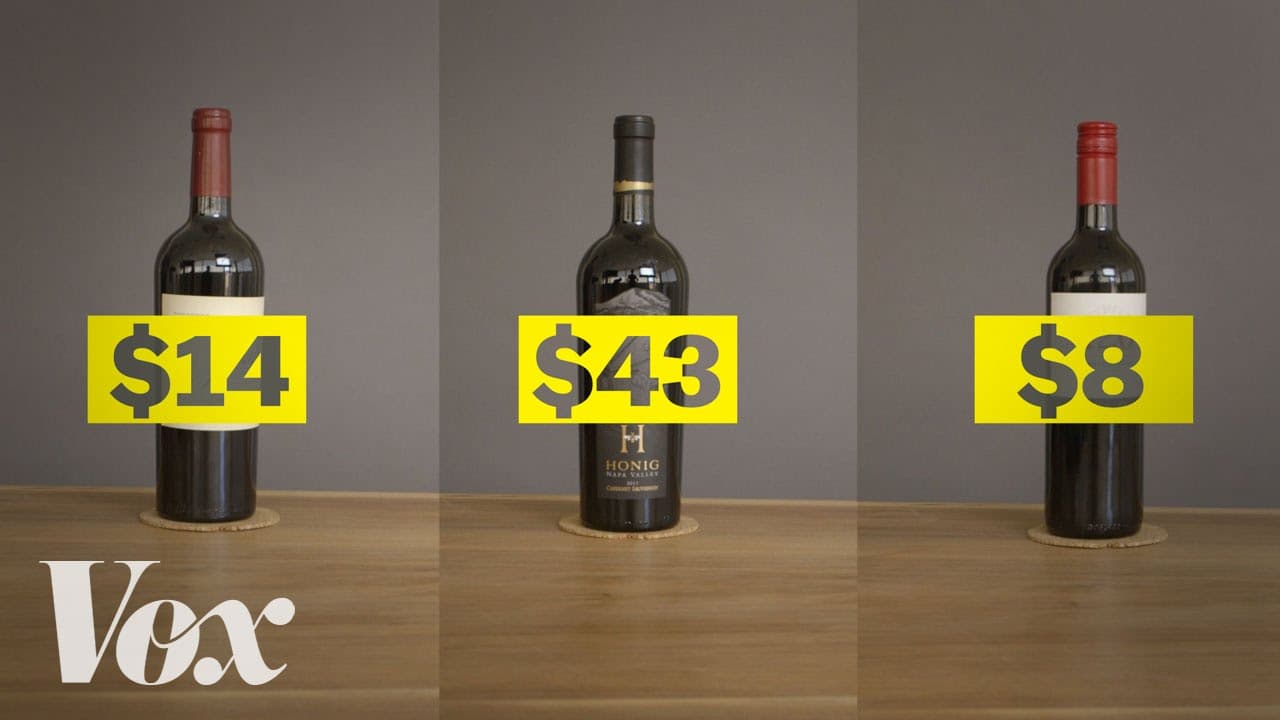
These are 3 red wines that are made from the same grape, but at different prices. The most expensive: a 2011Honig cabernet sauvignon from Napa Valley. Wine Spectator magazine rated it Outstanding. And it cost 5 times more than the one on the right. So does it taste 5 times better? 19 Vox staffers tasted and rated each of the wines. And almost half ... Read More
Key Insights
- Vox staffers participated in a blind tasting of wines with varying prices, revealing that the cost doesn't correlate with preference.
- A 2008 study showed that untrained individuals often don't prefer expensive wines and sometimes rate them lower than cheaper options.
- Wine market trends can be influenced by popular culture, as seen with the impact of the movie 'Sideways' on Pinot Noir and Merlot sales.
- Professional wine judges show inconsistency in their evaluations, with some wines receiving both high and low scores across different competitions.
- Wine critics can have vastly different opinions on the same wine, highlighting the subjective nature of wine tasting.
- People often associate higher prices with better quality, even when the actual wine quality is deliberately worsened in experiments.
- Brain scans reveal that perceived price can affect the enjoyment of wine, with expensive wines triggering more brain activity in regions associated with pleasure.
- The perception of wine quality can be heavily influenced by psychological factors, such as the belief that more expensive means better.
Install to Summarize YouTube Videos and Get Transcripts
Explore YouTube Video Summarizer or Get YouTube Transcript Extractor
Questions & Answers
Q: How did Vox staffers rate the wines based on price?
Vox staffers participated in a blind tasting of three wines with different prices. Almost half correctly identified the most expensive wine, but it wasn't necessarily because they preferred it. The average ratings for the cheapest and most expensive wines were the same, indicating that price did not significantly influence their taste preferences.
Q: What did the 2008 study reveal about wine preferences?
The 2008 study compiled data from 6,000 blind tastings and found that unless individuals had undergone wine training, they did not prefer the taste of more expensive wines. In fact, they often enjoyed them slightly less than cheaper options, suggesting that price isn't a reliable indicator of personal preference.
Q: How did the movie 'Sideways' affect wine sales?
The release of the movie 'Sideways' had a significant impact on the wine market. Sales of Pinot Noir increased after the movie's release, while sales of Merlot slowed down. This demonstrates how pop culture can influence consumer behavior and wine market trends.
Q: What inconsistency exists among professional wine judges?
Professional wine judges often show inconsistency in their evaluations. A statistician found that wines receiving the highest scores in one competition could receive the lowest in another. Additionally, when judges were given the same wine multiple times, only a small percentage awarded it the same medal consistently.
Q: How do wine critics differ in their reviews?
Wine critics can have vastly differing opinions on the same wine, as seen in the 2004 example where two top critics described a wine with contradictory terms. This highlights the subjective nature of wine tasting and the difficulty in establishing a universal standard for wine quality.
Q: What role does price play in wine perception?
Price significantly affects wine perception. Experiments in Australia showed that people rated the same wine higher when told it was more expensive, even when the wine's quality was objectively worsened. This indicates that the perception of price can override actual taste experience.
Q: What did brain scans reveal about wine tasting?
Brain scans showed that when people thought they were drinking an expensive wine, there was more activity in brain regions associated with pleasant tastes and smells. This suggests that the perceived cost can enhance the sensory experience of wine, even if the wine is not objectively better.
Q: What psychological factors influence wine quality perception?
Perception of wine quality is heavily influenced by psychological factors, such as associating higher prices with better quality. Experiments have shown that people often rate wines higher when they believe they are more expensive, demonstrating that preconceived notions about price can alter taste perception.
Summary & Key Takeaways
-
The video explores the common misconception that expensive wines are inherently better than cheaper ones. Through various studies and tastings, it is shown that people often cannot distinguish between pricey and affordable wines, with personal bias playing a significant role.
-
Wine judges and critics frequently display inconsistency in their ratings, sometimes awarding the same wine both high and low scores. This inconsistency suggests that wine evaluation is largely subjective and not as reliable as perceived.
-
Experiments demonstrate that the perceived price can significantly influence the enjoyment of wine. When individuals believe they are drinking expensive wine, their brain activity suggests they enjoy it more, even if the wine quality is objectively poor.
Read in Other Languages (beta)
Share This Summary 📚
Summarize YouTube Videos and Get Video Transcripts with 1-Click
Try YouTube Summary with ChatGPT & Claude or YouTube Transcript Generator
Explore More Summaries from Vox 📚



Summarize YouTube Videos and Get Video Transcripts with 1-Click
Try YouTube Summary with ChatGPT & Claude or YouTube Transcript Generator