How Do Google's OKRs Drive Company Success?
TL;DR
Google's OKR framework promotes transparency and measurable goal setting to align team efforts with company objectives. This system encourages individuals to set ambitious benchmarks while fostering a culture of learning and improvement, independent of performance evaluations.
Transcript
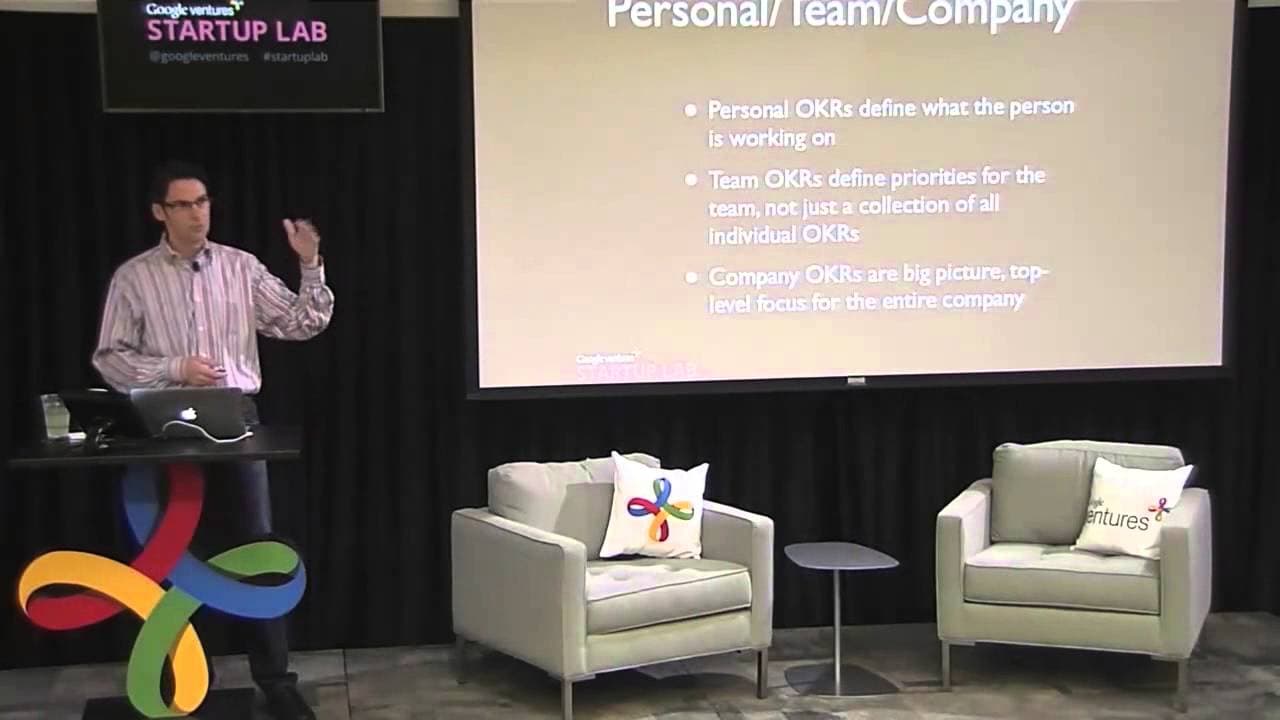
foreign my name is Rick Clow I'm a partner at Google Ventures for those of you I haven't met before thank you for coming this morning uh thank you to those of you watching online we're here to talk about objectives and key results this is one of the critical elements of how Google managed its early execution and really grew ... Read More
Key Insights
- Google's OKR framework, introduced by John Doerr in 1999, emphasizes measurable objectives and key results to drive company growth and alignment.
- OKRs are designed to be ambitious and slightly uncomfortable, encouraging teams and individuals to strive for excellence.
- Transparency is key; OKRs at Google are public within the company, allowing everyone to see each other's goals and progress.
- The OKR process is not tied to performance evaluations, allowing teams to focus on learning and improvement rather than just hitting targets.
- Effective OKRs require a balance between top-down and bottom-up goal setting, ensuring individual contributions align with company priorities.
- Regular reviews and grading of OKRs help teams assess progress, identify obstacles, and adjust strategies as needed.
- Google uses a simple internal tool for managing OKRs, but emphasizes that commitment to the process is more important than the tool itself.
- Implementing OKRs early in a company's lifecycle can instill a culture of focus, discipline, and transparency, benefiting long-term growth.
Install to Summarize YouTube Videos and Get Transcripts
Explore YouTube Video Summarizer or Get YouTube Transcript Extractor
Questions & Answers
Q: How did Google initially implement OKRs?
Google adopted OKRs in 1999 after John Doerr introduced the concept to the founders. The system was immediately embraced as it provided a structured way to quantify goals and measure progress. OKRs were seen as a tool to align the company's efforts and drive growth, even in its early stages.
Q: What is the significance of transparency in Google's OKR system?
Transparency is a fundamental aspect of Google's OKR system. All OKRs are public within the company, allowing employees to see each other's goals and progress. This openness fosters collaboration, accountability, and ensures that everyone is aligned with the company's priorities. It also helps individuals understand how their work contributes to broader objectives.
Q: How are OKRs graded at Google?
OKRs at Google are graded on a scale from 0 to 1, with the target being a score between 0.6 and 0.7. This encourages setting ambitious goals that may not be fully achieved, fostering a culture of continuous improvement. The grading process is meant to provide feedback and insights rather than serve as a performance evaluation tool.
Q: Why are OKRs not used as a performance evaluation tool at Google?
OKRs are not tied to performance evaluations at Google to encourage risk-taking and learning. By separating OKRs from performance reviews, employees can focus on ambitious goals without fear of negative consequences if they fall short. This approach fosters a culture of innovation and continuous improvement.
Q: How does Google's OKR system balance top-down and bottom-up goal setting?
Google's OKR system balances top-down and bottom-up goal setting by allowing individuals to propose their objectives, which are then aligned with company priorities. This approach ensures that employees work on meaningful tasks while contributing to the company's overall goals. It encourages engagement and ownership of the objectives.
Q: What role does regular review play in the OKR process?
Regular review is crucial in the OKR process as it helps assess progress, identify obstacles, and adjust strategies. At Google, OKRs are reviewed and graded quarterly, providing an opportunity to reflect on achievements and learn from challenges. This iterative process ensures continuous alignment and improvement.
Q: What tools does Google use to manage OKRs?
Google uses a simple internal tool to manage OKRs, which allows employees to log in, set objectives, add key results, and enter grades. The focus is on the commitment to the process rather than the sophistication of the tool. Transparency and measurability are emphasized over technological complexity.
Q: When should a company implement OKRs?
A company should implement OKRs as early as possible to instill a culture of focus, discipline, and transparency. Starting the process early helps establish a rhythm of setting and reviewing goals, aligning efforts, and driving growth. Even small teams can benefit from the clarity and direction that OKRs provide.
Summary & Key Takeaways
-
Google's OKR system, introduced in 1999, focuses on setting ambitious and measurable goals to drive company alignment and growth. OKRs are public within the company, fostering transparency and collaboration. The system encourages a balance between top-down and bottom-up goal setting, ensuring individual contributions align with company priorities.
-
OKRs are not tied to performance evaluations, allowing teams to focus on learning and improvement. Regular reviews and grading help assess progress and adjust strategies. Google's internal tool for managing OKRs is simple, emphasizing that commitment to the process is more important than the tool.
-
Implementing OKRs early in a company's lifecycle can instill a culture of focus, discipline, and transparency. The system encourages teams to set slightly uncomfortable goals, fostering a mindset of striving for excellence and continuous improvement. Google's experience shows the long-term benefits of this approach.
Read in Other Languages (beta)
Share This Summary 📚
Summarize YouTube Videos and Get Video Transcripts with 1-Click
Try YouTube Summary with ChatGPT & Claude or YouTube Transcript Generator
Explore More Summaries from GV (Google Ventures) 📚






Summarize YouTube Videos and Get Video Transcripts with 1-Click
Try YouTube Summary with ChatGPT & Claude or YouTube Transcript Generator