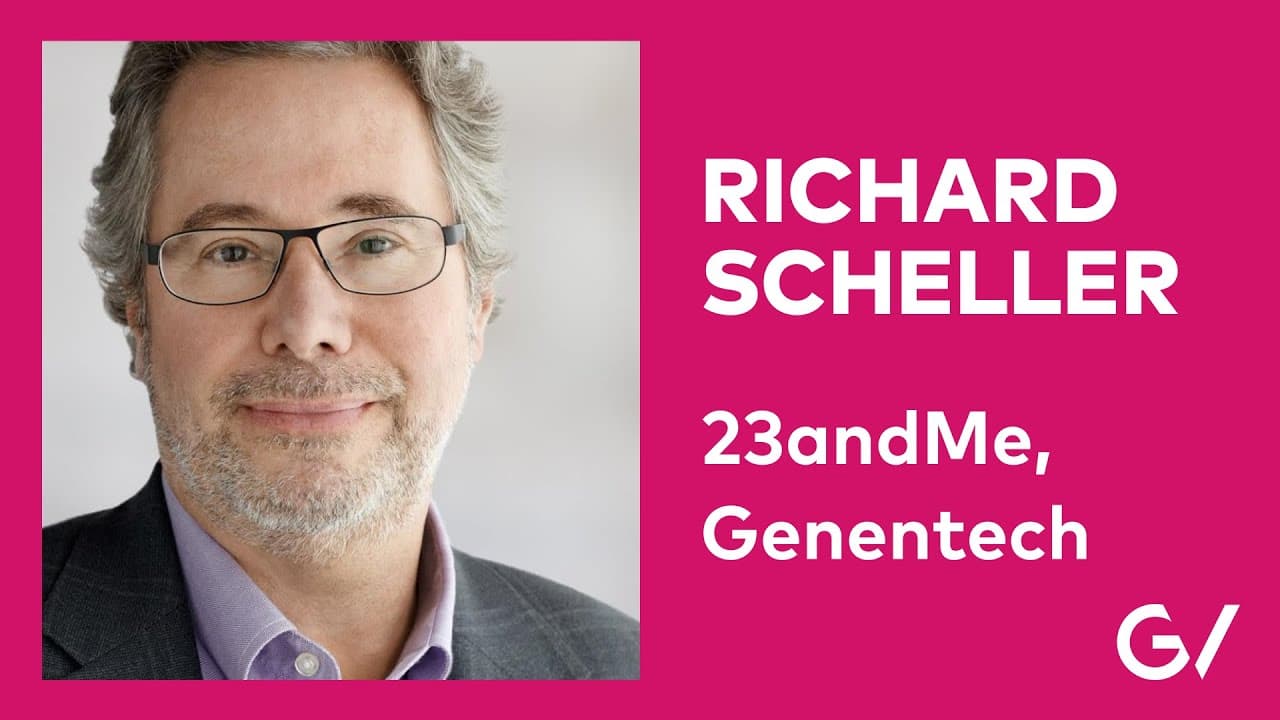
Dr. Richard Scheller on Scientific Rigor, Genetics, and the Evolution of Drug Development
TL;DR
Richard, a former Stanford professor, shares insights on his transition from academia to industry and discusses the importance of mentorship and rigorous science in the pharmaceutical industry.
Transcript
well richard thanks so much for taking some time this afternoon to chat you were a professor at stanford from 1982 to 2001 before joining genentech leading perhaps one of the most important research groups in both industry and academia developing medicines that literally have touched millions of lives and so i want to start by asking you what was t... Read More
Key Insights
- ❓ Transitioning from academia to industry can be both scary and exciting, requiring appropriate mentorship and guidance.
- 🔬 Building a culture of rigorous science in the pharmaceutical industry involves a mix of basic science and directed drug discovery.
- 👨🔬 Reproducibility issues in life sciences research pose challenges, emphasizing the need for greater rigor in publishing.
- 👨🔬 Incentivizing scientists to prioritize "killer experiments" early contributes to better science and research outcomes.
- 🖐️ Mentorship plays a crucial role in the successful transition from academia to industry.
- 🐢 Neuroscience remains an intellectually fascinating field, though progress may be slower due to the complex nature of understanding cognition and decline.
- 👨🔬 Increased investment in biotech startups requires thoughtful consideration of solid science and research.
Install to Summarize YouTube Videos and Get Transcripts
Explore YouTube Video Summarizer or Get YouTube Transcript Extractor
Questions & Answers
Q: How did Richard's transition from academia to industry impact his research group?
Richard's transition allowed his research group to grow from 20 people to 2,000 people, with a significantly increased budget. The transition also provided access to mentorship from industry leaders, which was crucial for navigating the new environment successfully.
Q: How did Richard build a culture of rigorous science at Genentech?
Richard established a postdoc program focused on basic science, which worked alongside technicians and full-time employees engaged in drug discovery. This mix of basic science and directed drug discovery created an atmosphere of rigorous science.
Q: What challenges did Richard identify in maintaining rigorous science in the pharmaceutical industry?
Richard raises concerns about the lack of reproducibility in published papers, with approximately half of the conclusions and data being non-reproducible. He attributes this issue to the pressure to publish, coupled with lower concern for rigor in publishing.
Q: How does Richard suggest incentivizing scientists to conduct "killer experiments" rather than preserving their projects?
Richard suggests that avoiding "killer experiments" may have short-term benefits, but it catches up with scientists in the long run. He also emphasizes the importance of high-level reviews by senior scientists who can provide objective evaluation and correction when necessary.
Summary & Key Takeaways
-
Richard discusses his transition from academia to industry, describing it as scary but exciting. He credits his success to mentorship and emphasizes the importance of appropriate mentors when transitioning.
-
The research culture at Genentech, where Richard worked, was characterized by a mix of basic science done by postdocs and directed drug discovery science done by full-time employees. This approach fostered a culture of rigorous science.
-
Richard highlights the issue of reproducibility in life science research, citing that approximately half of the conclusions and data in published papers are not reproducible. He calls for a greater emphasis on rigor in publishing.
Read in Other Languages (beta)
Share This Summary 📚
Summarize YouTube Videos and Get Video Transcripts with 1-Click
Try YouTube Summary with ChatGPT & Claude or YouTube Transcript Generator
Explore More Summaries from GV (Google Ventures) 📚


Summarize YouTube Videos and Get Video Transcripts with 1-Click
Try YouTube Summary with ChatGPT & Claude or YouTube Transcript Generator