What Are the 4 Quadrants of Employee Performance?
TL;DR
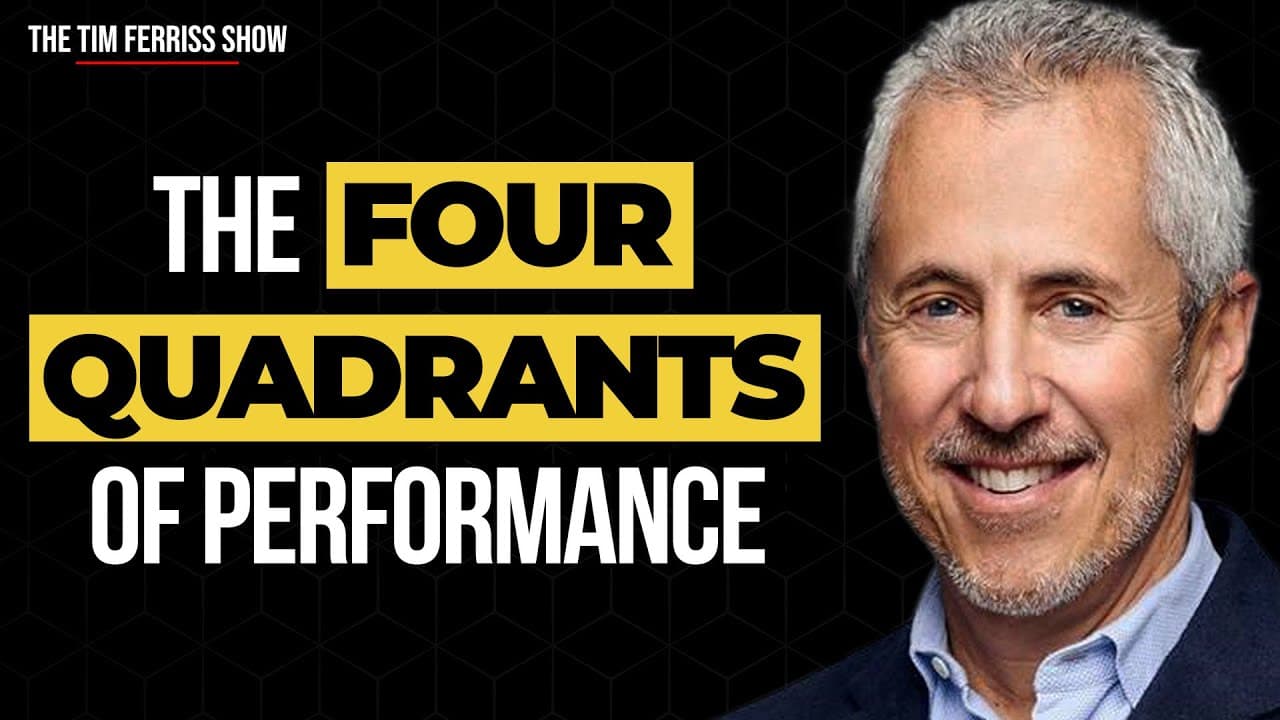
The four quadrants of employee performance classify individuals based on their technical skills and emotional willingness: can, can't, will, and won't. This framework helps managers decide whether to celebrate, coach, or address performance issues, ultimately fostering a high-performing team through clear expectations and honest communication.
Transcript
foreign tours in California they gave me this model that that I just absolutely love and we've turned it into something that we do and they basically created a four quadrant thing you've seen these axes many times with a y-axis and an x-axis and in one of the quadrants there's the word can let's say the upper left hand it says can and then in the u... Read More
Key Insights
- ⚾ The four-quadrant model categorizes employees based on technical abilities and emotional willingness.
- 🍂 Celebrating, coaching, and addressing performance issues are directed by the quadrant an employee falls into.
- 😤 The approach aims to cultivate a high-performing team by nurturing capable and willing employees.
- ❓ Transparent conversations and clear expectations are essential for effective performance management.
- 🗯️ Handling employees who are not the right fit involves honest discussions and providing support for their transition.
- ❓ Upholding integrity and values is crucial in addressing employees who betray trust within the organization.
- 🤑 The model helps in scaling organizational culture by emphasizing wanted behaviors and eliminating unwanted ones.
- 🎙️ More videos with Danny Meyer:
Install to Summarize YouTube Videos and Get Transcripts
Explore YouTube Video Summarizer or Get YouTube Transcript Extractor
Questions & Answers
Q: How does the four-quadrant model help in managing employees effectively?
The model categorizes employees based on technical abilities and emotional willingness, providing clear directions for celebrating, coaching, or addressing performance issues.
Q: What actions are recommended for employees falling under the "can't but will" quadrant?
Employees who can't perform but are willing should be given coaching and support to enhance their skills, leading to their long-term loyalty and development.
Q: How can managers handle employees in the "can't and won't" quadrant?
Employees who both lack the ability and willingness to perform should be dealt with swiftly through corrective actions to prevent negative impacts on team morale and performance.
Q: Why is it important to have open and honest conversations with employees regarding their performance and fit within the organization?
Transparent discussions regarding performance and fit help eliminate surprises during exit conversations and ensure employees understand expectations and contributions required in the role.
Summary & Key Takeaways
-
A model using four quadrants categorizes employees based on their technical abilities and emotional aptitude.
-
Employees are classified as can, can't, will, or won't based on their capabilities and willingness.
-
The approach involves celebrating, coaching, or addressing performance issues based on the quadrant an employee falls into.
Read in Other Languages (beta)
Share This Summary 📚
Summarize YouTube Videos and Get Video Transcripts with 1-Click
Try YouTube Summary with ChatGPT & Claude or YouTube Transcript Generator
Explore More Summaries from Tim Ferriss 📚





Summarize YouTube Videos and Get Video Transcripts with 1-Click
Try YouTube Summary with ChatGPT & Claude or YouTube Transcript Generator