Estimating actual COVID 19 cases (novel corona virus infections) in an area based on deaths
TL;DR
Actual COVID-19 cases are likely far higher than reported numbers due to limited testing, and estimating the true number of cases can provide insights into the severity of the outbreak.
Transcript
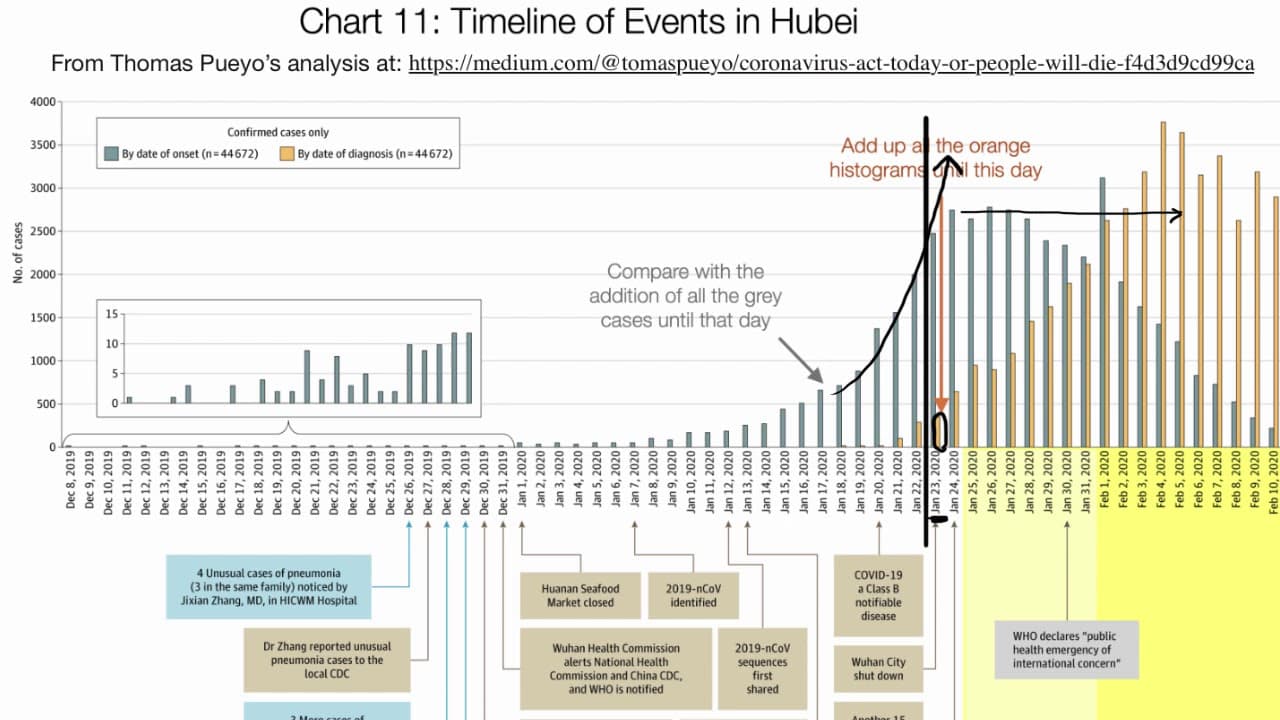
- [Narrator] The goal of this video is to help us all estimate the actual new COVID-19 cases per day in your area. And it's based on analysis by Thomas Pueyo, he wrote an incredible blog post on Medium. This is the link and I'll also include it in the description below. This is the data that he uses to do some of his analysis. Now, some of you migh... Read More
Key Insights
- 🔡 Reported COVID-19 cases are based on tested individuals and are likely far lower than the actual number of cases due to limited testing capacity.
- ☠️ Analyzing deaths and estimated mortality rate can provide insights into the actual number of cases in a region.
- 🇺🇸 Lagging data and lack of testing, especially in countries like the United States, highlight the need for proactive measures to prevent overwhelming healthcare systems.
- ☠️ Social distancing and preventive measures are crucial in reducing the spread rate and lowering the mortality rate of COVID-19.
Install to Summarize YouTube Videos and Get Transcripts
Explore YouTube Video Summarizer or Get YouTube Transcript Extractor
Questions & Answers
Q: Why are reported COVID-19 cases lower than the actual number of cases?
Reported cases are only based on tested individuals, leaving out asymptomatic and undiagnosed cases, leading to a significant underestimation.
Q: How can the actual number of cases be estimated?
By analyzing deaths and using estimations of mortality rate, time from infection to death, and virus spread rate, it is possible to estimate the number of cases in a region.
Q: Why is it important to consider estimated actual cases?
Understanding the true extent of COVID-19 cases is crucial for assessing the severity of the outbreak, preparing healthcare systems, and implementing preventive measures.
Q: How can taking proper precautions lower the mortality rate?
By practicing social distancing, proper hygiene, and following guidelines, the spread rate of the virus can be reduced, preventing an overwhelming burden on the healthcare system and reducing mortality.
Summary & Key Takeaways
-
Reported COVID-19 cases are based on tested individuals and do not account for asymptomatic or undiagnosed cases.
-
By analyzing deaths and estimations of mortality rate, time from infection to death, and virus spread rate, it is possible to estimate the actual number of cases in a region.
-
The lag in reported data, lack of testing, and potential overwhelming of the healthcare system make it crucial to take the COVID-19 outbreak seriously and practice proper precautions.
Read in Other Languages (beta)
Share This Summary 📚
Summarize YouTube Videos and Get Video Transcripts with 1-Click
Try YouTube Summary with ChatGPT & Claude or YouTube Transcript Generator
Explore More Summaries from Khan Academy 📚



Summarize YouTube Videos and Get Video Transcripts with 1-Click
Try YouTube Summary with ChatGPT & Claude or YouTube Transcript Generator