How Does a Mantis Shrimp Punch Work?
TL;DR
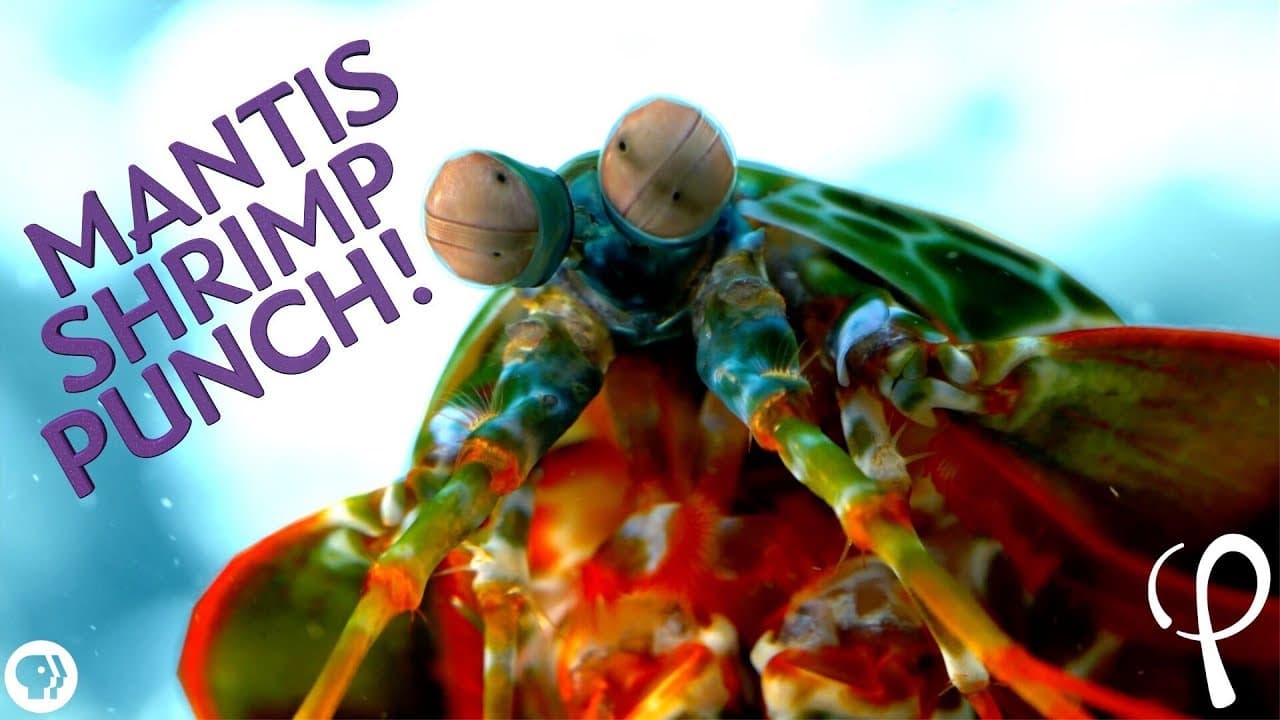
A mantis shrimp's punch can reach speeds of up to 45 miles per hour and generate a force similar to a .22 caliber bullet. This incredible power is due to cavitation, where the rapid movement creates vapor bubbles that violently collapse, releasing energy and light. Their aggressive behavior stems from the need to crack open hard-shelled prey and establish territory.
Transcript
So in this video, we're seeing the mantis shrimp about to get really angry at a tiny shell. Hi. I'm Dianna. You're watching "Physics Girl," and I'm about to get curious again. I'm here at Scripps Institution of Oceanography, and I'm going to talk to my friend Dr. Kate Furby about mantis shrimp. They have to get really mad to eat. DIANNA COWERN: ... Read More
Key Insights
- 👻 Mantis shrimps have a modified claw called a raptorial appendage, which allows them to smash shells.
- 🚄 Their punch is incredibly fast, reaching speeds of up to 45 miles per hour with an acceleration similar to a .22 caliber bullet.
- 🙂 Cavitation, caused by the fast movements, forms vapor bubbles that collapse violently, releasing energy and light.
- 👁️🗨️ The temperature inside these bubbles can reach the temperature of the Sun's surface.
- 🤗 Mantis shrimps are aggressive due to their territorial nature and the need to crack open the hard shells of their prey.
- 😅 These creatures eat a wide variety of ocean creatures, including prey in hard shells and soft-bodied prey.
- 😠 The footage of mantis shrimps smashing shells is often obtained by making them feel hungry or annoyed.
Install to Summarize YouTube Videos and Get Transcripts
Explore YouTube Video Summarizer or Get YouTube Transcript Extractor
Questions & Answers
Q: Why do mantis shrimps have such a powerful punch?
Mantis shrimps need to crack open the hard shells of their prey, so their powerful punch helps them achieve this.
Q: What causes the two spikes in the force graph of a mantis shrimp punch?
The first spike represents the initial punch, while the second spike is caused by cavitation, which releases energy and light.
Q: Can the bubbles formed by cavitation in mantis shrimps be dangerous?
The temperature inside these bubbles can reach the temperature of the Sun's surface, making them potentially harmful.
Q: Why are mantis shrimps so aggressive?
Mantis shrimps are territorial and need to defend their territory. Additionally, their aggression often results in better footage for researchers.
Summary & Key Takeaways
-
Mantis shrimps are fascinating creatures with modified claws called raptorial appendages, used for smashing shells.
-
They punch with an acceleration of 0 to 60 in 0.2 milliseconds, reaching speeds of up to 45 miles per hour.
-
When they strike, cavitation occurs, causing the formation of vapor bubbles that collapse violently, releasing energy and light.
Read in Other Languages (beta)
Share This Summary 📚
Summarize YouTube Videos and Get Video Transcripts with 1-Click
Try YouTube Summary with ChatGPT & Claude or YouTube Transcript Generator
Explore More Summaries from Physics Girl 📚






Summarize YouTube Videos and Get Video Transcripts with 1-Click
Try YouTube Summary with ChatGPT & Claude or YouTube Transcript Generator