What Is the Difference Between Mass Number and Atomic Mass?
TL;DR
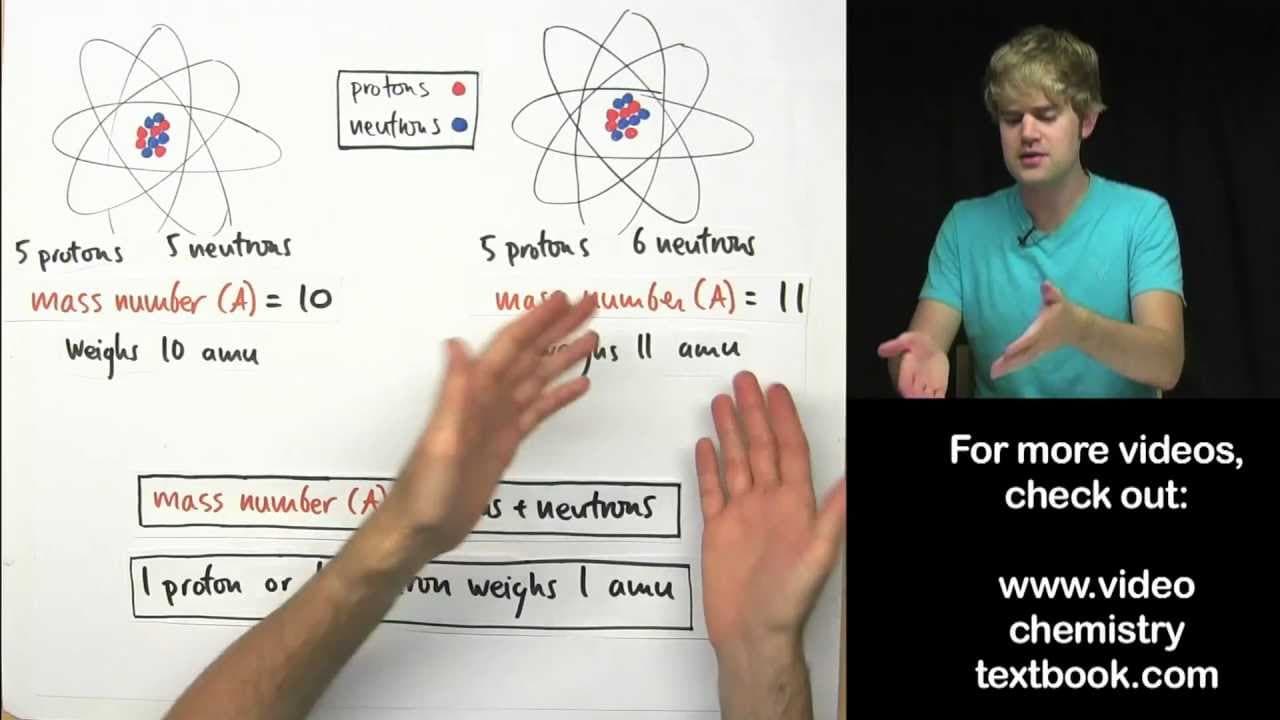
Mass number is the total count of protons and neutrons in an atom, serving as its weight in atomic mass units (amu), while atomic mass reflects the average weight of an element's isotopes based on their abundance. For example, Boron has isotopes Boron-10 and Boron-11, with atomic mass being approximately 10.8 amu due to the higher abundance of Boron-11.
Transcript
Let’s talk about the difference between mass number an atomic mass. These things sound very similar but they're actually very different. Just so you know, atomic mass can go by other names. Sometimes it's called average atomic mass or relative atomic mass or even atomic weight. Maybe your teacher calls it one of these. For our purposes, in this vid... Read More
Key Insights
- 🫀 Mass number sums protons and neutrons to provide an atom's weight in atomic mass units.
- 🫀 Atomic mass considers the abundance of different isotopes in an element for a weighted average.
- 💆 Isotopes like Boron 10 and Boron 11 exemplify the concept of mass number vs. atomic mass.
- 💆 Mass number pertains to a specific isotope, while atomic mass accounts for all isotopes in an element.
- 🫀 Understanding atomic mass requires factoring in the relative abundance of isotopes for an accurate calculation.
- 💆 The difference between mass number and atomic mass lies in their scope of measurement within an element.
- 🫀 Atomic mass calculations involve weighting the masses of multiple isotopes by their relative abundance.
Install to Summarize YouTube Videos and Get Transcripts
Explore YouTube Video Summarizer or Get YouTube Transcript Extractor
Questions & Answers
Q: What is mass number and how does it differ from atomic mass?
Mass number sums protons and neutrons in an atom, determining its weight in amu. Atomic mass, on the other hand, considers the abundance of isotopes to calculate the average weight of an element.
Q: How are isotopes like Boron 10 and Boron 11 related to mass number and atomic mass?
Isotopes like Boron 10 and Boron 11 showcase differences in neutron count, affecting their mass numbers. Atomic mass incorporates these isotopic abundances to determine the element's average weight.
Q: Why is it necessary to calculate atomic mass instead of relying solely on mass number?
Atomic mass accounts for the variety of isotopes present in an element, offering a more accurate representation of its weighted average mass compared to examining mass numbers individually.
Q: How does the abundance of isotopes impact the calculation of atomic mass?
Isotopic abundance, like the predominance of Boron 11 over Boron 10, influences the calculation of atomic mass by considering the weighted contribution of each isotope to the overall average.
Summary & Key Takeaways
-
Mass number is the sum of protons and neutrons in an atom, indicating weight in atomic mass units (amu).
-
Atomic mass accounts for isotopic variations within an element to derive the average atom weight.
-
Isotopes like Boron 10 and Boron 11 demonstrate these concepts of mass number and atomic mass.
Read in Other Languages (beta)
Share This Summary 📚
Summarize YouTube Videos and Get Video Transcripts with 1-Click
Try YouTube Summary with ChatGPT & Claude or YouTube Transcript Generator
Explore More Summaries from Tyler DeWitt 📚



Summarize YouTube Videos and Get Video Transcripts with 1-Click
Try YouTube Summary with ChatGPT & Claude or YouTube Transcript Generator