Why Are Risky Playgrounds Better for Kids' Development?
TL;DR
Risky playgrounds, like adventure playgrounds, foster creativity and self-confidence in children by allowing them to engage with tools and take manageable risks. Research shows that these environments promote increased physical activity, better risk assessment skills, and higher self-esteem compared to traditional, overly safe playgrounds.
Transcript
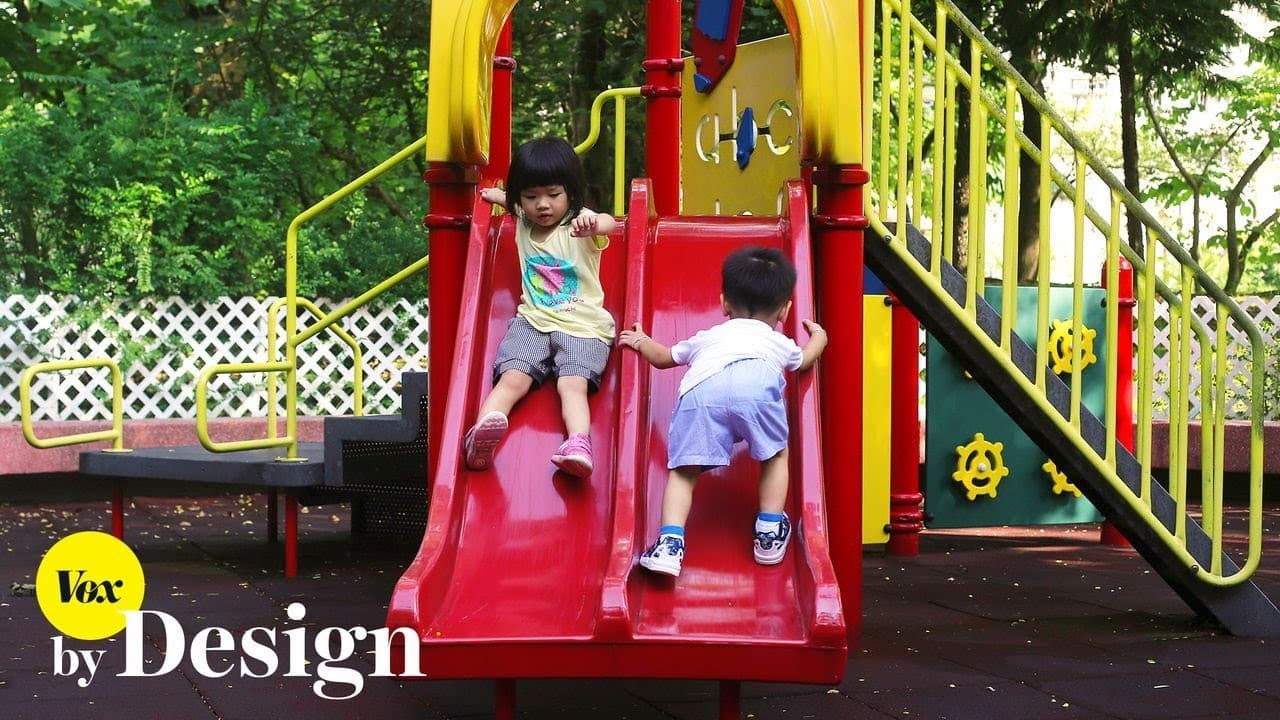
When you imagine a playground, chances are it looks something like this. There’s usually a slide, a bridge, and a high point with a domed roof. That’s what makes this a playground, and this, and this. But what about this? This isn’t a junkyard. It’s called an adventure playground. Here, there are no plastic play structures – just things like old ti... Read More
Key Insights
- Adventure playgrounds, which look more like junkyards, encourage children to take risks by using tools and building materials, fostering creativity and problem-solving.
- Marjory Allen and Carl Theodor Sorensen pioneered the concept of adventure playgrounds, emphasizing controlled risk over hazard avoidance in play spaces.
- Controlled risk in playgrounds involves elements like heights, speed, tools, and the ability to explore independently, promoting self-confidence and experimentation in children.
- Overly safe playgrounds may lead to higher injury rates as children seek thrills elsewhere, unlike adventure playgrounds which balance risk and safety.
- The US playground culture focuses on minimizing risk due to liability concerns, but this approach often results in uninspiring and less engaging play environments.
- Risky play is linked to increased physical activity, better risk assessment skills, and higher self-esteem in children, as evidenced by studies comparing playgrounds in London and US cities.
- Adventure playgrounds face criticism for their appearance, space requirements, and maintenance needs, but their benefits for children's development are significant.
- The debate in playground design centers on balancing safety with engagement, highlighting the need for innovative approaches to create stimulating play environments.
Install to Summarize YouTube Videos and Get Transcripts
Explore YouTube Video Summarizer or Get YouTube Transcript Extractor
Questions & Answers
Q: What is an adventure playground?
An adventure playground is a play space that encourages children to engage in risky play using materials like tools, building materials, and discarded objects. Unlike conventional playgrounds, these spaces allow children to create their own play structures and explore independently, fostering creativity, problem-solving, and self-confidence through controlled risk.
Q: Who were the pioneers of adventure playgrounds?
Marjory Allen and Carl Theodor Sorensen were pioneers of adventure playgrounds. Sorensen, an architect, first introduced the concept during World War II in Denmark, while Allen, a British landscape architect and children's welfare advocate, popularized it in the UK. They emphasized the importance of controlled risk over hazard avoidance in play environments.
Q: What are the key elements of controlled risk in playgrounds?
Controlled risk in playgrounds involves elements such as heights, speed, tools, dangerous elements, rough and tumble play, and the ability for children to disappear or become lost. These elements encourage children to make decisions, explore independently, and engage in experimentation, promoting self-confidence and a sense of discovery.
Q: Why are overly safe playgrounds not ideal for children?
Overly safe playgrounds may not be ideal for children because they often lack engaging elements, leading children to seek thrills elsewhere. This can result in higher injury rates compared to adventure playgrounds, where controlled risk is balanced with safety. Safe playgrounds may also stifle creativity and limit opportunities for problem-solving and physical activity.
Q: How do risky playgrounds benefit children's development?
Risky playgrounds benefit children's development by promoting increased physical activity, better risk assessment skills, and higher self-esteem. Studies have shown that children who engage in risky play are more creative, socially adept, and resilient, as they learn to navigate challenges and make decisions in a stimulating environment.
Q: What challenges do adventure playgrounds face?
Adventure playgrounds face challenges such as their unconventional appearance, space requirements, and maintenance needs. Critics argue that they may appear unsightly and require significant resources to staff and maintain. However, their developmental benefits for children often outweigh these drawbacks, making them a valuable alternative to traditional playgrounds.
Q: How does US playground design differ from adventure playgrounds?
US playground design typically focuses on minimizing risk to avoid liability, resulting in environments that reduce heights, movement, and hard materials. In contrast, adventure playgrounds embrace controlled risk, using elements like tools and building materials to engage children in creative and independent play, fostering a more stimulating and developmental experience.
Q: What is the main debate in playground design?
The main debate in playground design centers on balancing safety with engagement. While traditional playgrounds prioritize safety to avoid liability, they often lack stimulating elements. Adventure playgrounds, however, offer a more engaging experience by incorporating controlled risk, promoting creativity, problem-solving, and physical activity in children.
Summary & Key Takeaways
-
Adventure playgrounds encourage children to engage in risky play, using tools and building materials to foster creativity and self-confidence. This concept, pioneered by Marjory Allen and Carl Theodor Sorensen, emphasizes controlled risk over hazard avoidance, providing a healthier and more engaging play experience compared to conventional playgrounds.
-
The US playground design focuses on minimizing risk to avoid liability, often resulting in uninspiring environments. However, research shows that risky play promotes physical activity, risk assessment skills, and self-esteem, suggesting that adventure playgrounds offer significant developmental benefits despite their unconventional appearance and maintenance needs.
-
The debate in playground design involves balancing safety with engagement. While adventure playgrounds face criticism, their ability to promote healthier, more engaged children makes them a valuable alternative to traditional, overly safe play spaces. Innovative design approaches are needed to create stimulating environments that cater to children's developmental needs.
Read in Other Languages (beta)
Share This Summary 📚
Summarize YouTube Videos and Get Video Transcripts with 1-Click
Try YouTube Summary with ChatGPT & Claude or YouTube Transcript Generator
Explore More Summaries from Vox 📚




Summarize YouTube Videos and Get Video Transcripts with 1-Click
Try YouTube Summary with ChatGPT & Claude or YouTube Transcript Generator