Figurative language | Reading | Khan Academy
TL;DR
Figurative language uses non-literal expressions to convey meaning, such as similes, metaphors, personification, hyperbole, and allusion.
Transcript
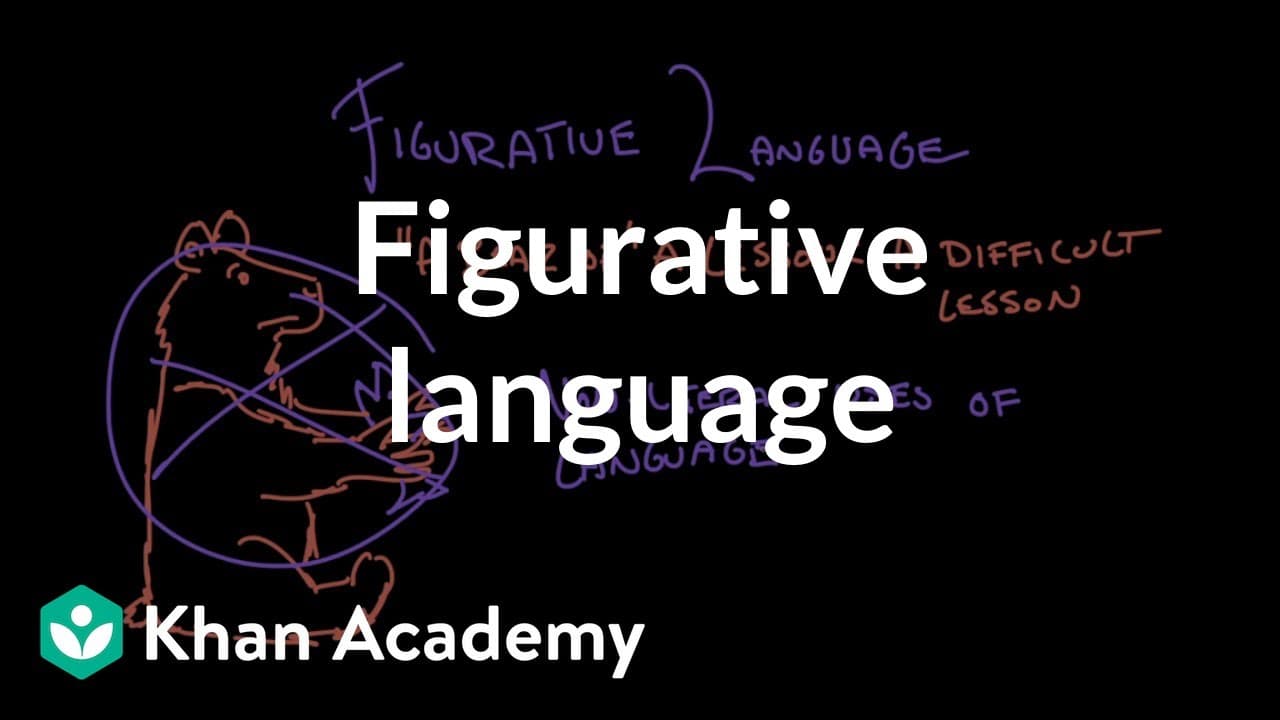
- [Instructor] Hello readers, we've got a bear of a lesson today and it's all about figurative language. Sorry, I should back up. I know I said we have a bear of a lesson. I don't literally mean that I've got a bear. That would be extremely sweet. Love a bear, love bear's whole thing with the snacking and the sleeping and the eating of fish, but no... Read More
Key Insights
- 💡 Similes and metaphors are used to compare and emphasize ideas in figurative language.
- 🚱 Personification attributes human qualities to non-living things for expressive purposes.
- ❓ Hyperbole exaggerates to emphasize enthusiasm or importance.
- ❓ Allusions reference characters or events from literature or culture to enrich meaning.
- 😑 Figurative language allows for creative expression and adds depth to communication.
- ❓ Understanding and recognizing allusions can be improved by familiarizing oneself with mythology.
- 💨 Figurative language can convey complex emotions and ideas in a concise and imaginative way.
Install to Summarize YouTube Videos and Get Transcripts
Explore YouTube Video Summarizer or Get YouTube Transcript Extractor
Questions & Answers
Q: What is figurative language?
Figurative language uses non-literal expressions to convey meaning, such as similes, metaphors, personification, hyperbole, and allusion.
Q: What is the difference between similes and metaphors?
Similes use "like" or "as" to compare two things, while metaphors directly state that one thing is another.
Q: How does personification work in figurative language?
Personification attributes human characteristics to non-living things, allowing them to "behave" like humans in the expression of ideas or emotions.
Q: What is hyperbole and how is it used in figurative language?
Hyperbole involves exaggeration to express emphasis and importance. It often goes beyond what is logically possible, such as claiming to read a million books or eat a ton of hot dogs.
Q: What is the role of allusion in figurative language?
Allusion involves making comparisons to characters or events from literature, movies, or culture. It adds depth and meaning to the expression but requires the audience to understand the reference.
Summary & Key Takeaways
-
Figurative language expresses something non-literally to convey meaning, such as comparing hunger to a tar pit or a wolf.
-
Similes use "like" or "as" to compare things, while metaphors directly state that one thing is another.
-
Personification attributes human characteristics to non-living things, while hyperbole exaggerates for emphasis. Allusion refers to characters or events from literature or culture.
Read in Other Languages (beta)
Share This Summary 📚
Summarize YouTube Videos and Get Video Transcripts with 1-Click
Try YouTube Summary with ChatGPT & Claude or YouTube Transcript Generator
Explore More Summaries from Khan Academy 📚



Summarize YouTube Videos and Get Video Transcripts with 1-Click
Try YouTube Summary with ChatGPT & Claude or YouTube Transcript Generator