How to Overcome Fear and Anxiety Using Effective Strategies

TL;DR
To overcome fear and anxiety, recognize your body's signals and employ strategies like the 5-second rule and anchor thoughts. These techniques help redirect negative thinking and calm your nervous system, allowing you to effectively confront fears and reclaim your daily life.
Transcript
so i you know i'm very open about the fact that i struggled with anxiety for a long time and um what's interesting about anxiety is that you know i'm i'm now talking to you from the perspective of being 53 years old i was like really [ __ ] up and by [ __ ] up i mean not that i was like stealing cars or breaking laws or doing anything like that but... Read More
Key Insights
- 🥺 Childhood trauma can trigger anxiety, leading to chronic feelings of being on edge and impacting daily life.
- 😵💫 Habits of worry can spiral into anxiety if left unchecked, affecting decision-making and overall well-being.
- 💭 Employing cognitive strategies like the 5-second rule and anchor thoughts can help individuals manage anxiety triggers in the moment.
- 😟 Recognizing anxiety triggers and practicing techniques to interrupt negative thoughts can lead to a calmer nervous system and improved mental well-being.
Install to Summarize YouTube Videos and Get Transcripts
Explore YouTube Video Summarizer or Get YouTube Transcript Extractor
Questions & Answers
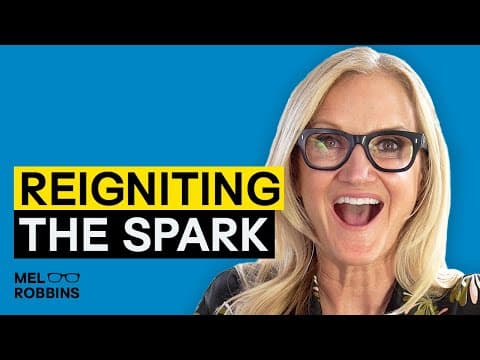
Q: How did Mel Robbins describe her experience of anxiety from childhood trauma?
Mel Robbins shared how a fourth-grade incident triggered anxiety, leading to chronic feelings of being on edge and struggling with focus and decision-making due to continuous worry.
Q: What cognitive strategies did Mel Robbins suggest to manage anxiety triggers in the moment?
Mel Robbins recommended using the 5-second rule to interrupt negative thoughts and employ anchor thoughts to redirect the mind from spiraling into worry or panic.
Q: How did Mel Robbins explain the connection between worrying and anxiety?
Mel Robbins clarified that worrying leads to anxiety when negative thought patterns amplify physical sensations of fear, highlighting the importance of catching triggers and retraining the mind.
Q: How can individuals use the 5-second rule and anchor thoughts to control anxiety responses?
By practicing the 5-second rule to interrupt worry patterns and using positive anchor thoughts, individuals can stabilize their thoughts, settle their body, and prevent anxiety from escalating.
Summary & Key Takeaways
-
Mel Robbins shares her personal struggle with anxiety, starting from childhood trauma affecting her nervous system.
-
She explains how habits of worry can lead to anxiety, affecting decision-making and daily life interactions.
-
By using tools like the 5-second rule and anchor thoughts, individuals can interrupt negative thought patterns and calm their nervous system.
Read in Other Languages (beta)
Share This Summary 📚
Summarize YouTube Videos and Get Video Transcripts with 1-Click
Try YouTube Summary with ChatGPT & Claude or YouTube Transcript Generator
Explore More Summaries from Mel Robbins 📚




Summarize YouTube Videos and Get Video Transcripts with 1-Click
Try YouTube Summary with ChatGPT & Claude or YouTube Transcript Generator