Why the US has so many tornadoes
TL;DR
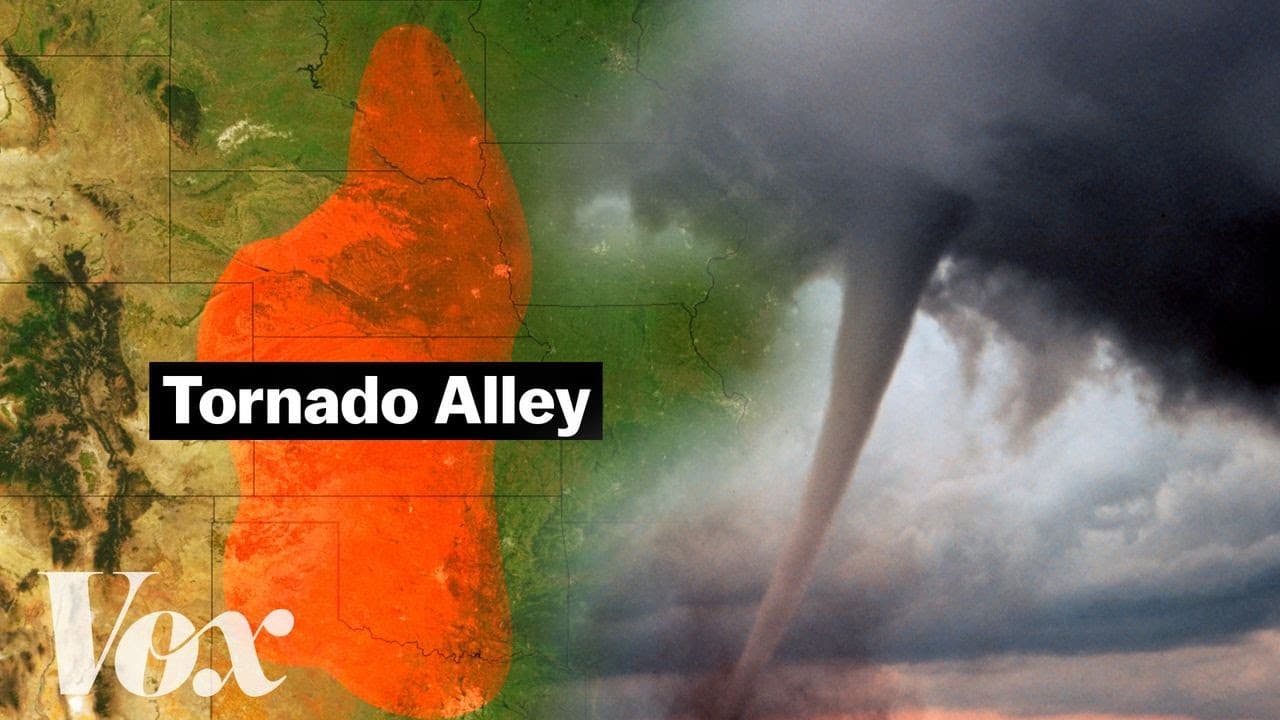
Tornadoes are common in Tornado Alley due to unique geography.
Transcript
Hollywood loves a good tornado. Like most things Hollywood it's all a little dramatic, but flying cows aside there is something accurate about the setting. "I have a feeling we're not in Kansas anymore." You're not. But the tornado started there, which makes sense. Tornadoes are far more common in the US than anywhere else. For perspective all of E... Read More
Key Insights
- Tornado Alley is a region in the central US known for its high frequency of tornadoes, primarily due to its unique geographical features.
- The US records over 1,200 tornadoes annually, significantly more than any other region, with Tornado Alley being the epicenter.
- Tornado formation requires specific conditions: warm moist air, cold dry air, and a lifting mechanism, all prevalent in Tornado Alley.
- The Gulf of Mexico provides warm moist air, while the Rocky Mountains contribute cold dry air, creating ideal conditions for thunderstorms.
- The jet stream plays a crucial role in tornado formation by keeping rain away from the updraft, allowing storms to intensify.
- Supercells, which are rotating thunderstorms, are the primary producers of tornadoes, often forming in Tornado Alley.
- The Andes and Amazon in South America provide some similar conditions, but not as effectively as the Rockies and Gulf of Mexico.
- Despite understanding tornado formation, predicting their exact occurrence remains challenging due to the complex nature of weather systems.
Install to Summarize YouTube Videos and Get Transcripts
Explore YouTube Video Summarizer or Get YouTube Transcript Extractor
Questions & Answers
Q: Why does Tornado Alley experience more tornadoes than other regions?
Tornado Alley experiences more tornadoes due to its unique geographical features. The warm moist air from the Gulf of Mexico meets cold dry air from the Rocky Mountains, creating ideal conditions for thunderstorms. The jet stream further aids in maintaining storm intensity, making the region a hotspot for tornadoes.
Q: What are the necessary conditions for tornado formation?
Tornado formation requires specific conditions: warm moist air at low levels, cold dry air above, and a mechanism to lift the warm air. In Tornado Alley, these conditions are met through the warm air from the Gulf of Mexico, cold air from the Rockies, and the presence of the jet stream.
Q: How does the jet stream contribute to tornado formation?
The jet stream contributes to tornado formation by keeping rain away from the updraft, allowing the storm to maintain its intensity. This high-speed air current flows from west to east, pairing with mountain air to blow rain away, thus enabling the formation of supercell thunderstorms, which can lead to tornadoes.
Q: What is a supercell and how is it related to tornadoes?
A supercell is a type of rotating thunderstorm that is a primary producer of tornadoes. In Tornado Alley, the combination of warm moist air, cold dry air, and the jet stream creates conditions for supercells. These storms have rotating updrafts, which can intensify and lead to the formation of tornadoes.
Q: Why don't other regions experience as many tornadoes as Tornado Alley?
Other regions don't experience as many tornadoes as Tornado Alley because they lack the same effective geographical features. For example, while South America has some similar conditions, the Andes aren't as wide as the Rockies, and the Amazon isn't as effective a moisture source as the Gulf of Mexico, reducing tornado frequency.
Q: What role does geography play in tornado formation?
Geography plays a crucial role in tornado formation by providing the necessary conditions for thunderstorms. In Tornado Alley, the proximity of the Gulf of Mexico and the Rocky Mountains creates a unique environment where warm moist air and cold dry air meet, fostering the development of powerful storms capable of producing tornadoes.
Q: How challenging is it to predict tornadoes?
Predicting tornadoes is challenging due to the complex nature of weather systems. While the necessary conditions for tornado formation are understood, accurately forecasting the exact time and location of a tornado remains difficult. This complexity makes it hard for meteorologists to provide precise warnings, despite advancements in weather prediction technology.
Q: What is the significance of Tornado Alley in tornado research?
Tornado Alley is significant in tornado research because it provides a natural laboratory for studying tornadoes. The region's high frequency of tornadoes allows scientists to observe and analyze these storms in detail, leading to a better understanding of their formation, behavior, and potential warning systems, ultimately improving public safety measures.
Summary & Key Takeaways
-
Tornado Alley in the central US experiences more tornadoes than any other region due to its unique geographical features. The combination of warm moist air from the Gulf of Mexico and cold dry air from the Rocky Mountains creates ideal conditions for thunderstorm formation, which can lead to tornadoes.
-
Supercells, rotating thunderstorms that often form in Tornado Alley, are crucial for tornado development. The jet stream helps maintain the storm's intensity by preventing rain from cooling the updraft, allowing the storm to grow and potentially produce a tornado.
-
While other regions like South America have similar weather conditions, they don't match the frequency of tornadoes in the US due to less effective geographical features. Predicting tornadoes remains difficult despite understanding their formation, highlighting the complexity of weather systems.
Read in Other Languages (beta)
Share This Summary 📚
Summarize YouTube Videos and Get Video Transcripts with 1-Click
Try YouTube Summary with ChatGPT & Claude or YouTube Transcript Generator
Explore More Summaries from Vox 📚




Summarize YouTube Videos and Get Video Transcripts with 1-Click
Try YouTube Summary with ChatGPT & Claude or YouTube Transcript Generator