How many particles in the Universe? - Numberphile
TL;DR
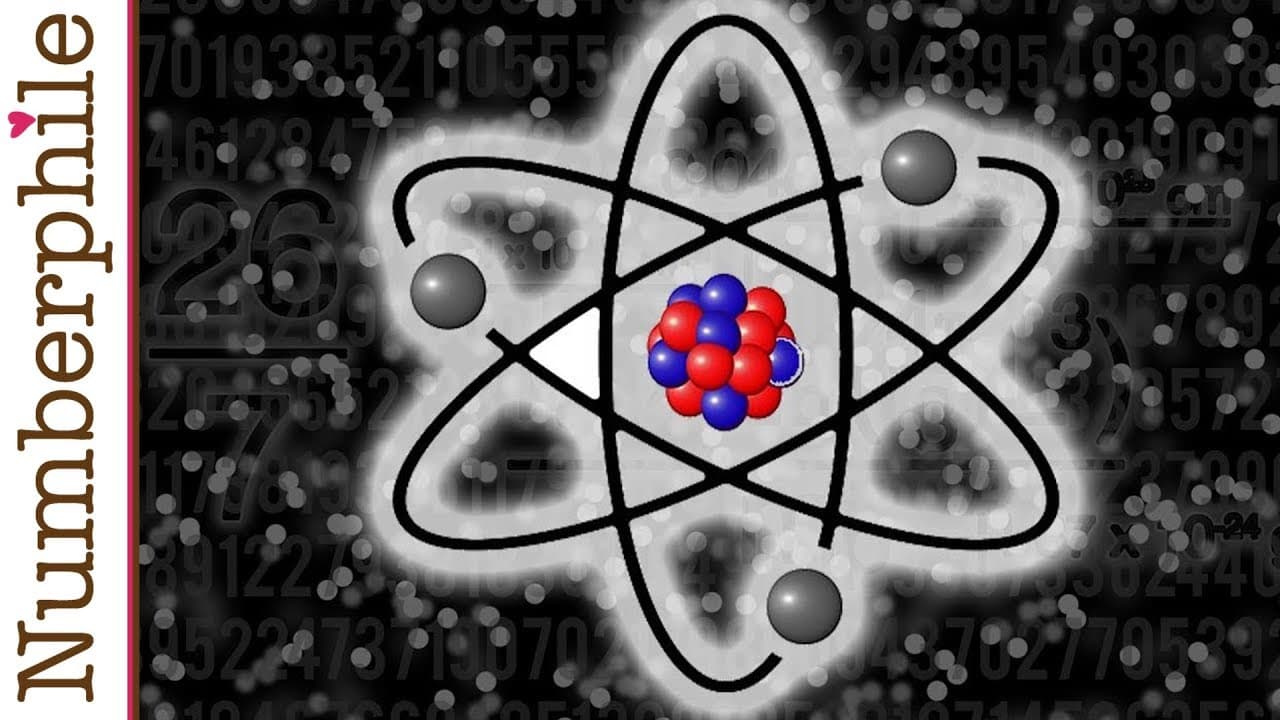
Calculating the number of particles in the observable universe using baryons, energy density, and particle distribution.
Transcript
So, Brady, we're gonna talk about how many particles there are in the universe. We're gonna calculate the number of particles in the observable universe. So that's, you know, the section of the universe that we can see, where light could have reached us from. What are the particles that we're talking about here? So we're gonna be interested in part... Read More
Key Insights
- 💆 The universe's energy density, baryon fraction, size, and proton mass are crucial elements in calculating particle numbers.
- 🦻 Understanding baryons, volume calculations, and particle distribution aid in determining total particle counts.
Install to Summarize YouTube Videos and Get Transcripts
Explore YouTube Video Summarizer or Get YouTube Transcript Extractor
Questions & Answers
Q: What are the fundamental particles considered when calculating the total number of particles in the universe?
Fundamental particles like quarks, protons, neutrons, and electrons with mass are considered in the calculation, focusing on baryons.
Q: How is the energy density stored in baryons used to calculate the total number of particles in the universe?
By multiplying the energy density stored in baryons by the volume of the universe and dividing by the mass of a proton, the total number of particles can be determined.
Q: How is the distribution of particles, mainly protons and electrons, accounted for in calculating the total particle count?
Maintaining electrical neutrality means equivalent positive and negative charges, balancing protons and electrons in the universe's particle count estimation.
Q: What is the significance of knowing the number of particles in a typical human body when estimating the total particles in the universe?
The comparison helps visualize the immense scale of the universe's particle count, showcasing the vast difference between individual human bodies and the entire universe.
Summary & Key Takeaways
-
The universe's particle count is determined by baryon energy density, volume, and particle distribution.
-
Baryons like protons and neutrons are key components in calculating the total number of particles.
-
The estimated number of particles in the universe is around 3.28 x 10^80.
Read in Other Languages (beta)
Share This Summary 📚
Summarize YouTube Videos and Get Video Transcripts with 1-Click
Try YouTube Summary with ChatGPT & Claude or YouTube Transcript Generator
Explore More Summaries from Numberphile 📚




Summarize YouTube Videos and Get Video Transcripts with 1-Click
Try YouTube Summary with ChatGPT & Claude or YouTube Transcript Generator